

Mouthguards for Contact Sports: Which One is Right for You?
If your sport involves collisions, falls, sticks, balls or elbows, you need a mouthguard. The real question is which type and which model. This guide covers which sports count as contact sports, how often mouth injuries happen in them, what the rules require, how the three types of guard compare and which AlienGuards model fits each sport. It's based on the American Dental Association (ADA) and published research.
The short answer
- Wear a properly fitted mouthguard in every contact sport, in practice as well as games. The ADA recommends one for any sport with a real risk of mouth injury.
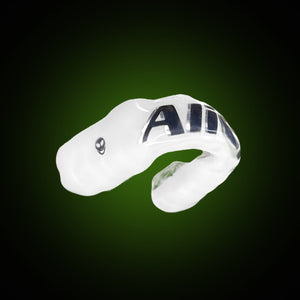
- Combat sports (boxing, MMA, Muay Thai, kickboxing, karate, taekwondo): a thicker combat guard. We make Origin and Origin Pro.
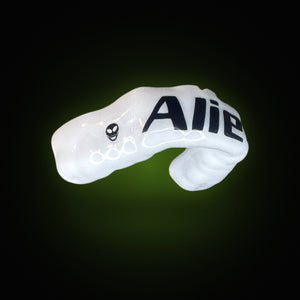
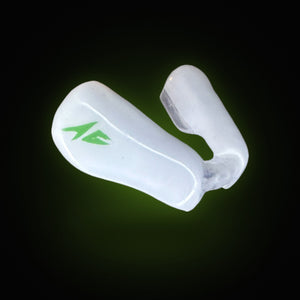
- Grappling and team sports (wrestling, BJJ, football, rugby, hockey, field hockey, lacrosse, basketball, soccer): a slimmer guard you can breathe and talk through. We make NanoBite, our thinnest at 4 mm.
- Fit matters more than price or brand. The best mouthguard is the one you'll actually wear.
Which sports count as contact sports?
The ADA's list of contact and collision sports where a mouthguard is recommended includes basketball, boxing, football, handball, hockey (ice and field), lacrosse, martial arts and other combat sports, rugby, soccer, water polo and wrestling. Basketball and soccer belong on that list: one study the ADA cites found basketball players had the highest incidence of dental trauma. The ADA also recommends a mouthguard for limited-contact sports such as volleyball and baseball and softball, where we recommend NanoBite; see our volleyball mouthguard guide. More in basketball and dental health. How a guard actually protects you: the science behind mouthguard protection.
How common are mouth injuries in contact sports?
Common enough that most athletes in these sports will see one. Three large reviews and studies give a sense of the scale:
- Team contact sports. A 2020 meta-analysis of adult contact-sport players (Oliveira Werlich and colleagues) found about 28% had had at least one injury to the teeth, jaw, lips or face. By sport: rugby about 37%, basketball about 27%, handball about 25% and field hockey about 19%. Dental injuries were the most common type. Rugby players: see how rugby players can protect their smile.
- Combat sports. A 2020 meta-analysis of combat-sport athletes (Polmann and colleagues) put the overall rate of these injuries at about 30%. Jiu-jitsu had the highest rate of the sports studied, at about 53%, and among Pan American Games sports, boxing had the highest rate of dental injuries.
- High school sports. A US high school surveillance study (Collins and colleagues, 2016) found dental injuries were relatively uncommon per game or practice, but the highest rates were in girls' field hockey and boys' basketball. Most happened through contact with another player (61.3%) or with a ball, stick or other equipment (31.5%), and the rate in competition was three times the rate in practice.
These reviews pooled very different studies, and Polmann and colleagues rated the certainty of their evidence as low, so treat the numbers as a rough picture rather than precise odds. The takeaway holds either way: grappling and team sports carry real mouth-injury risk, not just striking sports. For striking sports, see combat sports and dental protection.
Does a mouthguard actually help?
Yes, for teeth and soft tissue. A 2019 systematic review and meta-analysis (Knapik and colleagues) found that in cohort studies, athletes without a mouthguard had 2.33 times the risk of a mouth or face injury. A 2019 meta-analysis of contact-sport athletes (Fernandes and colleagues) found dental trauma in about 7.5% to 7.75% of mouthguard users, compared with 48% to 59% of non-users. And in the Collins high school study, the athlete wasn't wearing a mouthguard in 72.5% of dental injuries. If a tooth is knocked out, see knocked-out tooth first aid.
What a mouthguard doesn't do is prevent concussions. The ADA calls that evidence mixed. See do mouthguards prevent concussions?
What the rules require
Some sports require one. The NFHS (high school) mandates mouthguards in football, field hockey, ice hockey and lacrosse, and for wrestlers who wear braces. The NCAA (college) requires them in football, field hockey and lacrosse; its current ice hockey rules book (Rule 9.5) recommends one rather than requiring it. Boxing is the only professional sport where mouthguards are mandated, according to the ADA. Leagues, clubs and fight promotions set their own rules on top of that, so check yours. For a sport-by-sport summary, see mouthguard rules by sport.
Even where a guard isn't required, the ADA notes that use stays low unless a governing body mandates it. That's the gap where a lot of injuries happen, especially in basketball, soccer and grappling. Basketball players can check basketball mouthguard rules.
Rules at a glance
| Sport | What the main rulebooks say | Details |
|---|---|---|
| Football | Required in high school (NFHS) and college (NCAA) | Football rules |
| Ice hockey | Required in high school; USA Hockey requires a colored guard from 12U through 18U; NCAA recommends one | Hockey rules |
| Field hockey, lacrosse | Required in high school and college | Lacrosse rules |
| Wrestling | Required in high school for wrestlers with braces; NCAA recommends one | Wrestling rules |
| Basketball, soccer | Allowed but not required by NFHS, NCAA, FIBA or IFAB; some states and leagues require one | Basketball rules |
| Rugby | Recommended by World Rugby and unions such as the RFU; New Zealand made it compulsory in 1998, and many clubs and schools require one | Rugby rules |
| Roller derby | Required during play under WFTDA rules, which MRDA and JRDA also use | Roller derby rules |
| Boxing, MMA, kickboxing, Muay Thai | Required to compete under the major amateur and pro rulebooks | Boxing rules |
| Karate, taekwondo | Required by WKF and World Taekwondo; WT allows only white or transparent guards | Karate and taekwondo rules |
| BJJ and grappling | Varies by organization, from not mentioned to required | BJJ rules, judo rules |
Rulebooks change every season, so treat this as a starting point and check your own league, event or state association.
Do mouthguard rules work?
The best real-world test comes from rugby in New Zealand. Mouthguards became compulsory in matches for under-19 players in 1997 and for all grades of domestic rugby in 1998. In a 2005 study in the British Journal of Sports Medicine (Quarrie and colleagues), self-reported mouthguard use rose from 67% of player-weeks in 1993 to 93% in 2003, and rugby-related dental injury claims fell 43% between 1995 and 2003. It was an ecological study, which can't prove cause and effect on its own, but the authors concluded that mouthguards are a simple and effective way to prevent injuries and strongly recommended them for all players in matches and contact practice.
Without a rule, use stays low. In a 2015 survey of 1,636 high school athletes (Collins and colleagues), 65.3% of non-wearers said they didn't wear one because it wasn't required. In a 2016 survey of 494 junior rugby league players and coaches in Australia (Kroon and colleagues), about two-thirds of players (68.2%) wore a mouthguard even though most coaches encouraged it, and the main reasons for skipping one were cost (40.1%) and not believing it works (35.7%). If your league doesn't require a guard, make your own rule.
The three types of mouthguard
- Stock: ready-made and cheap, but the ADA calls it the least effective type because of its poor fit and retention. You have to keep your mouth shut to hold it in, which is hard to do while you're running or getting hit.
- Boil-and-bite: molded at home in hot water. Better than stock, but the ADA says it has to be molded exactly as directed, because imprecise shaping leaves a poorly fitted guard.
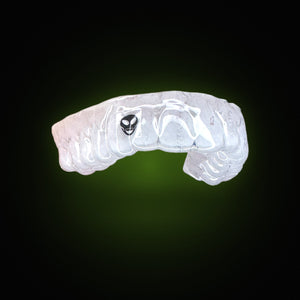
- Custom: made on a model of your teeth from an impression. Many consider it the most protective option, according to the ADA. You can take that impression at home; see how to get a custom mouthguard without a dentist visit.
The best mouthguard is the one you'll wear every time. A guard that's bulky, loose or hard to breathe through tends to end up in a bag. Research hasn't proven that custom guards prevent more injuries than a well-fitted guard worn every time, but in a 1994 study of high school athletes, players preferred custom guards for comfort and wearability. See custom vs. boil-and-bite.
What to weigh for your sport
- Type of impact: heavy, direct strikes to the face (boxing, MMA, Muay Thai, kickboxing, karate, taekwondo) call for a thicker combat guard. Grappling and team sports, where you need to breathe hard and talk, suit a slimmer guard. More in breathing and talking with a mouthguard.
- Breathing and talking: in team sports you call plays and run for long stretches, so profile matters. In a 2002 lab study, thicker EVA absorbed more energy, but the gains leveled off beyond about 4 mm while comfort dropped. See how thick should a mouthguard be?
- Rules: check your league. NFHS football dropped its rule against clear and white mouthguards in 2016, and USA Lacrosse and NFHS boys' lacrosse removed color restrictions for 2026. USA Hockey still requires a colored (non-clear) mouthpiece for 12U through 18U.
- Practice, not just games: the ADA's policy covers practice sessions too. Most of your hours on the mat or field are in training.
- Age: growing athletes need a new guard more often as their teeth change. See custom mouthguards for kids.
- Braces: athletes with braces need a guard made around them; see below.
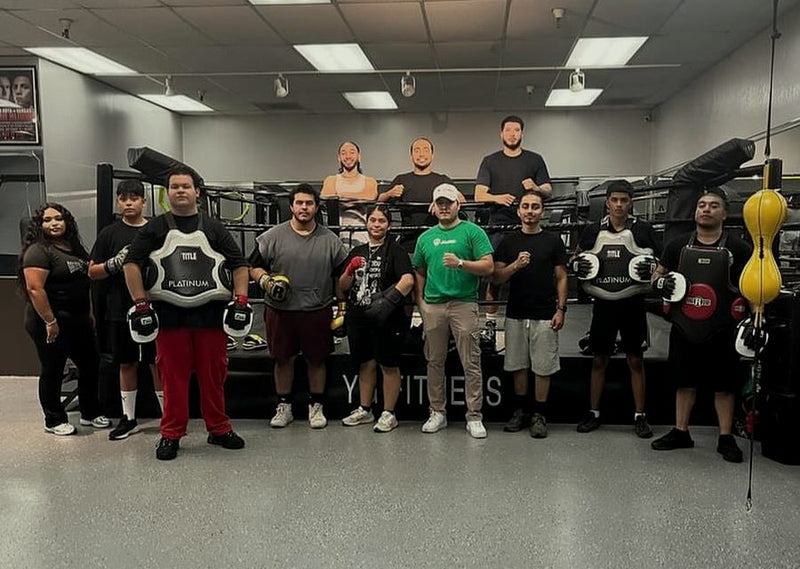
Combat sports vs. grappling and team sports
Striking sports and grappling sports put different demands on a guard. In boxing, Muay Thai, kickboxing, karate and taekwondo, and in the striking half of MMA, punches, kicks, elbows and knees land directly on the mouth and jaw. That's where our 5 mm guards with reinforced impact zones make sense. See boxing vs. MMA mouthguards and the best mouthguard for sparring. For what any guard can and can't do for the jaw, see mouthguards and jaw injuries.
Wrestling and BJJ are about scrambles, clinches, knees and the mat. You're breathing hard for long rounds, and a guard that's too thick wears you out. Team sports add talking: calling plays, communicating on defense, yelling for the ball. That's why NanoBite, at 4 mm, is our pick for grappling and every team sport. Given how high the jiu-jitsu injury rate was in the Polmann review, "it's only grappling" isn't a reason to skip one.
Our picks by sport
| Sport | Model | Guide |
|---|---|---|
| Boxing, MMA, Muay Thai, kickboxing, karate, taekwondo | Origin (5 mm) or Origin Pro (5 mm, optional 6mm) | Boxing, MMA (rules), karate and taekwondo |
| Football | NanoBite (4 mm) | Football |
| Hockey, field hockey, lacrosse | NanoBite | Hockey, lacrosse |
| Rugby | NanoBite | Rugby (rules) |
| Basketball, soccer, volleyball | NanoBite | Basketball, soccer (rules) |
| Wrestling, BJJ | NanoBite | Wrestling, BJJ (rules) |
All are made from your at-home impression and pressure-formed in our USA lab. Compare all models. To pick colors, see mouthguard colors for team uniforms.
Athletes with braces can get AlienGuards, but their dentist needs to take the impression instead of using our at-home kit, so the braces don't get damaged. The dentist can take an impression or 3D scan, then ship it to us or email it to impressions@alienguards.com. More in mouthguards with braces.
Ordering for a team, club or gym? Teams get 20% off every model, including NanoBite and PowerBite, with a minimum of 5, and we keep athletes' models on file for quick replacements. See team orders.
Keep reading: how to choose the right mouthguard for your sport, why a custom mouthguard matters and how much does a custom mouthguard cost?
Field hockey players can also see our field hockey mouthguard guide and field hockey mouthguard rules. For league requirements, see football mouthguard rules, hockey mouthguard rules, rugby mouthguard rules, soccer mouthguard rules, MMA mouthguard rules, Muay Thai mouthguard rules, kickboxing mouthguard rules and karate and taekwondo mouthguard rules. If a guard makes you gag or will not stay in, read mouthguard gag reflex and why does my mouthguard fall out? Once you've picked a model, see custom mouthguard designs.
Contact sports mouthguard FAQ
Do I need a mouthguard for basketball or soccer?
The ADA lists both as contact sports where a mouthguard is recommended, and one study it cites found basketball players had the highest incidence of dental trauma. They're not required nationally in high school, but some states and leagues have their own rules.
Which mouthguard is best for contact sports?
A properly fitted one you'll wear every time. For combat sports we recommend Origin or Origin Pro (5 mm). For wrestling, BJJ and team sports we recommend NanoBite (4 mm), which is easier to breathe and talk through.
Do I need a mouthguard for BJJ or wrestling?
Yes. In a 2020 review of combat-sport athletes, jiu-jitsu had the highest rate of face and mouth injuries of the sports studied. NFHS rules also require a mouthguard for high school wrestlers who wear braces.
Should I wear my mouthguard in practice?
Yes. The ADA's policy endorses mouthguards in practice sessions as well as games, and most of your contact time happens in training.
Can I wear a mouthguard with braces?
Yes. Your dentist takes the impression or a 3D scan instead of using our at-home kit, so your braces aren't damaged, and we build the guard around them.