

Can You Wear a Mouthguard in Judo? Rules and Tips
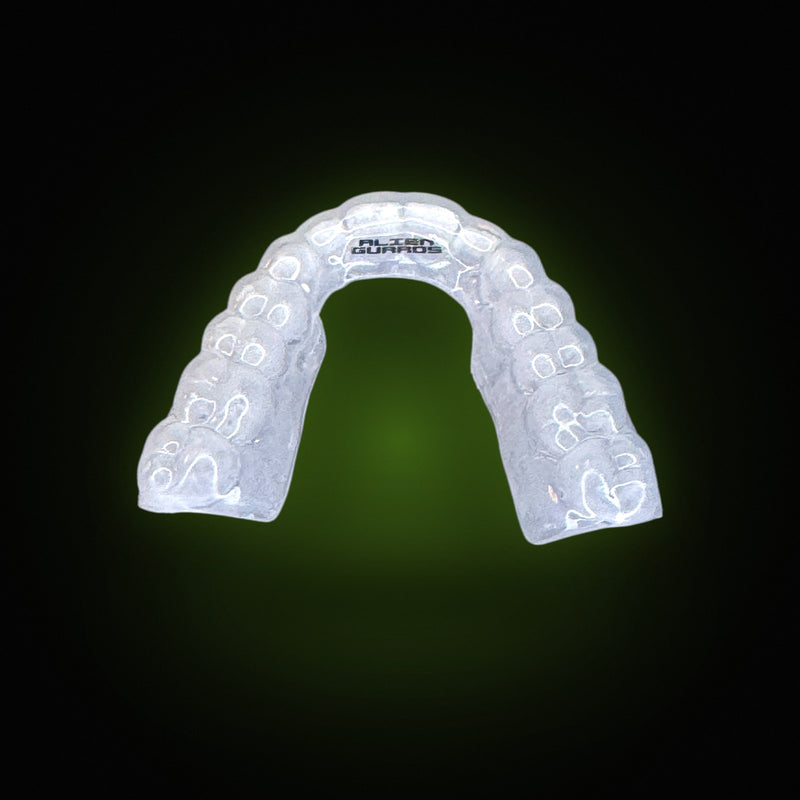
Judo looks like a sport where your mouth is safe. There are no punches or kicks, and putting a hand on your opponent's face is penalized. But judoka still bang heads in grip fights, land hard on throws and catch knees and elbows in newaza. Yet you rarely see a mouthguard at a judo tournament, and many players aren't sure whether one is even allowed.
This guide sums up what the International Judo Federation (IJF) rules say, how mouthguard use has been handled at U.S. and British events, what research shows about mouth and face injuries in judo, and how to pick a guard you'll actually keep in. It's general information, not legal or dental advice. Your tournament organizer and referee have the final say on the day.
The short answer
- Mouthguards are not required in judo. None of the IJF, U.S. or British judo rules we checked makes one mandatory.
- The IJF rulebook doesn't mention them by name. The August 2026 IJF Sport and Organisation Rules have no mouthguard rule. They do ban hard or metallic objects and require protective gear to be soft.
- They used to be banned. A 2020 study of Swiss judoka notes that mouthguards were not allowed in judo until June 2018.
- Local rules still vary. Some events allow a soft guard at the referee's discretion. Some referees ask players to take them out. Ask the organizer before you compete.
- Training is a different story. Most of your judo happens in class and randori, where wearing a guard is up to you and your club.
What the IJF rules say
The IJF's Sport and Organisation Rules (version of 14 August 2026) are the rulebook for IJF events and the base for most national rules. We searched the full document. It never mentions a mouthguard, gum shield or mouthpiece. The only rule about the mouth is a shido for taking the judogi in your mouth.
Three rules in the 2026 SOR matter for anything you wear:
- Protective gear must be soft. At judogi control, knee pads, elbow pads, shin guards and other protections are checked. They "cannot be composed of or have the slightest metallic or rigid element."
- Hard or metal objects are a grave infringement. The SOR lists "to wear or to have inside the judogi a hard or metallic object (covered or not)" under hansoku-make for acts against the spirit of judo, which means the athlete can't continue in the competition.
- Jewelry and piercings come out. Officials must make sure any head covering, jewelry or body piercings are removed and that wearable medical devices aren't a source of injury to either athlete.
A custom mouthguard is soft material with no metal in it, but the rulebook doesn't say how a referee should treat one. That gap is why practice differs from event to event.
A short history: banned, then allowed
Judo has been slower than other combat sports to accept mouthguards. A 2020 study in Dental Traumatology of 382 judoka from two clubs in Bern, Switzerland, states that "mouthguards were not allowed until June 2018." The authors called for more awareness of what they described as the recent authorization of mouthguards.
In the U.S., a November 2018 referee guide by an IJF-B referee and a national referee put it this way in its pre-match checklist: "USA Judo allows mouthpiece use in domestic competition ONLY. IJF & PJC events hosted in the USA do NOT allow the use of mouthpieces as they are conducted using the full IJF rules." Its example was the international day of the Junior Olympics. That guide is from 2018, and USA Judo's current sanctioning procedures don't address mouthguards, so check the event's own rules sheet.
Example: a British Judo-approved rule
Some events write the rule down. The IAPS Judo Championships 2024 rules, approved by British Judo for a school development event, say:
- "Gum shields may be worn providing that, in the opinion of the referee, the shield does not pose a risk of injury to either the player wearing the shield or their opponent."
- "The player wearing the shield is totally responsible for their own safety and where they consider necessary have received professional advice beforehand to establish that this is indeed the case."
- "The referee reserves the right to refuse the player the right to compete if they deem the shield to be inappropriate in any way."
That's a useful model of how many local events handle it: allowed, but the referee decides. Other events may say nothing at all, which leaves it to the referee on the mat.
Judo mouthguard rules at a glance
| Level | Mouthguard required? | What the rules say |
|---|---|---|
| IJF events (World Tour, Worlds, Olympics) | No | SOR (Aug 2026) doesn't mention mouthguards; protections must be soft; hard or metallic objects banned |
| U.S. domestic events | No | A 2018 U.S. referee guide said USA Judo allowed mouthpieces at domestic events only, not at IJF or PJC events in the U.S.; check the event rules sheet |
| British school development event (IAPS 2024) | No | Gum shields allowed if the referee considers them safe; referee can refuse |
| Club training and randori | No | Up to you and your club |
How to compete in a mouthguard without surprises
- Read the event rules sheet. Look for a line on mouthguards, gum shields or mouthpieces, and note whether the event runs on full IJF rules.
- Email the organizer if it's silent. Ask whether a soft custom mouthguard is allowed and save the reply.
- Tell the referee. Show your guard at the edge of the mat before your first match, the same way officials check other gear.
- Have a plan B. If a referee says no, you'll compete without it, so don't make the tournament the first day you've thought about it.
- Train in it first. The Faculty of Sport and Exercise Medicine UK suggests about a month of use before competition so you get used to breathing in it.
What research shows about judo mouth and face injuries
Judo research on teeth is thin, but a few studies are worth knowing:
- Swiss club study (2020). In the Bern study, about two thirds of the 382 judoka had suffered at least one traumatic injury. Face injuries were the second most common group (855), including 562 lip injuries, and 47 dental trauma incidents happened during judo. Nobody in the group wore a mouthguard, and acceptance of one was low (9.7%). Judoka with increased overjet (upper front teeth that stick out) and lips that don't close easily had the most dental injuries, and players who had worn fixed braces had significantly more lip injuries.
- Combat sports review (2020). A systematic review and meta-analysis of 27 studies estimated that about 30% of combat sports participants had a dentofacial injury. Judo had the lowest pooled rate of the sports studied, at 25.0%, and jiu-jitsu the highest. Lowest isn't low: that is still about one in four.
- U.S. emergency data (2022). A 20-year study of 2,845 head and neck injuries from U.S. emergency departments found judo and jiu-jitsu were the martial arts most likely to cause neck injuries, and judo injuries were more likely to lead to hospital admission than those from other martial arts.
These are surveys and records, so treat the numbers as estimates. A mouthguard protects teeth, lips and cheeks. It is not shown to prevent concussions or neck injuries. More in do mouthguards prevent concussions?
Why fit matters more in judo
If a guard is legal but nobody wears it, it isn't doing anything. In judo, the usual complaints are breathing and talking, plus the fear of losing a loose guard on the mat. A fit that stays put fixes most of that.
The FSEM position statement on mouthguards (2025) says athletes at risk of mouth injury should wear a mouthguard that fits well throughout training and competition, that custom guards fitted by a dental professional offer the highest level of protection against dental trauma, and that a guard should at minimum stay in place with your jaws clenched, while breathing and with your mouth open. The American Dental Association lists martial arts among the contact sports where mouthguard use is recommended, and says an ideal guard is properly fitted, covers all remaining teeth on one arch (usually the upper) and stays in place comfortably and securely.
For a judo player, that means:
- Thin and low-profile, so you can breathe through grip fights and long newaza exchanges.
- Retained without biting down, so it doesn't pop out when you get thrown or turned over.
- Soft, with nothing hard or metal on it. No charms, tabs or add-ons.
Related reading: how should a mouthguard fit?, why does my mouthguard fall out?, can you breathe and talk with a mouthguard? and mouthguard gag reflex.
Junior judoka
Judo is a big kids' sport, and the IAPS rule above came from a school event. The FSEM notes that mouthguards for young athletes should allow for changes in the position and number of teeth and for orthodontic treatment. A custom guard made from an impression of a child's mouth today may need replacing as teeth come in. More in our kids and youth mouthguards guide, what age kids should start wearing a mouthguard and how often to replace a mouthguard.
Judo with braces or a retainer
The Bern study found more lip injuries in judoka who had worn fixed braces, which makes sense: brackets and wires sit right behind your lips. None of the judo rules above has a braces rule.
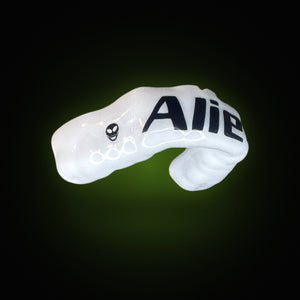
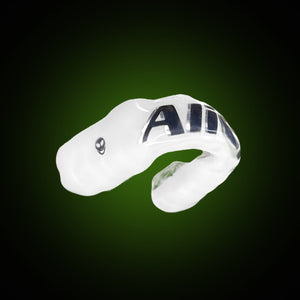
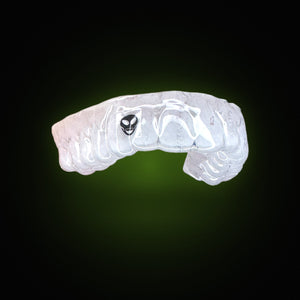
Athletes with braces can get AlienGuards, but don't use our at-home impression kit over braces, because it can damage them. Have your dentist take an impression or 3D scan, then ship it to us or email it to impressions@alienguards.com. More in mouthguards for orthodontic patients. If you wear a removable retainer or clear aligners, take them out for randori and wear a sports guard instead; see can you wear a mouthguard with a retainer?
Which AlienGuard for judo?
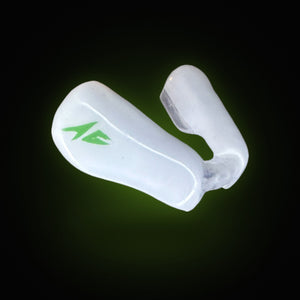
Our pick for judo is NanoBite. At 4 mm it is our thinnest, lowest-profile guard and the best of our models for breathing and talking. We put judo with jiu-jitsu, wrestling (see our custom wrestling mouthguards guide) and other grappling, where hits are less direct than in boxing or MMA. It's the same guard we recommend for BJJ and wrestling, and it's in our BJJ and grappling mouthguards collection. More in how thick should a mouthguard be?
Also train MMA or a striking art? Origin and Origin Pro are our 5 mm combat guards for boxing, MMA, Muay Thai, kickboxing, karate and taekwondo. Some athletes keep a combat guard for striking days and a NanoBite for the mats; see our MMA and BJJ mouthguard guide. PowerBite is for powerlifting and weightlifting, not judo. AlienGuards makes upper mouthguards; see upper vs. lower mouthguards.
Keeping your guard clean on the mat
Mats and shared dojo bags are hard on hygiene. The ADA's MouthHealthy mouthguard tips say to rinse your guard before and after each use or brush it, clean it regularly in cool, soapy water, store it in a sturdy case with vents, and never leave it in the sun or in hot water. Keep it in its case between matches, not on the mat or tucked in your judogi. Full routine: how to clean and care for your custom mouthguard.
Ordering and club orders
Every AlienGuard is made from your own impression. We ship an at-home impression kit, and your custom guard is made from the impression you send back. If you have a tournament coming up, see how long a custom mouthguard takes and order early enough to train in it. Step-by-step help is on our impression instructions page.
Dojos and clubs with 5 or more athletes get 20% off through team orders, including NanoBite, with your club logo plus athlete names or numbers. Metallic, satin and holographic text colors are free. See custom team and gym mouthguards for how club orders work.
Related rules: mouthguard rules by sport, BJJ mouthguard rules, wrestling mouthguard rules, karate and taekwondo mouthguard rules and MMA mouthguard rules. If a tooth gets knocked out, see knocked-out tooth first aid.
Judo mouthguard FAQ
Can you wear a mouthguard in judo?
Usually, yes. Mouthguards aren't required, and the IJF rules don't mention them. Many local events allow a soft guard if the referee considers it safe, but practice varies, so ask the organizer and show the referee before your first match.
Are mouthguards allowed at IJF events?
The August 2026 IJF Sport and Organisation Rules don't mention mouthguards. They ban hard or metallic objects and require protective gear to be soft. A 2020 study says the old ban ended in June 2018. If you're entered in an IJF event, confirm with your national federation or the event organizer.
Does USA Judo allow mouthguards?
A 2018 U.S. referee guide said USA Judo allowed mouthpieces in domestic competition only, not at IJF or PJC events held in the U.S. We didn't find a current USA Judo document on mouthguards, so check the rules sheet for your event.
Why don't Olympic judoka wear mouthguards?
According to a 2020 study, mouthguards were not allowed in judo until June 2018, and the current IJF rules still don't address them. Habit and tradition play a part too: in the 2020 Swiss study, none of the 382 judoka wore one.
Can a referee make me take my mouthguard out?
Yes, at some events. The British Judo-approved IAPS 2024 rules, for example, let the referee refuse a gum shield they consider inappropriate. Ask ahead and be ready to compete without it.
Should I wear a mouthguard for randori?
It's your choice and your club's. The FSEM recommends a well-fitting guard for training and competition for any athlete at risk of mouth injury, and most of your mat time is in class.
Which AlienGuard is best for judo?
NanoBite, our thinnest guard at 4 mm and the best of our models for breathing and talking. If you also do MMA or other striking, use Origin or Origin Pro for those sessions.
Can I wear a mouthguard in judo with braces?
Yes. None of the judo rules above bans it. For a custom guard, have your dentist take the impression or 3D scan instead of using our at-home kit, then ship it to us or email it to impressions@alienguards.com.
Sources: International Judo Federation, Sport and Organisation Rules (14 August 2026); Kitaura and Rayner, Refereeing Judo (November 2018); IAPS Judo Championships 2024 rules (British Judo approved); Bruggesser et al., Dental Traumatology 2020; Polmann et al., Dental Traumatology 2020; Stanbouly et al., Journal of Oral and Maxillofacial Surgery 2022; Faculty of Sport and Exercise Medicine UK, Mouthguards position statement (2025); American Dental Association, Athletic mouth protectors (mouthguards); ADA MouthHealthy, Mouthguards. Checked November 15, 2026.