
Wrestling Mouthguards: Choosing a Custom Guard
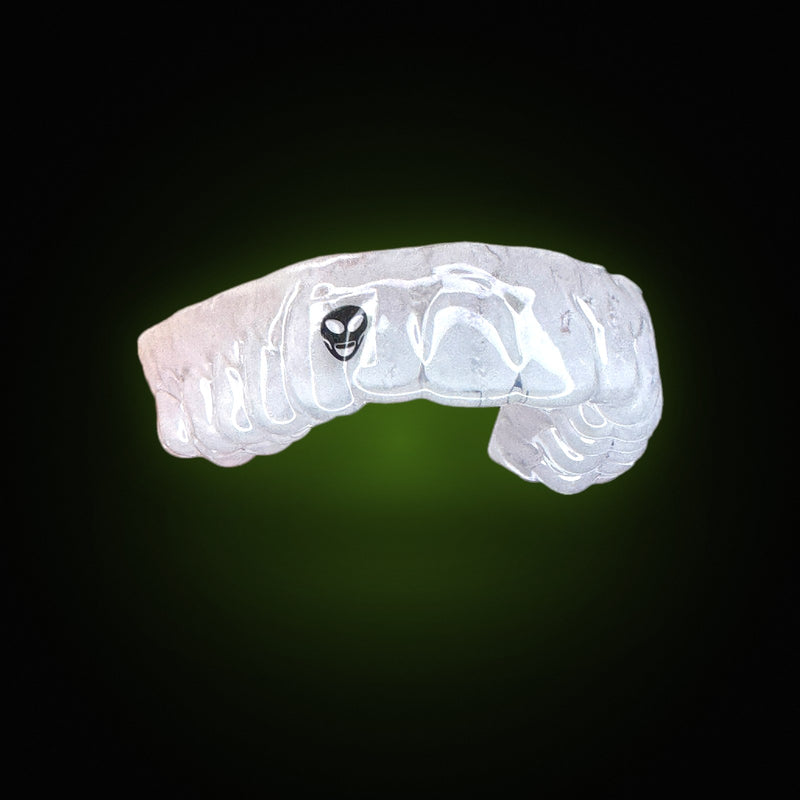
Wrestling is close contact from the first whistle: takedowns, scrambles, mat returns and heads, elbows and knees all within inches of your face. Mouthguards help protect against chipped, cracked or knocked-out teeth in sports with a high risk of falls or contact. In wrestling, the guard also has to let you breathe hard through every period. This guide covers how to pick a wrestling mouthguard, why we recommend NanoBite, and how teams order.
Do you need a fitted mouthguard for wrestling? Only some wrestlers must wear one. Under NFHS high school rules, wrestlers with braces must wear a mouthguard that covers all areas of the braces, and the rule recommends a properly fitted one made from a model of an impression. NCAA rules and USA Wrestling's folkstyle video-challenge events recommend a mouthguard rather than require one. A custom guard made from your own impression stays in through scrambles because of its fit instead of being held in by biting.
Wrestling mouthguard rules at a glance
- NFHS high school: a mouthguard is not required for most wrestlers, but wrestlers with braces must wear one that covers all areas of the braces. Ear guards are required (Rule 4-1-4).
- NCAA college: a mouthguard is recommended, not required. Hard equipment such as braces must be covered and padded, and ear guards are required during live wrestling.
- USA Wrestling folkstyle: at video challenge events a mouthguard is not required but is strongly recommended.
- UWW international: the January 2026 edition of the rules has no mouthguard rule, so check the event.
Rule numbers and sources are in wrestling mouthguard rules.
What the rule books say in more detail
NFHS braces rule (Rule 4-2-6). A wrestler with braces or a special orthodontic device "shall be required to wear a tooth and mouth protector." As quoted by the Utah High School Activities Association from the rule book, a legal protector has an occlusal part (protecting and separating the biting surfaces) and a labial part (protecting the teeth and supporting structures), covers the teeth and all areas of the braces with adequate thickness, and covers upper and lower teeth if there are devices on both. A lip bumper or a strip that only covers the brackets does not meet that description. The rule also recommends a properly fitted protector made from a model of an impression of the teeth and braces. NFHS listed 4-2-6 among its 2026-27 wrestling rule changes as a clarified description of an intraoral protector, so check with your state association if you are unsure your guard qualifies.
NCAA men. Rule 1, Section 7, Article 2 says: "It is recommended that all wrestlers wear a protective mouth guard." The April 2025 rules committee recommended making a mouth guard mandatory to help prevent oral and dental problems, but the committee rescinded that change on May 27, 2025. Ear guards are required any time live wrestling takes place, including practice. Women's college wrestling and other associations have their own books.
USA Wrestling and UWW. USA Wrestling's modifications for folkstyle events with video challenge say mouthguards are not required and are strongly recommended for wrestlers wearing braces; headgear is also strongly recommended rather than required there. Other events can publish their own sheets. The January 2026 UWW International Wrestling Rules cover the singlet and banned items such as rings, bracelets and piercings, but have no mouthguard rule. Not required is not the same as banned: you can still wear one unless your event says otherwise.
Ear guards are separate. Under NFHS Rule 4-1-4, ear guards must be designed for wrestling, rigid and padded, give adequate ear protection, pose no hazard to the opponent and have an adjustable locking device. Ear guards and a mouthguard protect different things, so one does not replace the other.
What the research says about wrestling mouth injuries
Wrestling isn't a striking sport, but heads, elbows, knees and the mat still hit the face.
- Japan: a 2026 survey of 500 wrestlers at the 2022 National Sports Festival found 89% reported a history of injuries. The most common mouth injuries were lip cuts (86%), tongue cuts (67%), tooth fractures (30%) and tooth dislocations (11%). Adult wrestlers and those with longer careers reported more dental injuries, and the authors called for early mouthguard use.
- U.S. emergency departments: a 2026 analysis of national emergency department data from 2014 to 2023 estimated wrestling accounted for 50.7% of the head and face injuries it counted across boxing, wrestling and martial arts, with ages 10 to 19 making up over 60% of all cases. This counts injuries, not rates, so it partly reflects how many people wrestle.
- Sweden: an older 1994 study of 26 champion wrestlers, none of whom wore mouth protectors regularly, found more frequent and severe injuries to the upper front teeth than in a matched control group.
These are surveys and injury counts, so they don't prove a mouthguard would have prevented each injury. The American Dental Association lists wrestling among the sports where it recommends a mouthguard. If a tooth is knocked out on the mat, see knocked-out tooth first aid.
Do wrestlers wear mouthguards?
Many don't. Most wrestlers aren't required to wear one, and surveys of school athletes point to forgetting it and comfort as the usual reasons for skipping it. The first two surveys are older and mix several sports, so read them as a picture of habits rather than a current wrestling-only rate:
- Minnesota high schools (1996–97 season): 72.3% of the wrestlers surveyed reported at least one mouth or face injury during the season, more than the soccer (27.6%) and basketball (55.4%) players in the same study. Only 6% of the athletes across the three sports said they used a mouthguard, even though half believed mouthguards prevent injuries. Athletes with fixed braces were at higher risk in all three sports (Kvittem and colleagues, 1998).
- Houston middle and high schools (2016): in a survey of 503 student-athletes across nine sports, including wrestling, 56% did not have a mouthguard. The most common reasons for not wearing one were forgetting it and a lack of comfort (Miller and colleagues, 2016).
- Japan (2022 National Sports Festival): in the 500-wrestler survey above, adults and wrestlers with longer careers reported more dental injuries, and the authors called for early mouthguard use and injury-prevention education (Katano and colleagues, 2026).
Comfort is the part you can fix. A guard that is bulky, loose or hard to breathe through ends up in the bag. A slim guard made from your own impression is easier to keep in for a whole practice, which is the point of owning one.
Practice and match-day checklist
- Wear it in live goes, not just matches. Most mat time is practice, and the face takes the same knees and elbows there.
- Braces on both arches? The NFHS rule calls for upper and lower teeth to be covered if there are devices on both. Talk to your dentist and email support@alienguards.com before you order.
- Keep it in a vented case in your bag, not loose with your shoes and headgear, and away from a hot car.
- Check the fit after weight cuts and between seasons. If it rocks or needs clenching to stay in, the fit has changed. Replace it every year, or sooner if it is damaged or worn.
- Don't cut it down to breathe easier. Trimming at home removes the material that holds it in place. A thinner custom guard is the better fix.
- Bring your ear guards too. They are required under NFHS and NCAA rules, and a mouthguard does not replace them.
The ADA's MouthHealthy site says stock guards "can be bulky and can make breathing and talking difficult," which is the usual reason wrestlers give for skipping a guard. Bulky guards are also more likely to make you gag.
How to choose the best mouthguard for wrestling
There is no single best wrestling mouthguard for everyone, but the good ones share a few traits:
- It stays in without biting down. In a scramble you can't keep your jaw clenched to hold a loose guard in place. A guard formed on a model of your own teeth holds by its fit.
- It is slim enough to breathe hard. Wrestling is grappling, not striking, so you don't need a thick boxing-style guard. We make 4 mm guards for wrestling and keep 5 mm for boxing, MMA and other striking sports.
- It lets you hear and answer your coach. Pick a guard you can talk through. Of our models, NanoBite is the best for breathing and talking.
- It covers your braces if you have them. Under NFHS rules a wrestler with braces needs a guard that covers all areas of the braces, upper and lower if there are devices on both. Your dentist takes the impression for a braces guard.
- You will actually wear it. The best guard is the one in your mouth in live goes, not the one in your bag.
For wrestling, that adds up to NanoBite, covered below. For what a good fit feels like, see how a mouthguard should fit.
Stock, boil-and-bite or custom?
Stock guards are pre-formed and offer basic protection. Boil-and-bite guards are softened in hot water and bitten into for a closer fit. Custom-fit guards, like AlienGuards, are made from an impression of your own teeth, which gives the most comfortable and secure fit. A custom guard does not slip or fall out, and it is easier to keep in for a full practice. Custom guards usually cost more than over-the-counter options. You are paying for that fit, comfort and durability. More on the difference: why custom mouthguards outperform boil-and-bite. More on why fit matters. Guard keeps slipping? See why does my mouthguard fall out?
Our pick for wrestling: NanoBite
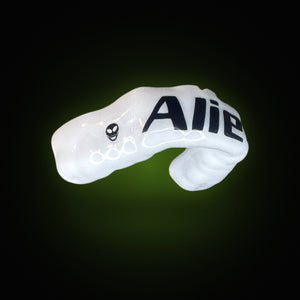
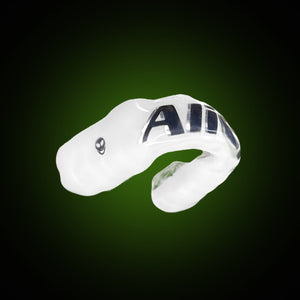
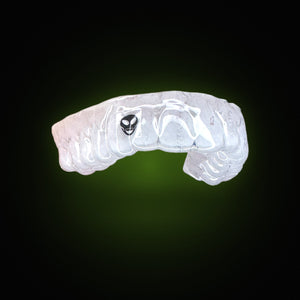
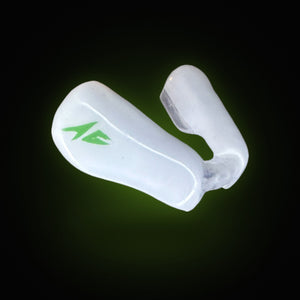
NanoBite is the AlienGuard we recommend for wrestling. It is our ultra-slim, 4 mm, lowest-profile guard and the best of our models for breathing and talking, so you can breathe hard in a scramble and still hear and answer your coach. It is the same guard we recommend for football and team sports like hockey and basketball. Also play another sport? See how to choose the right mouthguard for your sport. More in basketball and dental health.
- Base colors: Clear, White or Black.
- Custom text: up to 3 characters, such as your jersey number or initials, in a choice of 16 fonts and a range of text colors, including metallic and satin finishes.
- Extras: Impression Storage keeps your model on file and takes 20% off future reorders. Expedited Lab Service (3 Day) is available if you are working to a deadline.
See every NanoBite option in the NanoBite collection.
How thick should a wrestling guard be?
Choose by how hard you get hit, not by the size of your mouth. Our sizing and fit guide puts wrestling with grappling and other sports where hits are less direct, the group we make 4 mm guards for. Our 5 mm combat guards are for boxing, MMA, Muay Thai and other sports with heavy, direct strikes. If you also train MMA or kickboxing, Origin and Origin Pro are our combat guards. See the MMA mouthguard guide and the model comparison. Also compete in jiu-jitsu or judo? See BJJ mouthguard rules and judo mouthguard rules. Moving into MMA? See MMA mouthguard rules.
Wrestlers who lift
NanoBite also works for lifting. If heavy strength work is a big part of your training, PowerBite is our guard built for powerlifting and weightlifting; our weightlifting mouthguard guide compares PowerBite and NanoBite for the gym. For what studies show about mouthguards under a heavy bar, see weightlifting mouthguard research.

Braces and dental work
Every order requires a liability waiver. Athletes with braces can get AlienGuards, but their dentist needs to take the impression instead of using our at-home kit, so the braces don't get damaged. Your dentist can take an impression or 3D scan, then ship it to us or email it to impressions@alienguards.com. See our full guide to mouthguards with braces. Under NFHS rules, high school wrestlers with braces must wear a mouthguard that covers all areas of the braces, upper and lower if there are devices on both; see wrestling mouthguard rules for what it has to cover. Boil-and-bite guards are molded by biting into softened plastic around brackets and wires, which gives a rough fit and is a poor choice over braces. Teeth move during orthodontic treatment, so ask your dentist how often to check the fit. Sport-by-sport braces rules are in mouthguard rules with braces. For other sports, see mouthguard rules by sport. There is no age limit, but younger athletes' teeth are still changing, so plan to replace their guard more often. Parents can read more in our guide to custom mouthguards for kids and youth athletes. For other common misconceptions, see mouthguard myths debunked.
Ordering for a wrestling team
Coaches, clubs and schools can order through the team orders:
- 20% off mouthguards and merch (all models, including NanoBite and PowerBite), with a minimum order of 5 mouthguards.
- On-site fitting to help every athlete take a good impression (minimum order and location apply).
- Models kept on file for quick replacements (minimum order; athletes 14+ without braces).
More on team programs: custom mouthguards for gyms and teams. Wrestling clubs and shops that want to resell guards can apply to our wholesale and partnership program.
How ordering works
- Build and order. Pick your base color and custom text. We ship you an impression kit.
- Take your impression. Follow the impression guide at home, or read how to take your impression without a dentist visit. It takes about 10 minutes, and the putty sets in 2 minutes 30 seconds. Email us a photo of the impression, then mail it back to our lab.
- We make it. Your guard is formed on a model of your bite, pressure-formed from dental-grade material and finished by hand in the USA. It is crafted within 10–14 business days after we receive a good impression, then shipped with tracking.
Your order shows as fulfilled when the finished guard ships, not when the impression kit ships. Accessory-only orders (case, impression kit, putty) ship in a couple of business days. To plan around the start of the season, see how long a custom mouthguard takes.
Worried a guard will slow your breathing in a hard match? Read can you breathe and talk with a mouthguard? Not sure you need one at all? Read where mouthguards are required and recommended. For why wrestlers wear a 4 mm guard, see how thick a mouthguard should be.
Wrestling mouthguard FAQ
Which AlienGuard is best for wrestling?
NanoBite. It is our slimmest guard and the best of our models for breathing and talking.
Do wrestlers wear mouthguards?
Some do, but many don't, because most wrestlers aren't required to. NFHS high school rules require one only for wrestlers with braces, while NCAA rules and USA Wrestling's folkstyle video-challenge events recommend one. Surveys of school athletes have found low mouthguard use, with forgetting and comfort the usual reasons. A slim custom guard is easier to keep in.
Is a mouthguard required in high school wrestling?
Only for wrestlers with braces. NFHS rules require those wrestlers to wear a mouthguard that covers all areas of the braces. For everyone else it is optional but recommended. See wrestling mouthguard rules.
Do college wrestlers have to wear a mouthguard?
No. NCAA rules recommend a mouthguard but do not require one. Hard equipment like braces must be covered and padded.
Does a wrestling mouthguard have to cover upper and lower teeth?
If you have braces on both, yes. Under the NFHS rule text quoted by the UHSAA, the protector must cover the teeth and all areas of the braces, including upper and lower teeth when there are devices on both. Your dentist takes the impression or 3D scan for a braces guard.
What mouth protection is not allowed for a wrestler with braces?
Anything that only covers the brackets. The NFHS rule text quoted by the Utah High School Activities Association says a tooth and mouth protector must have an occlusal part (protecting and separating the biting surfaces) and a labial part (protecting the teeth and supporting structures), and must cover the teeth and all areas of the braces with adequate thickness. A lip bumper or a strip that only shields the brackets does not meet that description. If there are braces on both the upper and lower teeth, the protector has to cover both. NFHS listed this rule among its 2026-27 wrestling rule changes, so check with your state association if you are unsure your guard qualifies.
Are mouthguards allowed in international wrestling?
Yes. The January 2026 UWW International Wrestling Rules have no mouthguard rule, so one is not required, but not required is not the same as banned. You can wear one unless your event says otherwise, so read the event information before you travel.
Can I wear one with braces?
Yes. Your dentist needs to take your impression instead of using our at-home kit, so your braces don't get damaged. Your dentist can take an impression or 3D scan, then ship it to us or email it to impressions@alienguards.com.
Is there a size chart?
No. Your guard is made from your own impression. The kit includes trays in more than one size. S and M trays use one set of putty, and L trays use two.
How do I clean it?
Rinse it in cool water before and after each use, and brush it gently with a soft toothbrush and mild soap, not toothpaste. For a deeper clean, use an effervescent denture or retainer tablet in cool water. Keep it away from heat. See how to clean and care for your mouthguard.
How often should I replace it?
We recommend every year, or sooner if it is damaged or worn. With Impression Storage you can reorder without a new impression.
More answers are in the FAQ. Football too? Read the football mouthguard guide. Rugby? See the rugby mouthguard guide. Prices for every model are in how much a custom mouthguard costs.