


Wrestling Mouthguard Rules: Braces, Ear Guards and NFHS
Do wrestlers have to wear a mouthguard? In high school wrestling, the answer depends on one thing: braces. Ear guards, on the other hand, are required for everyone. This guide covers what the National Federation of State High School Associations (NFHS) rules say about mouthguards and ear guards, what a legal guard has to cover if you wear braces, and how to choose a guard you'll actually keep in for a full match.
Your state association, league or tournament can add rules of its own, and NFHS updates its rule book every season. Check the current book and ask your coach or officials before you compete.
Is a mouthguard required in high school wrestling?
Only if you have braces or another orthodontic device. NFHS wrestling Rule 4-2-6 says each contestant who has braces or a special orthodontic device on their teeth "shall be required to wear a tooth and mouth protector." The Utah High School Activities Association put it plainly in a memo to coaches quoting the rule: tooth and mouth protectors "are not optional for those with orthodontic devices."
If you don't wear braces, the rule doesn't require a mouthguard, but that doesn't make one a bad idea. Mouthguards help protect against chipped, cracked or knocked-out teeth in sports with a high risk of falls or contact, and wrestling has plenty of both: takedowns, scrambles and mat returns with heads, elbows and knees inches from your face.
What the braces rule requires
The rule doesn't just say "wear a mouthguard." As quoted by the UHSAA from the NFHS rule book, a legal tooth and mouth protector:
- includes an occlusal part (protecting and separating the biting surfaces) and a labial part (protecting the teeth and supporting structures),
- covers the teeth and all areas of the braces or orthodontic device with adequate thickness, and
- covers upper and lower teeth if devices are on both.
So a lip bumper or a strip that only covers the brackets doesn't meet the description. The rule also recommends the protector be properly fitted and either made from a model of an impression of the wrestler's teeth and braces, or fitted by impressing the teeth and braces into the guard itself.
NFHS listed 4-2-6 among its 2026-27 wrestling rule changes, describing it as a clarified, comprehensive description of an intraoral mouth and tooth protector. The full new wording is in the paid rule book, so check with your state association or officials if you're unsure your guard qualifies.
Getting a custom guard with braces
Athletes with braces can get AlienGuards, but your dentist needs to take the impression instead of using our at-home kit, so your braces don't get damaged. Your dentist can take an impression or 3D scan, then ship it to us or email it to impressions@alienguards.com. Every AlienGuard is formed on a model of your bite.
If you have braces on both your upper and lower teeth, remember the rule calls for both to be covered. Talk to your dentist, and email support@alienguards.com before you order so we can help you plan. More in can you wear a mouthguard with braces?
Teeth move during orthodontic treatment, so ask your dentist how often to check the fit.
Ear guards (headgear) are required
Under NFHS Rule 4-1-4, every wrestler has to wear ear guards. The NFHS wrestling uniform rules say they must be designed by the manufacturer for wrestling, rigid and padded, and provide:
- adequate ear protection,
- no injury hazard to the opponent, and
- an adjustable locking device so they don't come off or turn on your head.
Ear guards and a mouthguard protect different things, so wearing one doesn't replace the other.
What makes a good wrestling mouthguard
Wrestlers who skip a mouthguard usually say the same thing: it makes breathing hard. That's a fair complaint about bulky guards. The ADA's MouthHealthy site says stock guards "can be bulky and can make breathing and talking difficult." In wrestling, a guard should:
- Let you breathe hard through every period, including scrambles and the third period.
- Stay put without clenching, so you're not fighting the guard while you fight your opponent.
- Be thin where it can be. Wrestling sits with grappling and other sports where hits are less direct, the group we make 4 mm guards for.
More on this in can you breathe and talk with a mouthguard?
Our pick for wrestling: NanoBite
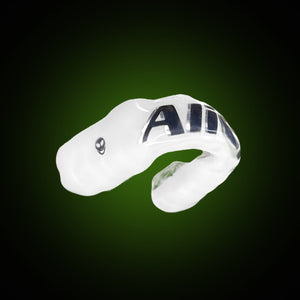
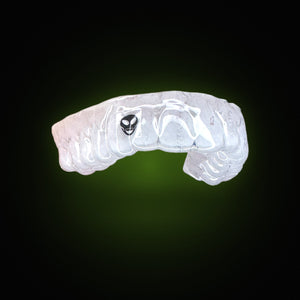
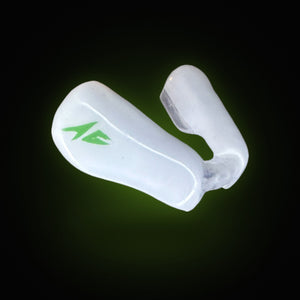
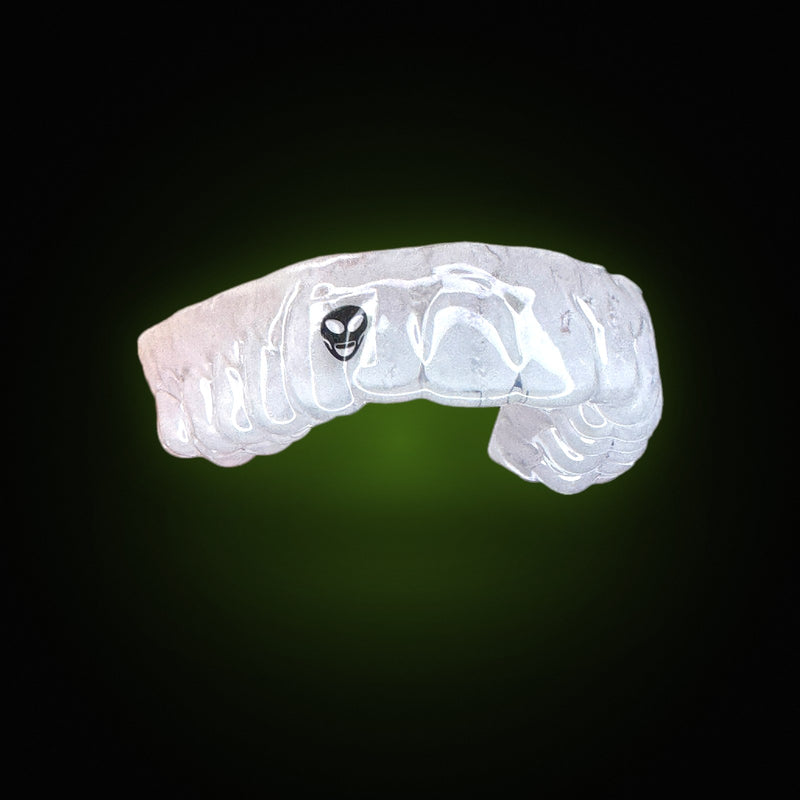
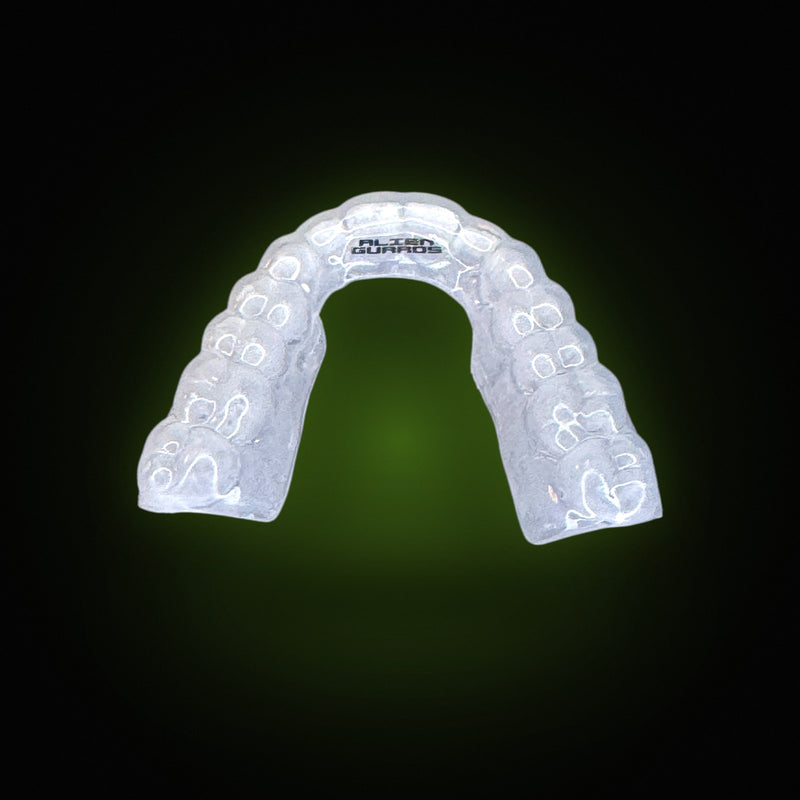
NanoBite is the AlienGuard we recommend for wrestling. It is our ultra-slim, 4 mm, lowest-profile guard and the best of our models for breathing and talking, so you can breathe hard in a scramble and still hear your coach. It is the same guard we recommend for BJJ (see our MMA and BJJ mouthguard guide). NanoBite comes in Clear, White or Black, with custom text up to 3 characters, such as your initials or a number.
For a full breakdown, read our wrestling mouthguards guide.
How ordering works
Without braces, you build your guard, we ship you an at-home impression kit, and you take your impression (it takes about 10 minutes, and the putty sets in 2 minutes 30 seconds). Your custom mouthguard is crafted within 10–14 business days after we receive a good impression, then shipped with tracking. With braces, your dentist sends the impression or scan instead.
Wrestling coaches, clubs and schools ordering 5 or more guards get 20% off through our team & gym orders, including NanoBite.
Parents of younger wrestlers can also read our guide to custom mouthguards for kids and youth athletes.
Related reading for other sports: boxing mouthguard rules, MMA mouthguard rules, football mouthguard rules and hockey mouthguard rules. If a guard keeps slipping in practice, see why does my mouthguard fall out?
Wrestling mouthguard rules FAQ
Do you have to wear a mouthguard in high school wrestling?
Only if you have braces or another orthodontic device. NFHS Rule 4-2-6 requires those wrestlers to wear a tooth and mouth protector. Your state association or event can have its own rules, so check with your coach.
Does a wrestling mouthguard have to cover both upper and lower teeth?
Under the rule text quoted by the UHSAA, the guard must cover the teeth and all areas of the braces, including upper and lower teeth if you have braces on both.
Is headgear required in high school wrestling?
Yes. NFHS Rule 4-1-4 requires wrestling ear guards that are rigid and padded, protect the ears, pose no hazard to the opponent and have an adjustable locking device.
Can I get a custom wrestling mouthguard with braces?
Yes. Your dentist takes the impression or 3D scan instead of using our at-home kit, then ships it to us or emails it to impressions@alienguards.com.
Which AlienGuard is best for wrestling?
NanoBite. It is our slimmest guard at 4 mm and the best of our models for breathing and talking.