

Why Custom Mouthguards Outperform Boil-and-Bit
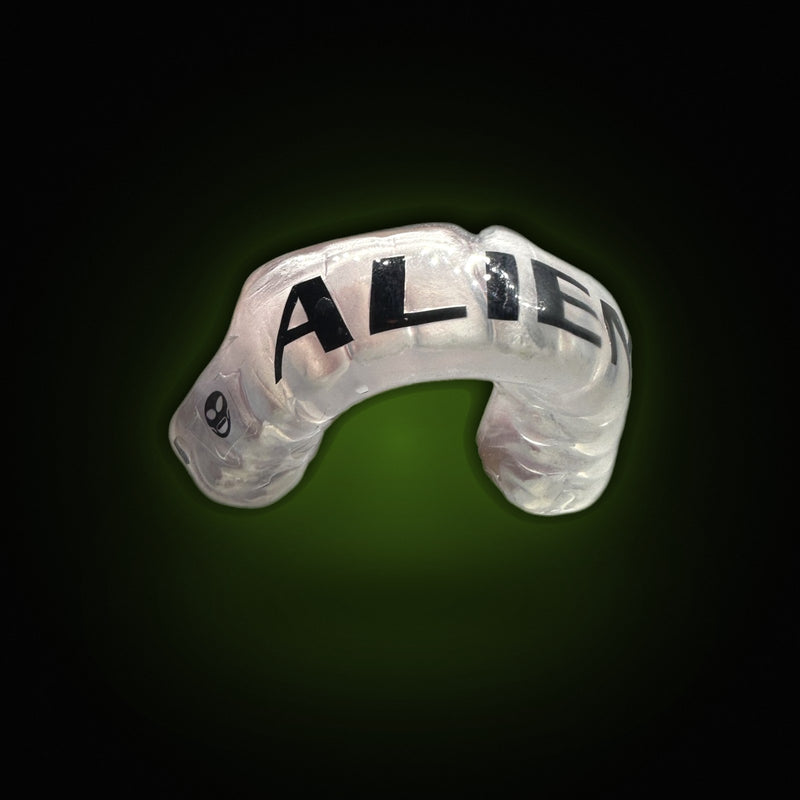
Stock, boil-and-bite and custom are the three types of athletic mouthguard the American Dental Association (ADA) describes. A custom guard is formed on a model of your own teeth, so it can stay in place without you keeping your mouth shut. A boil-and-bite guard is softened in hot water and shaped by your bite, so the fit depends on how well that molding goes. This guide compares the types using the ADA's descriptions and shows how an AlienGuard is made from your impression.
The three types of mouthguards
The ADA's guidance on athletic mouth protectors groups mouthguards into three categories. They are often made from materials such as ethylene vinyl acetate (EVA), but they differ in how they are fitted and how well they stay put. More in what mouthguards are made of.
Stock (ready-made) guards are the most common and usually the least expensive. They come in a limited range of sizes, are not adapted to your mouth, and you have to keep your mouth shut to hold them in place. The ADA calls them the least effective type because of their generic design, improper fit and inadequate retention. The ADA's MouthHealthy consumer page adds that stock guards can be bulky and can make breathing and talking difficult. Bulk and length are also common reasons a guard makes you gag.
Boil-and-bite guards are widely sold at sporting goods stores and drugstores. According to the ADA, you soften one in hot water (about 15 seconds), let it cool briefly, then shape it with bite pressure and your tongue, fingers and lips. MouthHealthy says this type may fit better than a stock guard. The ADA also says you should follow the manufacturer's instructions, because imprecise shaping can leave a poorly fitted device. For what a good fit looks like, see how a custom fit helps you play.
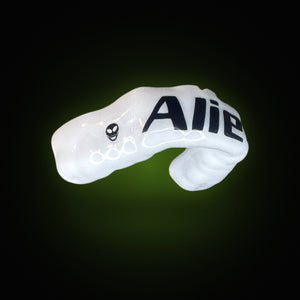
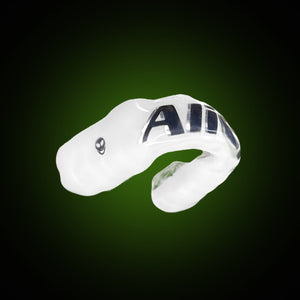
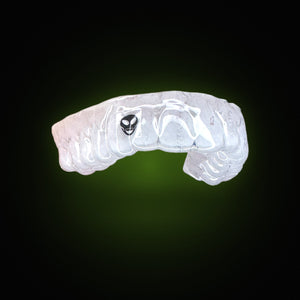
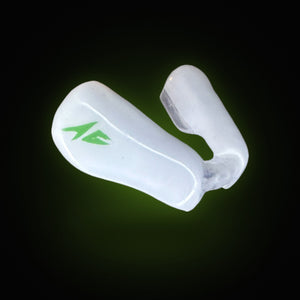
Custom guards are fabricated in a dental office or a laboratory from an impression of your teeth, using vacuum-forming or pressure-forming. The ADA says they can be fully customized and provide an optimal fit, but they are the most expensive option and typically require dental visits. MouthHealthy puts it simply: "The best mouthguard is one that has been custom made for your mouth by your dentist." AlienGuards are laboratory-made custom guards. You can take the impression at home with our kit if you don't wear braces, or your dentist can take it.
What the ADA says about fit and protection
The ADA Councils recommend wearing a properly fitted mouthguard to help reduce the incidence and severity of sports-related dental injuries. An ideal mouthguard, they write, should be accurately adapted to your mouth, stay in place comfortably and securely, be relatively easy to clean, absorb impact energy, and cover the remaining teeth on one arch, usually the upper teeth.
Custom guards match that description most closely because they are formed on your impression. A 1994 comparison study cited by the ADA (DeYoung, Robinson and Godwin in the Journal of the American Dental Association) found that dentist-made custom mouthguards provided improved comfort and wearability versus self-adapted guards. Custom guards are "considered by many to be the most protective option," the ADA says, and other mouthguards can still be effective if they are properly made and consistently worn. Some boil-and-bite products carry the ADA Seal of Acceptance. If a custom guard is out of reach, MouthHealthy still recommends wearing a stock or boil-and-bite guard rather than nothing. Whatever you wear, see how often to replace your mouthguard.
A 2019 systematic review and meta-analysis cited by the ADA found that mouthguard users were 82% to 93% less likely to suffer dentofacial injuries than non-users. Boil-and-bite guards were the most commonly used type in those studies, and the type of mouthguard may influence the outcome. That figure compares people who wear a mouthguard with people who do not; it is not a custom-versus-boil-and-bite score. A mouthguard does not prevent every injury, and it does not prevent concussions. The ADA says evidence that mouthguards reduce concussion rates is mixed and less consistent than the evidence for dental and orofacial injuries. We cover the studies in do mouthguards prevent concussions?
The ADA recommends a properly fitted mouthguard in contact and collision sports, including basketball, boxing, football, hockey, lacrosse, martial arts, rugby, soccer, water polo and wrestling, and in limited-contact activities such as volleyball, gymnastics and weightlifting. Requirements are narrower: the NFHS (high school) requires mouthguards in football, field hockey, ice hockey and lacrosse, and for wrestlers with braces. The NCAA (college) requires them in football, field hockey and lacrosse; its current ice hockey rules book (Rule 9.5) recommends one rather than requiring it. Compare sports in mouthguard rules by sport, or read how mouthguards protect teeth from chips and cracks and knocked-out tooth first aid.
What head-to-head studies show
A handful of studies have put custom and boil-and-bite guards side by side. They are small, and most measure fit, comfort and material thickness rather than injuries on the field, but they point the same way.
- Material thickness: in a 1994 lab study in the Journal of Prosthetic Dentistry (Park and colleagues), material got thinner during fitting in every guard tested. Custom-fabricated guards lost 25% to 50% of their thickness, while mouth-formed boil-and-bite guards lost 70% to 99%. The same study found that thicker material absorbs more energy, so the authors stressed keeping enough thickness over the biting surfaces after the guard is made.
- Usability: a 2014 study in Dental Traumatology (Gawlak and colleagues) compared five types of custom guards with three types of boil-and-bite guards, 168 devices in all. Athletes rated the usability of the custom guards much higher.
- Breathing and performance: in a 2012 randomized trial of 18 college athletes (Duddy and colleagues), a custom guard had no detrimental effect on strength and performance tests, including a 1,600 m run, and athletes said it was comfortable and didn't make breathing hard. The over-the-counter boil-and-bite guard didn't perform as well, and athletes said it was uncomfortable and made breathing difficult.
- Comfort over time: a 2024 randomized trial (Doğan and colleagues) gave 60 professional basketball players a boil-and-bite guard or a 3 mm or 5 mm custom guard, with data analyzed for 48. Boil-and-bite guards scored lowest overall, including for stability, comfort, speaking and breathing at different check-ins. The two custom thicknesses didn't differ significantly.
None of these studies proves that a custom guard prevents more broken teeth in real games. What they show is the practical case for custom: a guard formed on your own teeth keeps more of its thickness, stays put, and is easier to breathe and talk in, which makes it more likely to stay in your mouth all game.
Breathing, talking and staying in place
A stock guard has to be held in with a closed mouth. A boil-and-bite guard stays only as well as the molding you did; if it is thin in spots or loose, it can shift when you talk, drink or take a hit. A custom guard is formed on a model of your bite, so it can stay in place without clenching, which makes breathing and talking easier. If your current guard slips, see why a mouthguard falls out and can you breathe and talk with a mouthguard?
Signs your current guard doesn't fit
Whatever type you wear now, these are signs it isn't doing its job. They follow from the ADA's description of an ideal guard.
- You have to bite down or keep your mouth closed to hold it in.
- It drops or shifts when you open your mouth, talk or drink.
- You take it out to call a play or catch your breath.
- It makes you gag, or it presses on your gums or the back of your mouth.
- There are bite-through spots, tears or chewed edges, or it no longer covers your back teeth.
Any of these means it's time to remold, replace or upgrade, and a guard that keeps coming out is giving you very little protection.
A custom guard without a dentist visit
The ADA notes that custom mouthguards typically require dental visits for fitting. That is true of a guard made entirely in a dental office, but it is not the only way to get a laboratory-made custom guard. With AlienGuards, you order online and we ship an at-home impression kit. You take the impression in about 10 minutes (the putty sets in 2 minutes 30 seconds), email us a photo so we can check it, and mail it back. We pour a plaster model of your teeth, pressure-form dental-grade material onto it — the thermoforming method the ADA describes for laboratory-made custom guards — and finish it by hand in the USA. Your guard is crafted within 10–14 business days after we receive a good impression, then shipped with tracking. Step-by-step photos are in the impression guide and in how to get a custom mouthguard without a dentist. See also how your guard is made and how long a custom mouthguard takes.
Athletes with braces can still get AlienGuards, but they should not use the at-home kit. A dentist takes the impression or a 3D scan so the brackets and wires are not damaged, then ships it or emails it to impressions@alienguards.com. The checkout waiver asks you to confirm: "If the athlete has braces, my dentist will take the impression." There is no age limit. More in mouthguards for athletes with braces. If you have a retainer, another appliance or loose teeth, talk to your dentist before using the kit.
Which AlienGuard to order
Every AlienGuard is custom-fit from your impression. Pick the model for your sport, not a one-size thickness. Other misconceptions: mouthguard myths debunked.
- Team sports, grappling and youth: NanoBite is our thinnest guard, at 4 mm, and the best of our models for breathing and talking. We recommend it for basketball, wrestling, BJJ, volleyball, soccer, field hockey, rugby, football, hockey, lacrosse and kids and youth athletes. For court rules, see basketball mouthguard rules. Grapplers can check BJJ mouthguard rules. Sport guides: football mouthguards, hockey and lacrosse mouthguards.
- Combat sports: Origin and Origin Pro are 5 mm guards (Origin Pro also offers an optional 6 mm upgrade) for boxing, MMA, Muay Thai, kickboxing, karate and taekwondo. They are made for heavy, direct strikes, so we do not recommend them for team sports, grappling or volleyball. Kickboxers can check kickboxing mouthguard rules. Sport guides: custom boxing mouthguards, custom MMA mouthguards.
- Lifting: PowerBite is for powerlifting and weightlifting only. NanoBite also works for lifting if you want a thinner option. See weightlifting mouthguards.
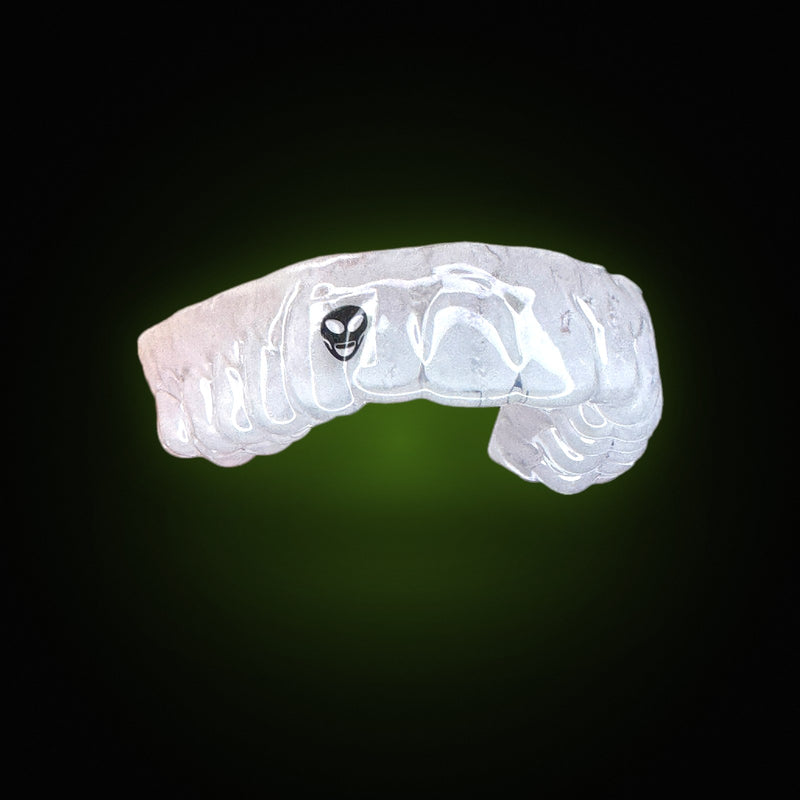
To match a model to your sport, see how to choose the right mouthguard.
Custom guards usually cost more than over-the-counter options; the ADA notes they are the most expensive type. What each AlienGuard includes is in how much a custom mouthguard costs. Accessory-only orders — an extra impression kit or putty — ship in a couple of business days.
Team and gym orders
Schools, clubs and gyms can order through team orders:
- 20% off all mouthguards and merch, with a minimum order of 5 mouthguards.
- Your team logo plus athlete names or numbers on every guard. For color ideas, see choosing your mouthguard color and design.
- On-site fitting to help every athlete take a good impression (minimum order and location apply).
- We keep athletes' models on file for quick replacements (minimum order; athletes 14+ without braces).
Athletes with braces still go through their dentist for the impression or 3D scan. More on roster orders: custom mouthguards for gyms and teams.
How to care for your guard
Rinse it in cool water and clean it with mild soap and a soft brush. Do not use toothpaste. For a deeper clean you can use an optional effervescent tablet in cool water, then rinse. Keep it away from heat, including hot water, dishwashers, hot cars and direct sun. Full routine: how to clean and care for your custom mouthguard. For the 4 mm vs. 5 mm question, see how thick a mouthguard should be. For the basics, read why a custom mouthguard matters.
Custom vs. boil-and-bite mouthguard FAQ
Are custom mouthguards better than boil-and-bite?
They fit more precisely, because they are formed on an impression of your teeth instead of being molded by a bite in softened plastic. The ADA says custom guards provide an optimal fit and are considered by many to be the most protective option. A 1994 JADA comparison found improved comfort and wearability versus self-adapted guards. Other mouthguards can still help if they are properly made and worn. A mouthguard does not prevent every injury, and it does not prevent concussions.
What is the difference between stock, boil-and-bite and custom mouthguards?
Stock guards come pre-formed in a few sizes and are the least effective type, per the ADA, because you have to hold them in with a closed mouth. Boil-and-bite guards are softened in hot water (about 15 seconds) and shaped by your bite; a poor molding leaves a poor fit. Custom guards are vacuum- or pressure-formed on a model of your teeth in a dental office or laboratory.
Can I get a custom mouthguard without going to the dentist?
Yes, if you don't wear braces. AlienGuards ships an at-home impression kit. You take the impression, we check a photo of it, and our lab pressure-forms your guard. If you wear braces, your dentist takes the impression or a 3D scan instead. Details: custom mouthguard without a dentist.
Can I wear a custom mouthguard with braces?
Yes. Do not use the at-home kit on braces. Your dentist takes an impression or 3D scan and ships it or emails it to impressions@alienguards.com. The checkout waiver confirms: "If the athlete has braces, my dentist will take the impression." There is no age limit.
Which AlienGuard should I get?
NanoBite (4 mm) for team sports, grappling, volleyball and youth. Origin or Origin Pro (5 mm) for boxing, MMA, Muay Thai, kickboxing, karate and taekwondo. PowerBite for powerlifting and weightlifting only. See how to choose the right mouthguard for your sport.
More answers are in the FAQ.