

Volleyball Mouthguard Rules: FIVB, NFHS and What Leagues Require
Volleyball mouthguard rules are short: no major rulebook requires one, and none bans one. This article covers the published rules, what the research says about mouth and face injuries in volleyball, and how to decide whether to wear a guard. For fit, model picks and how to order, use our volleyball mouthguards page.
Always confirm with your league, state association, school or club handbook. Local organizers can add their own equipment rules even when the main rulebooks do not.
Short answer
- FIVB (international indoor rules): a mouthguard is not listed as required equipment. Rule 4.5 forbids objects that may cause injury or give an artificial advantage.
- NFHS (U.S. high school): not required. Volleyball is not on the NFHS mouthguard mandate list.
- NCAA (college): not on the list of sports where the ADA says college rules require a mouthguard.
- Clubs, leagues and schools: can add their own requirement. Check your handbook.
- Dental advice: the American Dental Association lists volleyball among the activities where it recommends a mouthguard.
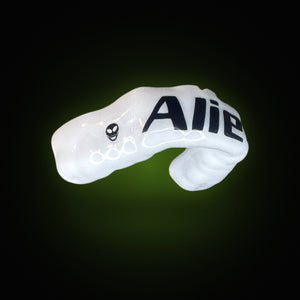
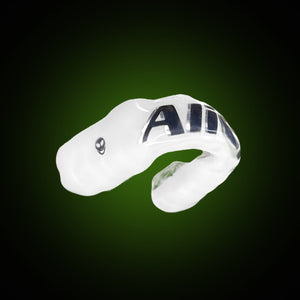
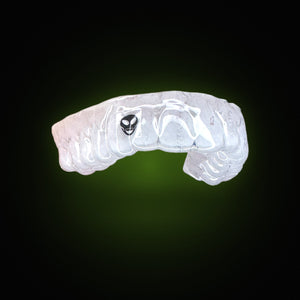
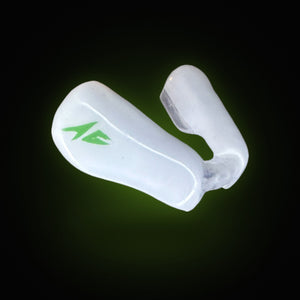
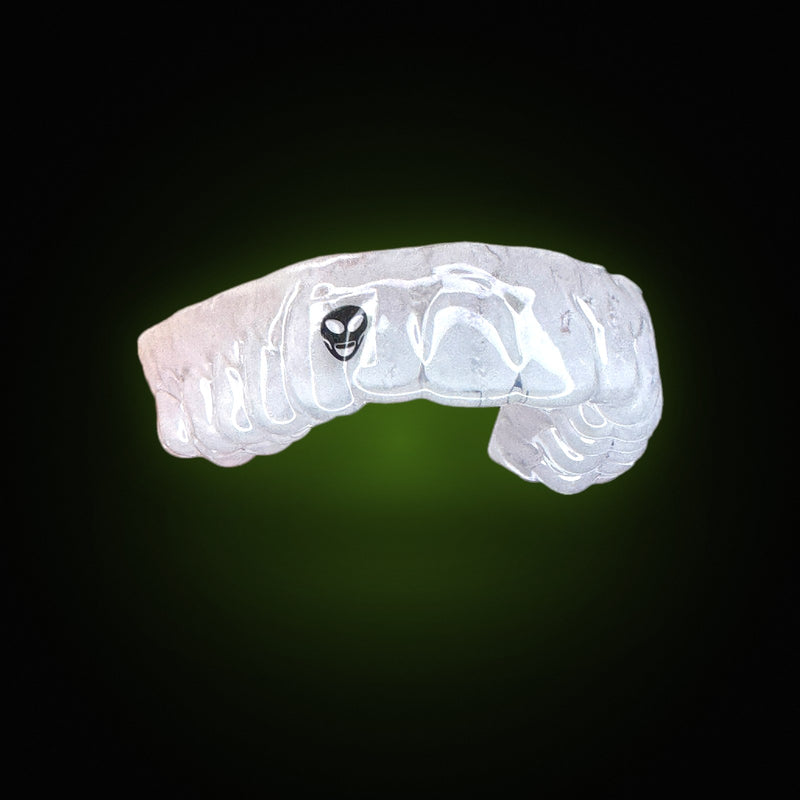
- Our pick: NanoBite, our 4 mm guard, the slimmest model we make.
Is a mouthguard required in volleyball?
No major rulebook requires one. The NFHS Sports Medicine Advisory Committee’s Position Statement and Recommendations for Mouthguard Use in Sports (October 2022) says the NFHS mandates mouthguards in football, field hockey, ice hockey, lacrosse and wrestling (for wrestlers wearing braces). Volleyball is not on that list.
The same statement recommends that athletes consider a properly fitted, unaltered mouthguard in any sport with a potential for orofacial injury from body or playing-apparatus contact, and it names the ball as an example of that apparatus. So the NFHS does not require a guard for volleyball, but it does point players toward one when there is a risk of being hit in the mouth.
FIVB Rule 4: what international rules say about equipment
The FIVB Official Volleyball Rules 2025–2028 define a player’s equipment as a jersey, shorts, socks and sport shoes (Rule 4.3). A mouthguard is not part of that list. Rule 4.5, “Forbidden objects,” says it is forbidden to wear objects which may cause injury or give an artificial advantage. The same rule lets players wear glasses or lenses at their own risk and allows compression pads (padded injury protection devices) for protection or support. For FIVB, World and Official senior competitions, those devices must match the color of the corresponding part of the uniform, or all players using them must wear the same black, white or neutral color.
The rules do not mention mouthguards by name. A soft guard worn inside the mouth is not an object that injures other players, but the first referee decides what is legal at a match. If you play under FIVB rules at a high level, ask the organizer before the event.
NFHS high school volleyball: jewelry, not mouthguards
The equipment rule that gets enforced most in high school volleyball is the jewelry rule. For 2023–24, the NFHS changed Rule 4-1-7 so that all jewelry must be removed except small, secured studs or posts worn above the chin. No jewelry is allowed below the chin, and taping over jewelry is not allowed. The NFHS said the change aligns high school rules with NCAA volleyball jewelry rules.
That matters for mouthguards in one way: keep your guard plain. Don’t add charms, piercings or anything metal to it. A mouthguard that is just a mouthguard is not jewelry.
College, club and beach volleyball
The ADA’s mouthguard guidance lists the sports where NFHS and NCAA rules require mouthguards. Volleyball is not one of them. Club programs, youth leagues, adult rec leagues and beach or grass tournaments set their own equipment sheets, so the rule for your team is whatever your organizer writes down. We don’t know of a club or beach rulebook that bans a mouthguard, but check yours.
Volleyball rules at a glance
- FIVB: not required equipment; Rule 4.5 bans objects that may cause injury or give an artificial advantage.
- NFHS: not on the mandate list; the SMAC recommends a fitted guard in any sport where the body or the ball can hit the mouth.
- NFHS jewelry (Rule 4-1-7): only small, secured studs or posts above the chin; nothing below the chin; no taping over jewelry.
- NCAA: volleyball is not among the sports the ADA lists as requiring a mouthguard in college.
- ADA: lists volleyball under limited-contact and other sports where mouthguard use is recommended.
What research shows about volleyball mouth and face injuries
Volleyball has fewer mouth injuries than contact sports, but they still happen. The main causes are a ball to the face, a teammate’s head or elbow on a shared dig, and dives to the floor.
- U.S. emergency departments, adults: a 2020 study in the Journal of Craniofacial Surgery used the NEISS database for 2009–2018. It recorded 235 volleyball-related facial traumas, an estimated 10,424 emergency visits nationally. Lacerations were the most common injury type (37.9%), the face was the most common site (41.7%), and most fractures involved the nose (71.4%).
- U.S. emergency departments, ages 14–23: a 2023 NEISS study estimated 214,302 female athletes aged 14 to 23 were seen in U.S. emergency departments for volleyball injuries between 2012 and 2021. The ankle, head and knee were the most frequently injured areas.
- Turkey, elite athletes: a 2004 Dental Traumatology study interviewed male athletes at the 2003 and 2004 national championships. Four of 50 volleyball players (8%) had at least one dental injury, compared with 24% in taekwondo and 26% in handball.
- Saudi Arabia, club athletes: a survey of 234 athletes in Riyadh found dental trauma in 31.6% of volleyball players, compared with 52.9% in football (soccer) and 56.2% in taekwondo. Crown fractures were the most common dental injury overall (43.6%).
Those studies differ in method and population, so treat the numbers as a range, not a single risk figure. Across sports, the ADA cites a 2019 systematic review and meta-analysis which found that mouthguard wearers were 82% to 93% less likely to have dentofacial injuries than non-wearers. That review covered sports in general, not volleyball alone.
Do mouthguards prevent concussions in volleyball?
Don’t buy a mouthguard for concussion protection. The NFHS SMAC statement says research does not support the theory that a mouthguard minimizes the risk or severity of a concussion. A mouthguard protects teeth, lips and gums. For more, read do mouthguards prevent concussions?
Who should consider one most?
- Front-row players who block and play close to the net, where hands, elbows and heads meet.
- Liberos and defensive specialists who dive, collide on shared digs and take hard-driven balls.
- Players with expensive dental work, such as crowns, implants or a repaired front tooth.
- Players with braces, since a hit can push lips and cheeks into the brackets.
- Anyone who has already chipped a tooth playing.
Volleyball with braces
Athletes with braces can get AlienGuards, but their dentist needs to take the impression instead of using our at-home kit, so the braces don’t get damaged. Your dentist can take an impression or 3D scan, then ship it to us or email it to impressions@alienguards.com. Every order requires a liability waiver, and there is no age limit. See mouthguards for athletes with braces.
Which AlienGuard for volleyball?
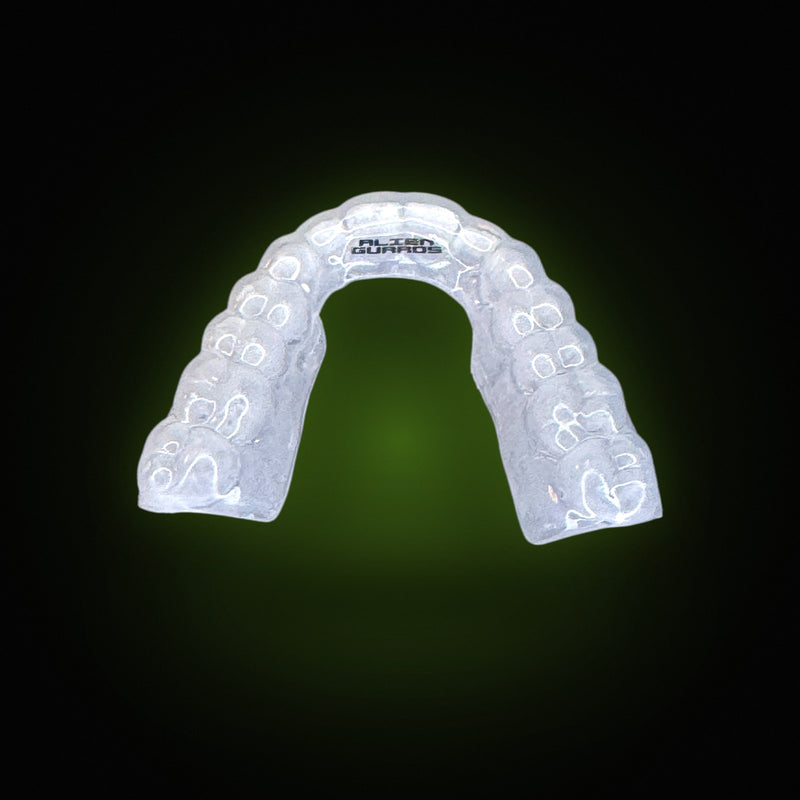
Our pick is NanoBite, our 4 mm ultra-slim team-sports guard and the best of our models for breathing and talking, so you can call the ball and talk through rotations with it in. See can you breathe and talk with a mouthguard?
Origin and Origin Pro are our 5 mm combat guards for boxing, MMA, Muay Thai, kickboxing, karate and taekwondo. They are not our recommendation for volleyball. PowerBite is for powerlifting and weightlifting, not the court.
Ordering and club / team orders
Every AlienGuard is made from your own impression. We ship an at-home kit, you take the impression (about 10 minutes), and your custom mouthguard is crafted within 10–14 business days after we receive a good impression, then shipped with tracking. Planning for club season? See how long a custom mouthguard takes.
Teams of 5 or more get 20% off through team orders, with your logo plus player names or numbers. Metallic, satin and holographic text colors are free. Club and school programs can start with custom mouthguards for teams and clubs.
Related rules reading: mouthguard rules by sport (all sports), basketball mouthguard rules, soccer mouthguard rules, field hockey mouthguard rules, and how to choose a mouthguard for your sport. If a tooth does get knocked out, follow our knocked-out tooth first aid guide.
Volleyball mouthguard rules FAQ
Is a mouthguard required in volleyball?
Not under the main rulebooks. FIVB does not list it as required equipment, and volleyball is not on the NFHS or NCAA mouthguard mandate lists. Your club, league or school can still require one.
Are mouthguards allowed in high school volleyball?
The NFHS does not ban them, and its SMAC recommends a properly fitted guard in any sport where the body or ball can hit the mouth. Keep it plain: NFHS Rule 4-1-7 limits jewelry, so don’t attach charms or metal.
Can you wear a mouthguard under FIVB rules?
FIVB Rule 4.5 forbids objects that may cause injury or give an artificial advantage, and it does not mention mouthguards. The first referee decides what is legal, so ask the organizer before a high-level event.
Does a mouthguard prevent concussions in volleyball?
No. The NFHS SMAC says research does not support the idea that a mouthguard lowers concussion risk or severity. It protects teeth, lips and gums.
Which AlienGuard is best for volleyball?
NanoBite, our slim 4 mm guard. Origin and Origin Pro are for combat sports, and PowerBite is for lifting.