

Do Mouthguards Prevent Concussions? What Mouthguards Do (and Don't) Protect
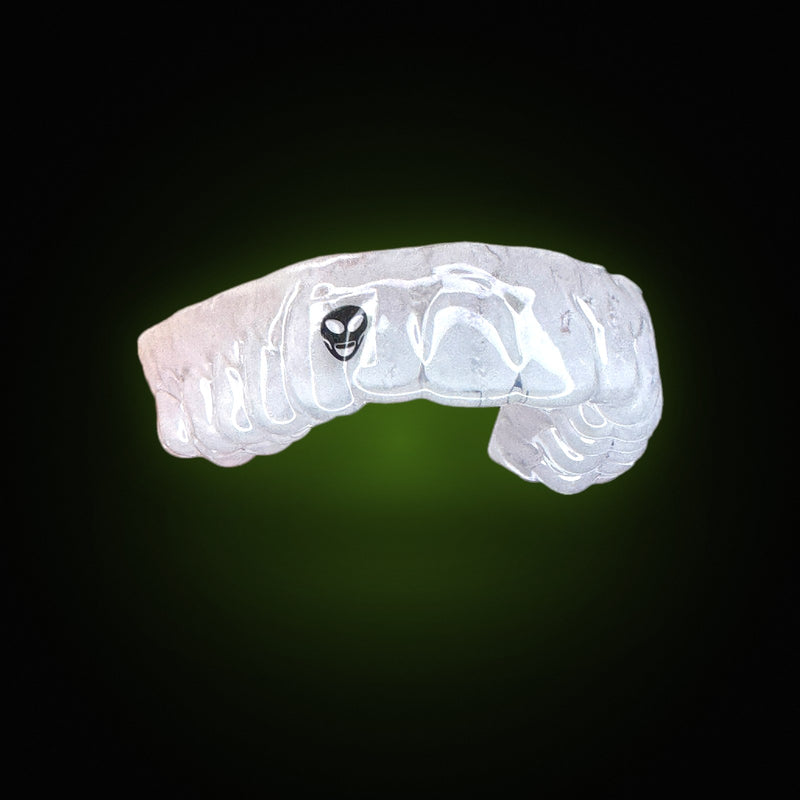
Short answer: no. No mouthguard is proven to prevent concussions. Some studies link wearing a mouthguard with fewer concussions, and others find no difference. The NFHS says current research doesn't support the idea that a mouthguard lowers concussion risk or severity. What a mouthguard is proven to do is protect your teeth, lips and jaw. That's reason enough to wear one in any contact sport, but it shouldn't be part of your concussion plan.
This guide explains what a concussion is, what the research actually shows (including the studies that seem to point both ways), what does lower concussion risk, and how to choose a mouthguard for the protection it really gives you.
What a concussion is
The CDC's HEADS UP concussion basics describe a concussion as a type of traumatic brain injury caused by a bump, blow or jolt to the head, or by a hit to the body that makes the head and brain move rapidly back and forth. That movement can make the brain bounce or twist inside the skull.
That definition explains why a mouthguard can't be a concussion solution. A lot of concussions come from hits that never touch the jaw: a shoulder to the chest, the back of the head hitting the ground or ice, or a whiplash-style collision. A mouthguard sits on your teeth. It can't stop your brain from moving inside your skull.
Why people think a mouthguard might help
The idea isn't random. The American Dental Association (ADA) describes two ways researchers think a mouthguard could play a role: by absorbing or spreading out force that travels through the mouth and jaw, or by helping steady the head and neck during impact. Those are hypotheses. The ADA says further research is needed to confirm whether mouthguards reduce concussion risk or severity at all.
What the research says
The ADA sums up the evidence on mouthguards and concussion as "relatively mixed and less consistent" than the evidence for dental injuries. Here are the main studies, in plain terms.
Studies that found no clear benefit
- College basketball, 2002. A study of 50 men's Division I programs (70,936 athlete exposures) found no significant difference in concussion rates between players who wore custom-fitted mouthguards and those who didn't (0.35 vs. 0.55 per 1,000 exposures). The same study did find far fewer dental injuries among mouthguard users (0.12 vs. 0.67).
- Systematic review, 2009. A review of 51 studies on protective equipment concluded that no strong evidence supports using mouthguards or face shields to reduce concussion risk. Most of the studies were observational, and the authors flagged selection bias and poor control for other factors.
- High school football, 2014. A prospective study of 2,081 high school players recorded 211 sport-related concussions. Players who wore a custom mouthguard actually had a higher concussion rate than players who wore a generic one. The authors' takeaway was that factors other than the type of equipment affect concussion risk.
Studies that found a possible benefit
- High school football, 2014. In a study of 412 players on 6 teams, players with custom laminated mouthguards had fewer concussions (3.6%) than players with over-the-counter guards (8.3%). It was a small study with 24 concussions in total, and the larger football study above found the opposite.
- Youth ice hockey, 2020. A Canadian case-control study of 315 concussions found that wearing any mouthguard was linked with lower odds of concussion. Off-the-shelf guards showed a significant link; custom dental guards didn't reach significance. It was observational, so it shows a link, not cause and effect.
- Meta-analysis, 2023. A large systematic review and meta-analysis in the British Journal of Sports Medicine pooled the studies and found a protective association for mouthguards in collision sports (incidence rate ratio 0.74). Its overall conclusion was cautious: rule changes, protective equipment and training strategies "may help" prevent concussion.
The ADA also notes a 2009 review that found no significant effect on concussion rates in professional ice hockey, though players who didn't wear mouthguards had higher symptom severity scores.
How to read all of this
- Most of it is observational. Athletes who choose to wear a mouthguard may play differently, or be more careful in other ways, than athletes who don't. That makes a true mouthguard effect hard to separate out.
- The studies disagree on custom vs. off-the-shelf. One football study favored custom guards, another found custom-guard wearers had more concussions, and the hockey study saw the clearer link with off-the-shelf guards. No good evidence shows that a custom guard protects against concussion better than any other type.
- The official position is still "not proven." The NFHS Sports Medicine Advisory Committee's mouthguard position statement says research does not currently support the theory that a mouthguard minimizes the risk or severity of a concussion.
So be wary of any mouthguard sold as "concussion-proof" or "concussion-reducing." We don't make that claim for AlienGuards, and you shouldn't buy any mouthguard for that reason. More common misconceptions: mouthguard myths debunked.
What the pooled numbers add
Two large reviews pooled the athlete studies, and both landed in the same place: a possible small effect that can't be told apart from no effect.
- 2017 review for the international consensus. A systematic review of 48 studies in the British Journal of Sports Medicine (Emery and colleagues), done for the 2016 Berlin concussion consensus, found a point estimate that suggests mouthguards might help in contact and collision sports (incidence rate ratio 0.8). But the 95% confidence interval ran from 0.6 to 1.1, which includes no effect at all, and the authors listed mouthguards in contact sport as a question that still needs research.
- 2019 meta-analysis. In a review by Knapik and colleagues, five cohort studies gave a summary risk ratio of 1.25 for non-users compared with users (95% CI 0.90 to 1.74). That's a modest difference that isn't statistically clear. The same review found a clear effect on orofacial injuries, with non-users at about 2.3 times the risk.
Does clenching on a guard steady the head?
One theory is that biting down on a guard tenses the jaw and neck muscles and steadies the head. Two small studies in Japanese high school athletes tested it:
- In 12 rugby players (Hasegawa and colleagues, 2014), head acceleration during contact drills dropped markedly when players were told to clench. The accelerations in those drills were small to begin with.
- In 11 soccer players heading a machine-fed ball (Narimatsu and colleagues, 2015), clenching lowered head acceleration and raised neck-muscle activity, and the effect was stronger when players clenched on a custom guard.
These studies measured head acceleration in a handful of players, not concussions. No study we know of shows that clenching on a mouthguard lowers concussion rates, so treat it as a research question, not a safety plan.
Smart mouthguards measure hits; they don't prevent them
Instrumented ("smart") mouthguards carry sensors that record head acceleration events. A 2026 review in the British Dental Journal (Haughey and colleagues) describes their use in concussion management, performance monitoring and injury-prevention research, and lists open problems: cost, data interpretation, accuracy, malfunctions and comfort. In a season of English elite rugby union (Allan and colleagues, 2024; 255 men and 133 women), forwards had about twice the rate of head acceleration events as backs. Several authors of that study work with or are funded by World Rugby.
Fit matters for the sensors, too. In a 2024 lab study (Gellner and colleagues), measurement error from a boil-and-bite sensor guard rose as the gap between the guard and the lower jaw grew. Data like this helps leagues spot hard hits and change rules or training. It doesn't make the guard itself a concussion protector, and AlienGuards don't contain sensors. For where instrumented mouthguards fit in the rulebook, see our rugby mouthguard rules.
What mouthguards are proven to do
The dental evidence is far stronger. The ADA cites a 2019 systematic review and meta-analysis that found mouthguard users were between 82% and 93% less likely to suffer dentofacial injuries than non-users. Broken tooth crowns and knocked-out teeth were the most common injuries. A mouthguard:
- cushions blows to the mouth and helps prevent chipped, cracked and knocked-out teeth (see how mouthguards protect teeth from chips and cracks);
- keeps your lips and cheeks from being cut against your own teeth;
- keeps your upper and lower teeth from slamming together when your jaw snaps shut (more in mouthguards and jaw injuries). For jaw joint pain and clicking, see mouthguards and TMJ disorders.
If a tooth does get knocked out, the first minutes matter. Every coach and parent should know what to do if a tooth is knocked out. Parents can also read custom mouthguards for kids.
What actually lowers concussion risk
The same 2023 meta-analysis found bigger, clearer effects from changing how the game is played than from equipment:
- Rules: leagues that don't allow bodychecking in child and adolescent ice hockey had a 58% lower concussion rate than bodychecking leagues.
- Practice design: in American football, limiting contact in practice was linked to a 64% lower practice concussion rate.
- Training: some evidence supports up to 60% lower concussion rates in rugby with a neuromuscular training warm-up program.
Beyond that, wear the helmet or headgear your sport requires and make sure it fits, learn safe technique (tackling, falling, keeping your hands up), and follow your league's concussion protocol. The CDC also stresses avoiding repeat head impacts, because the risk of more serious and longer-lasting symptoms goes up with multiple concussions, especially without enough healing time in between.
Mouthguards are also showing up in concussion detection. The ADA notes that in 2024 World Rugby began requiring "smart" mouthguards during training and matches, which send head-movement data to an on-site doctor so a player can be pulled and assessed. That's about spotting a possible injury, not preventing one.
If you think an athlete has a concussion
Take them out of play and get them checked by a health care provider. The CDC says a child with a concussion needs to be seen by a health care provider, and that getting care can help recovery. Don't let them go back in because they "feel fine," and follow your school or league's return-to-play steps. A mouthguard doesn't change any of this.
Choosing a mouthguard for the protection it really gives
A mouthguard only protects your teeth if it's in your mouth. The ADA says an ideal mouthguard is properly fitted, covers all the remaining teeth on one arch (usually the upper), stays in place comfortably and securely, and absorbs impact energy. It describes three types:
- Stock: pre-formed and ready to wear. They have to be held in place by closing your mouth, so the ADA calls them the least effective type.
- Boil-and-bite: softened in hot water and shaped by biting. Imprecise shaping can leave a poorly fitted guard.
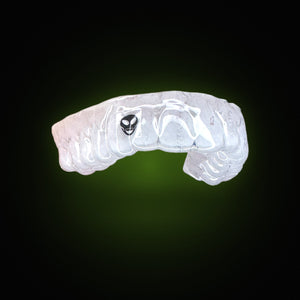
- Custom: made from an impression of your own teeth.
We make custom guards because a guard that fits stays in without clenching, so you actually keep it in for the whole game. More in why custom mouthguards outperform boil-and-bite.
Which AlienGuard for your sport
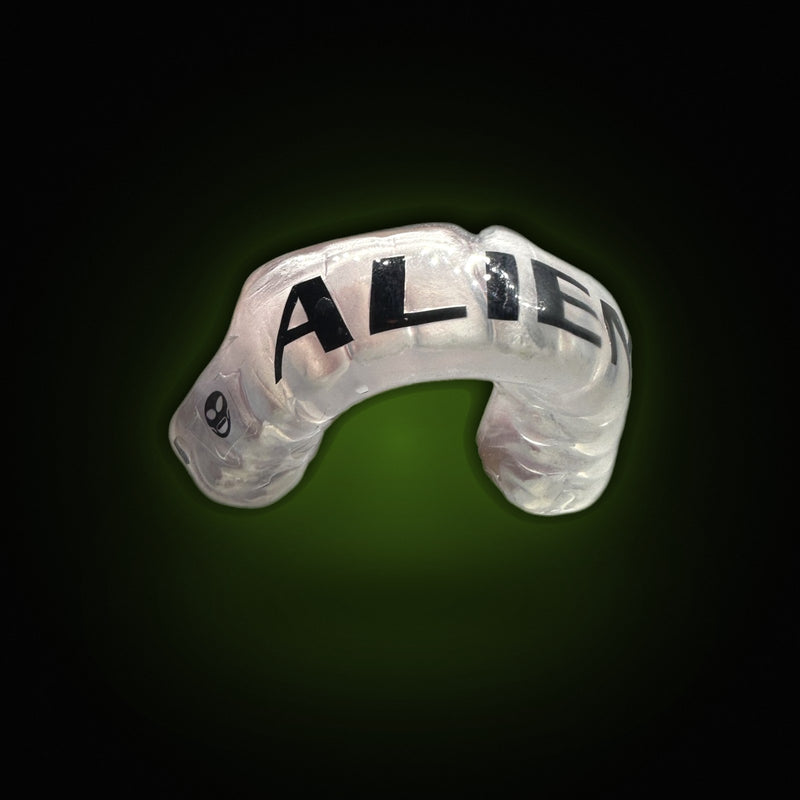
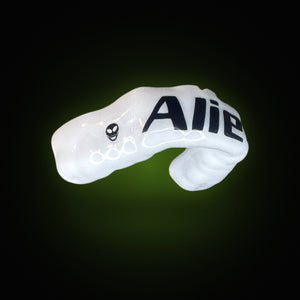
- Football, rugby, hockey, field hockey, lacrosse, basketball, soccer, wrestling and BJJ: NanoBite, our thinnest guard at 4 mm. Its slim fit makes it easy to breathe, talk and call plays. Grapplers can browse BJJ mouthguards, and field hockey players can read our field hockey mouthguard guide.
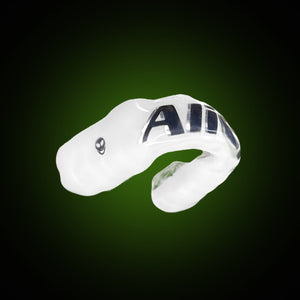
- Boxing, MMA, Muay Thai, kickboxing, karate and taekwondo: Origin or Origin Pro, our 5 mm combat guards with reinforced impact zones. Origin Pro is more breathable and comfortable. Origin and Origin Pro are for combat sports only. Fighting both? See boxing vs. MMA mouthguards. For cage rules, see MMA mouthguard rules, or shop MMA mouthguards. Karate and taekwondo athletes can check karate and taekwondo mouthguard rules.
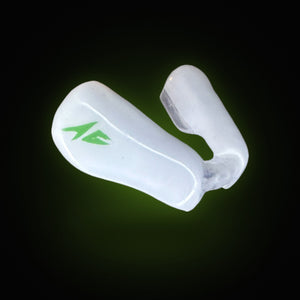
- Powerlifting and weightlifting: PowerBite, for lifting only. See weightlifting mouthguards.
Metallic, satin and holographic text colors are free on every model. Compare all four models, or read how thick a mouthguard should be.
How to order
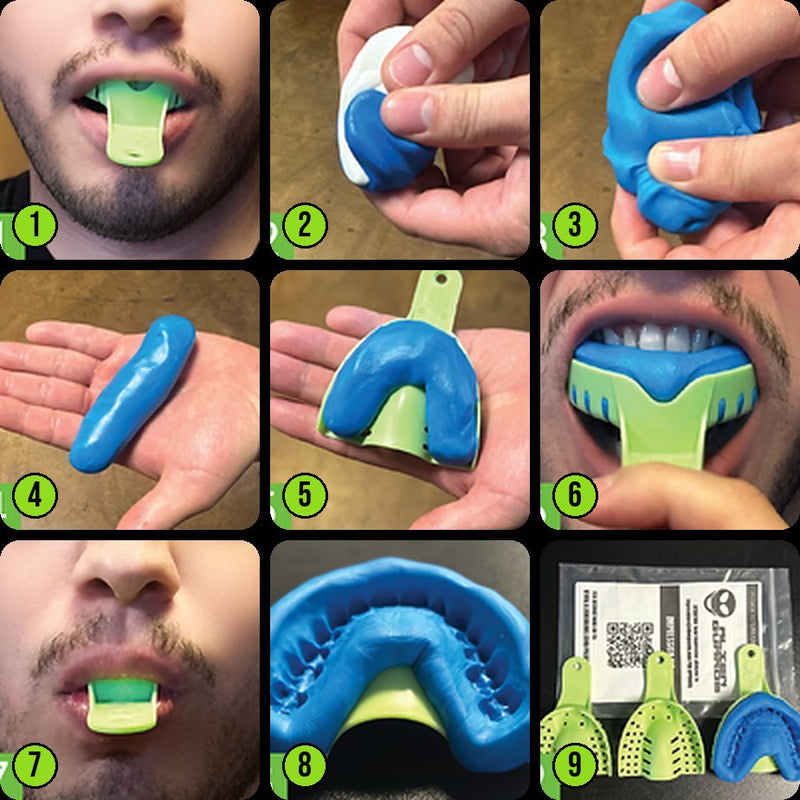
- Build your guard. Pick your model, color and text, and take a quick smile photo so we can pick your tray size. See sizing and fit.
- Take your impression at home. We ship you an impression kit. It takes about 10 minutes. Follow the impression instructions, then mail it back.
- We make it. Your guard is crafted within 10–14 business days after we receive a good impression, then shipped with tracking.
Athletes with braces can get AlienGuards too. Your dentist takes the impression or a 3D scan instead of using our at-home kit, so your braces don't get damaged, then ships it to us or emails it to impressions@alienguards.com. More in can you wear a mouthguard with braces?
Teams, clubs and gyms
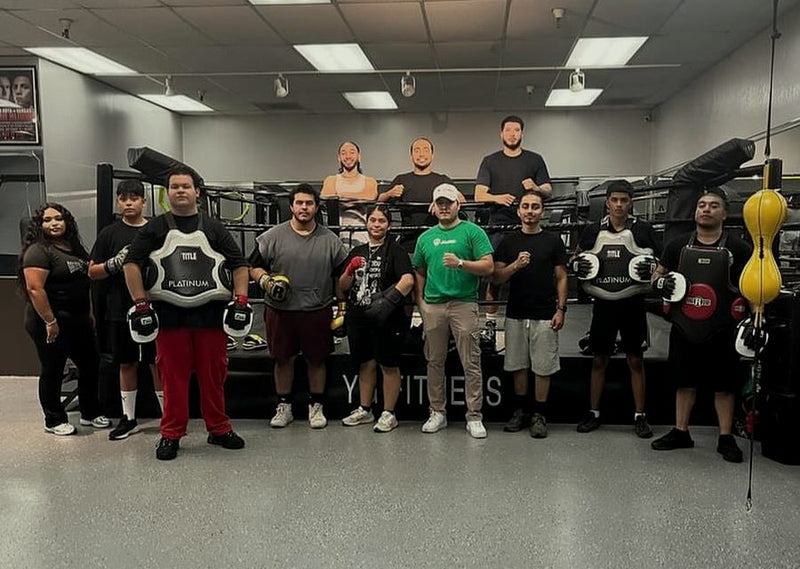
Teams that order 5 or more guards get 20% off all models through team orders, with your logo plus each athlete's name or number. See custom mouthguards for teams and gyms.
Sport guides: football mouthguards, hockey and lacrosse, rugby, soccer and boxing. Rules for every sport are in mouthguard rules by sport.
Keep reading: why rugby players need a custom mouthguard, dental protection in combat sports, why hockey players need a custom mouthguard and the history of mouthguards. For what a guard does protect, read why a custom mouthguard matters.
Mouthguards and concussions FAQ
Do mouthguards prevent concussions?
No mouthguard is proven to prevent concussions. Some observational studies link mouthguard use with fewer concussions and others find no difference. The NFHS says current research doesn't support the idea that a mouthguard lowers concussion risk or severity.
Do custom-fitted mouthguards lower concussion risk more than boil-and-bite?
There's no good evidence that it does. One high school football study favored custom guards, a larger one found custom-guard wearers had more concussions, and a youth hockey study saw the clearer link with off-the-shelf guards. Choose a custom guard for fit, comfort and dental protection.
Can a mouthguard make a concussion less severe?
That isn't established. One review found higher symptom scores in professional hockey players who didn't wear mouthguards, but the ADA says more research is needed, and the NFHS says research doesn't support it.
Is there a mouthguard for concussion protection?
No. No mouthguard, custom-fitted or off-the-shelf, is proven to protect against concussions, and the NFHS says current research doesn't support the idea that a mouthguard lowers concussion risk or severity. "Smart" mouthguards record head impacts so a player can be pulled and assessed, but they don't prevent the injury. For real concussion protection, look to the rules, practice limits, training and headgear covered above, and follow your league's concussion protocol.
What is the best football mouthguard to prevent concussions?
No football mouthguard is proven to prevent concussions, so choose one for what it does do: protect your teeth, lips and jaw. In American football, limiting contact in practice was linked to a 64% lower practice concussion rate, a much clearer effect than any mouthguard has shown. For football we recommend NanoBite, our thinnest guard at 4 mm, made from your impression so it stays in and leaves room to breathe and call plays. Shop football mouthguards, or check the football mouthguard rules.
Should I still wear a mouthguard?
Yes. The ADA cites research showing mouthguard users were 82% to 93% less likely to suffer dentofacial injuries than non-users. Wear one for your teeth, lips and jaw, and follow your sport's concussion rules separately.
Which AlienGuard should I choose?
NanoBite for football, rugby, hockey, lacrosse, basketball, soccer, field hockey, wrestling and BJJ. Origin or Origin Pro for boxing, MMA, Muay Thai, kickboxing, karate and taekwondo. PowerBite for lifting only.