

Rugby Mouthguard Rules: World Rugby Law 4 and What Clubs Require
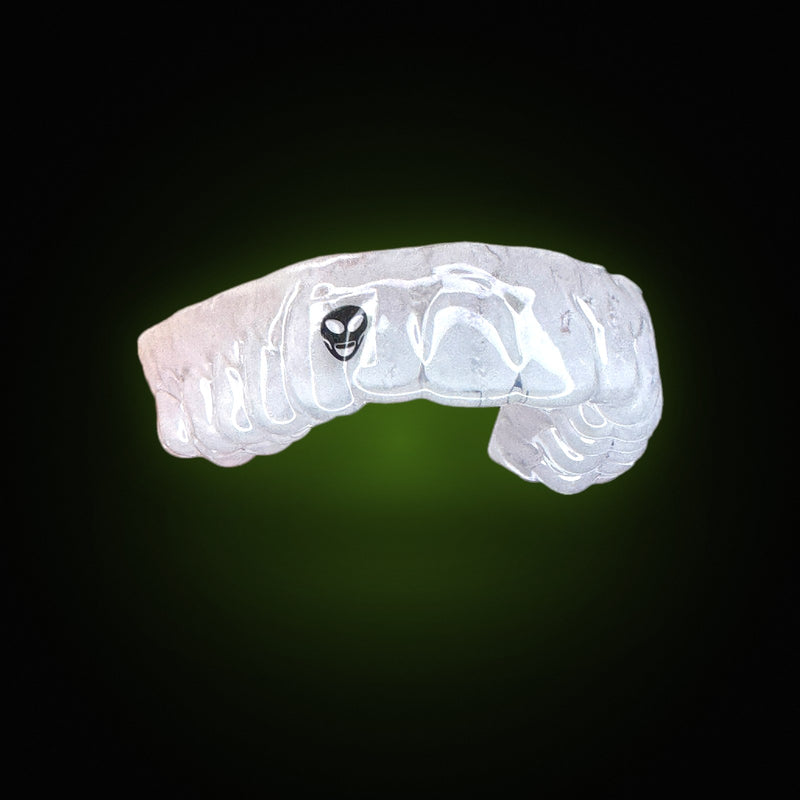
Rugby mouthguard rules sit between a World Rugby recommendation and stricter club, school and union policies. This article focuses on the published rules and equipment guidance. For fit, model picks and how to order, use our rugby mouthguards page.
Always confirm with your union, state youth organization, school or club handbook. Local organizers can make a mouthguard compulsory even when World Rugby Law only recommends one.
Is a mouthguard required in rugby?
Under the World Rugby Laws of the Game, a mouthguard is recommended, not listed as mandatory kit for every match. Law 4 (Players’ clothing) states that World Rugby recommends all players wear a mouthguard or dental protector. The same law lists a mouth guard or dental protector among the additional items a player is permitted to wear (Law 4.3.f).
That is different from U.S. high school sports where the NFHS Sports Medicine Advisory Committee's Position Statement and Recommendations for Mouthguard Use in Sports (October 2022) says the NFHS mandates mouthguards in football, field hockey, ice hockey, lacrosse, and wrestling (for wrestlers wearing braces). Rugby is not on that NFHS mandate list — because U.S. high school rugby is generally governed through rugby unions and state rugby organizations, not NFHS basketball- or football-style national rulebooks.
In practice, many unions, clubs and schools treat a mouthguard as required kit. Check your competition sheet before kickoff.
World Rugby Law 4: recommended and permitted
From the current World Rugby Laws by Number page for Law 4:
- Law 4.2 — World Rugby recommends all players wear a mouthguard or dental protector.
- Law 4.3.f — A mouth guard or dental protector is a permitted additional clothing item.
- Clothing must still comply with World Rugby Regulation 12, and the referee can order removal of any item that is dangerous or illegal.
World Rugby’s Rugby Ready equipment guidance goes further on fit: it strongly recommends a custom-made mouth guard for practice and matches, notes that moulded guards generally provide the best protection, and cites New Zealand’s experience after mouthguards became compulsory there in 1997 (a reported reduction in rugby-related dental claims). Rugby Ready does not rewrite Law 4 into a global “no gumshield, no play” rule — it is welfare guidance on top of the Laws.
USA Rugby, unions and club “no mouthguard, no play” policies
USA Rugby’s Protective Equipment and Clothing Guidelines (2019/2020) say mouth guards should be worn by every player, every time they play contact rugby. The same sheet says mouth guards should not have pieces extending outside the mouth (for example a football-helmet strap attachment), and that permanent tooth additions such as implants must be covered by a mouth guard.
Some national unions publish stronger club/school advice. Irish Rugby’s medical equipment guidance strongly recommends mouthguards for all levels in training and games and advises clubs and schools to adopt a “No Mouthguard, No Play” approach, with a written medical exception process when needed. Irish Rugby also notes custom-fitted mouthguards generally fit and protect better than pre-moulded or boil-and-bite options, and states there is no conclusive basis to wear a mouthguard primarily to reduce concussion risk — the primary reason is orofacial protection.
State and school programs can go further still. For example, the Texas Interscholastic Rugby Association lists a Mouth-Guard under required competition attire. Treat that as a reminder that your league sheet can be stricter than World Rugby Law 4.
ADA recommendation (not a rugby law)
The American Dental Association recommends a properly fitted mouthguard for sports with dental trauma risk and lists rugby among contact/collision activities where mouthguard use is recommended. That is dental guidance, not a substitute for your union or club equipment policy.
Color, attachments and referee control
World Rugby Law 4 does not set a mouthguard color rule the way some U.S. football codes do for visible tooth-and-mouth protectors. What matters under Law 4 is that the item is permitted, not sharp or abrasive, and not judged dangerous by the referee. USA Rugby’s gear sheet specifically warns against mouthguards with pieces extending outside the mouth. Keep charms, straps and non-protective add-ons off the field.
Youth, high school and club rugby in the U.S.
U.S. youth and high school contact rugby is typically run through USA Rugby-affiliated state organizations and clubs, not a single NFHS rugby mouthguard mandate. Expect equipment language to come from your state youth rugby body, school athletic handbook or tournament host. Non-contact / flag formats may have different kit lists — USA Rugby’s gear guidelines note they apply to contact rugby formats, not non-contact rugby.
Rugby with braces
Athletes with braces can get AlienGuards. Do not use our at-home impression kit over braces; that can damage the appliances. Have your dentist take an impression or 3D scan, then ship it to us or email it to impressions@alienguards.com. More detail in mouthguards for orthodontic patients.
Which AlienGuard for rugby?
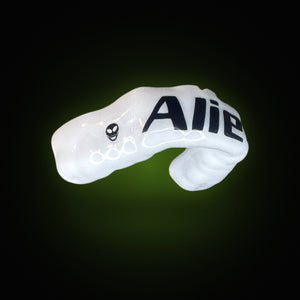
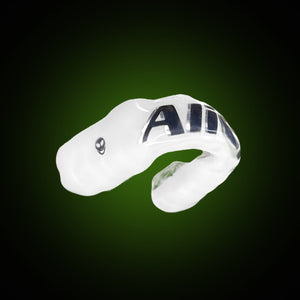
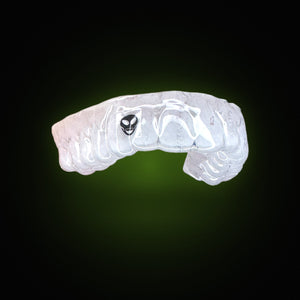
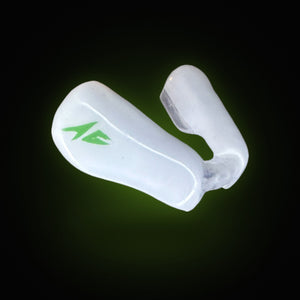
Our pick is NanoBite, our 4 mm ultra-slim team-sports guard and the best of our models for breathing and talking through phases and lineout calls. NanoBite is built for rugby and other contact team sports (including football, hockey, lacrosse, basketball, wrestling, BJJ, soccer and field hockey).
Origin and Origin Pro are our 5 mm combat guards for boxing, MMA, Muay Thai, kickboxing, karate and taekwondo. They are not our recommendation for rugby. PowerBite is for powerlifting and weightlifting, not team rugby.
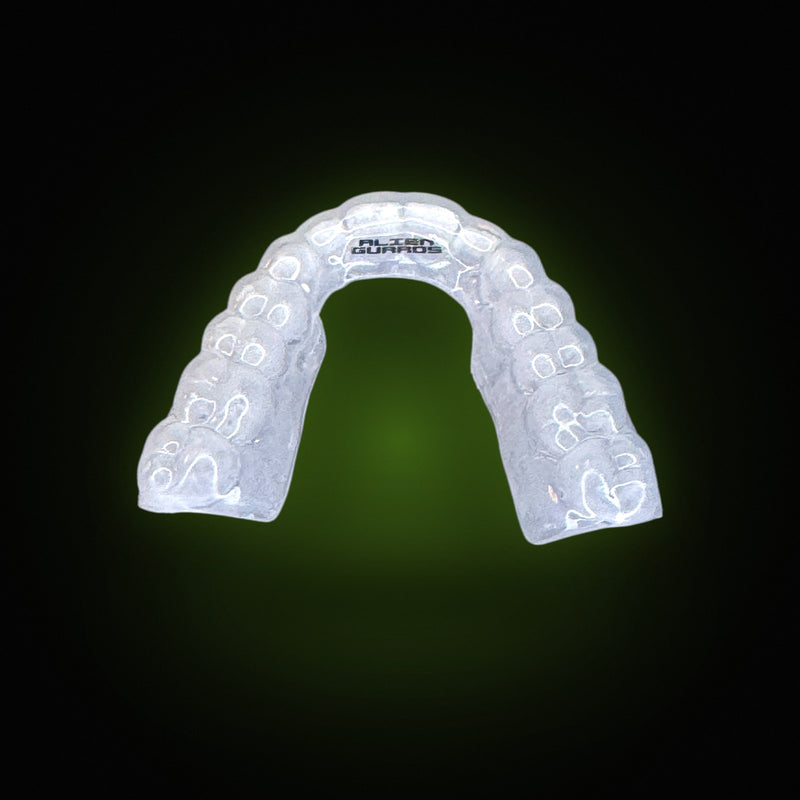
A custom guard made from your impression stays put better than a loose tray — useful when you are calling and resetting after contact. If yours already slips, read why does my mouthguard fall out? Shop the rugby collection when you are ready to order.
Ordering and club / team orders
Every AlienGuard is made from your own impression. We ship an at-home kit, you take the impression (about 10 minutes), and your custom mouthguard is crafted within 10–14 business days after we receive a good impression, then shipped with tracking. Accessory-only orders (case, kit, putty) ship in a couple of business days.
Teams of 5 or more get 20% off through team orders, including NanoBite and PowerBite, with your logo plus athlete names or numbers. Metallic, satin and holographic text colors are free.
Related rules reading: football mouthguard rules, basketball mouthguard rules, hockey mouthguard rules, lacrosse mouthguard rules, soccer mouthguard rules, and our broader how to choose a mouthguard for your sport guide.
Rugby mouthguard rules FAQ
Is a mouthguard required under World Rugby Law 4?
World Rugby Law 4 recommends a mouthguard or dental protector and lists it as permitted clothing. It does not make a mouthguard mandatory for every match under the Laws alone. Unions, schools and clubs may still require one.
Can my club or school make a mouthguard compulsory?
Yes. Many organizers treat “no mouthguard, no play” as local policy even though Law 4 is a recommendation. USA Rugby’s gear guidelines say every contact player should wear one every time; some state programs list a mouthguard as required attire.
Does a rugby mouthguard prevent concussions?
Do not choose a mouthguard primarily for concussion prevention. Irish Rugby’s equipment guidance and the NFHS SMAC mouthguard statement both emphasize orofacial protection; research does not support relying on a mouthguard to minimize concussion risk or severity.
Can rugby players with braces get AlienGuards?
Yes. Have your dentist take the impression or 3D scan instead of using our at-home kit, then ship it to us or email impressions@alienguards.com.
Which AlienGuard is best for rugby?
NanoBite, our slim 4 mm team-sports guard. Origin and Origin Pro are for combat sports; PowerBite is for lifting, not team rugby.