

Knocked-Out Tooth in Sports: What to Do Right Away
A tooth knocked out in a game or sparring session isn't always lost for good. The American Association of Endodontists (AAE) says the right emergency steps can save a knocked-out tooth so it can be replanted and last for years. What happens in the first few minutes matters most. This guide sums up the first-aid steps from the International Association of Dental Traumatology (IADT), the AAE and the American Dental Association (ADA), so players, parents and coaches know what to do.
This is general first-aid information, not medical advice. A knocked-out tooth is a dental emergency, so call a dentist or go to an emergency room right away. If the athlete is unconscious or may have a head or neck injury, get medical help first. The IADT notes that replanting isn't possible for an unconscious patient, so store the tooth instead (see below).
Quick answer: the first-aid steps
- Stay calm and find the tooth. Don't leave it at the field, rink or mat.
- Check that it's a permanent (adult) tooth. Baby teeth should not be put back in.
- Pick it up by the crown, the white chewing part. Never touch the root.
- If it's dirty, rinse it briefly in milk, saline or the athlete's own saliva. Don't scrub it.
- Put it back in the socket right away if you can, then bite gently on gauze, a handkerchief or a napkin to hold it in place.
- If you can't put it back, keep it moist in milk, a tooth preservation solution, saliva or saline. Never let it dry out.
- See a dentist immediately and bring the tooth.
Baby tooth or adult tooth?
First aid starts with knowing which kind of tooth it is. Both the IADT and its joint first-aid guidance with the Academy for Sports Dentistry say primary (baby) teeth should not be replanted. They note that baby teeth are generally small and the injured child is usually under 6. Leave it out and call your child's dentist.
Permanent teeth are different. The IADT calls an avulsed (knocked-out) permanent tooth "one of the few real emergency situations in dentistry" and says putting it back right away, at the scene, is the best treatment. Its patient page also notes that children between 7 and 10 are more likely to have a tooth knocked out, which matters for youth athletes.
How to put a knocked-out tooth back in
- Hold the crown only. The cells on the root surface need to stay alive, and the IADT's guidelines judge a replanted tooth's outlook by whether they are. The AAE says never to touch the root, and not to wrap the tooth in a tissue or cloth.
- Rinse gently, only if it's dirty. The IADT's 2020 avulsion guidelines say to rinse it in milk, saline or the patient's saliva. The IADT and ASD first-aid guidance adds that water is OK if none of those are practical. The AAE says not to use soap or chemicals and not to scrub or dry the tooth.
- Replant it the right way round. The IADT and ASD say to check the tooth's orientation first. Gently push it into the socket by the crown, or line it up over the socket and close your mouth slowly (AAE).
- Hold it in place. Bite gently on gauze, a handkerchief or a napkin, then go straight to a dentist.
If you can't put it back: what to store a knocked-out tooth in
The IADT says to put the tooth into a storage medium as soon as possible, because the root surface starts drying out within a few minutes. In order of preference, its 2020 guidelines list:
- Milk
- HBSS (Hanks' Balanced Salt Solution), the solution in emergency tooth preservation kits like Save-a-Tooth. The ADA suggests using a tooth preservation product with the ADA Seal of Acceptance.
- Saliva, for example spit into a cup. The ADA and AAE also suggest holding it in the mouth between the cheek and gum.
- Saline
Water is a poor storage medium. The AAE warns that root cells can't tolerate tap water for long, but the IADT says water is still better than letting the tooth air-dry.
How long do you have?
Time out of the mouth, especially dry time, is what decides the outcome. The AAE advises getting to a dentist or endodontist within 30 minutes if you can, but adds that a tooth can sometimes be saved even after an hour or more out of the mouth. The IADT's 2020 guidelines explain why speed matters for the cells on the root:
| What happened | Root cells (IADT 2020) |
|---|---|
| Replanted immediately or within about 15 minutes | Most likely viable |
| Kept in milk, HBSS, saliva or saline, with less than 60 minutes of dry time in total | May be viable but compromised |
| More than 60 minutes of dry time in total, stored or not | Likely non-viable |
The takeaway: put it back in, or into milk, within minutes, then get to a dentist.
What not to do
- Don't pick the tooth up or hold it by the root.
- Don't scrub it or clean it with soap or chemicals.
- Don't wrap it in a tissue or cloth, or let it dry out.
- Don't store it in plain tap water if you have milk, saliva or saline.
- Don't put a baby tooth back in.
- Don't wait until after the game to see a dentist.
Add these to your sideline kit
A few small items make the steps above easier on the sideline: sterile gauze, a small sealable container, single-serve milk or saline, and a tooth preservation kit with the ADA Seal of Acceptance. Coaches can print the IADT's free Save Your Tooth poster, which comes in dozens of languages.
Prevention: wear a mouthguard that stays in
The IADT's first prevention tip is to wear a mouthguard for all contact sports, "especially football, hockey, basketball, soccer, futbol, and martial arts." According to the ADA's summary of the research, a 2019 systematic review and meta-analysis found mouthguard users were 82% to 93% less likely to suffer dentofacial injuries, and broken crowns and knocked-out teeth were the most frequent injuries. No mouthguard prevents every injury, and a guard only protects you if it's in your mouth and fits. More on that in how mouthguards protect your teeth from chips and cracks.
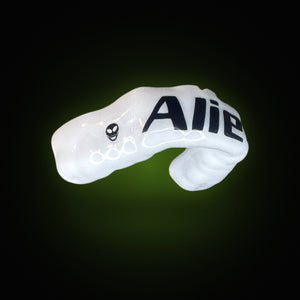
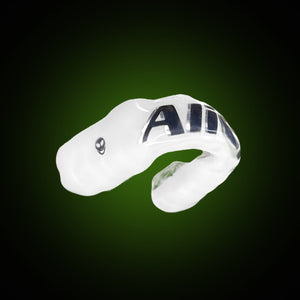
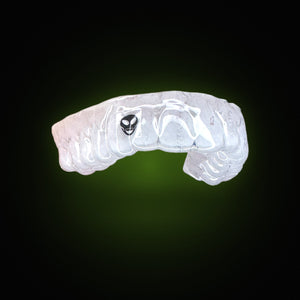
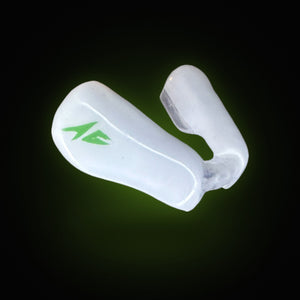
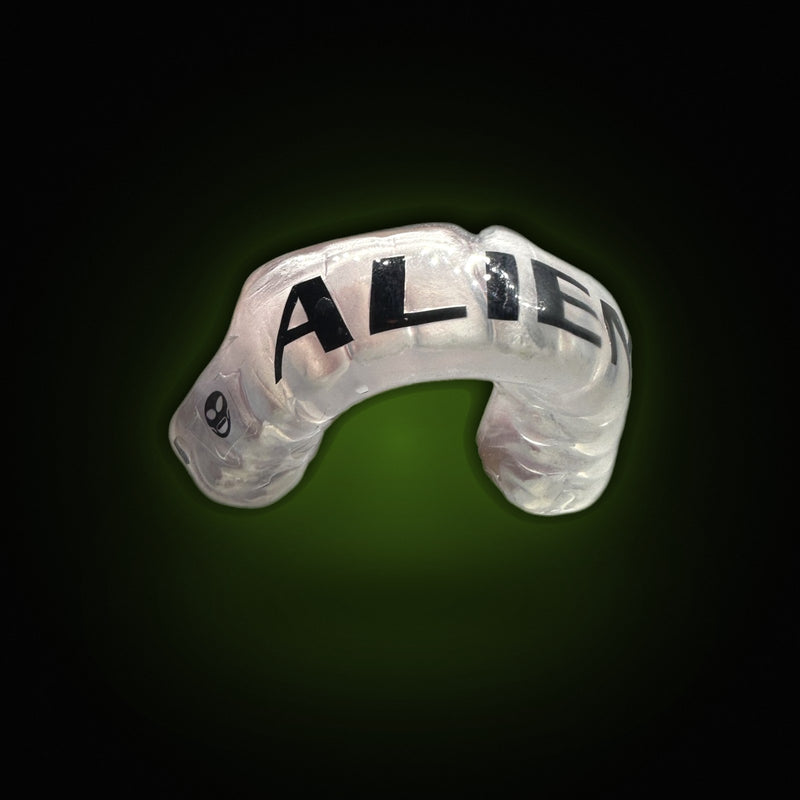
The IADT also says to replace a damaged or distorted mouthguard and to have your dentist check it at least once a year. Every AlienGuard is made from an impression of your own teeth:
- Team sports and grappling: NanoBite, our thinnest guard at 4 mm, for football, hockey, lacrosse, basketball, soccer, rugby, field hockey, wrestling and BJJ.
- Combat sports: Origin and Origin Pro, our 5 mm guards for boxing, MMA, Muay Thai, kickboxing, karate and taekwondo.
Check whether your sport requires a guard in mouthguard rules by sport.
Getting back to play after a knocked-out tooth
Your dentist will tell you when it's safe to return to contact. A replanted tooth, new dental work or a lost tooth can change how your old guard sits, so don't assume it still fits. Once your dentist clears you, take a new impression. If you've had dental work since your last AlienGuards impression, contact us before reordering from a stored model. Every guard is crafted within 10–14 business days after we receive a good impression. See how often to replace your mouthguard.
Athletes with braces can still order. Their dentist takes the impression or a 3D scan, then ships it to us or emails it to impressions@alienguards.com. See mouthguards with braces for the steps. There's no age limit. Teams and gyms get 20% off with a minimum of 5 guards; see team and gym orders.
Knocked-out tooth FAQ
Can a knocked-out tooth be saved?
It can be, if it's a permanent tooth and you act fast. The IADT says putting it back in the socket at the scene is the best treatment, and the AAE says a properly handled tooth can be replanted and last for years. See a dentist immediately either way.
What should you put a knocked-out tooth in?
If you can't put it back in the socket, use milk first. Next best are a tooth preservation solution (HBSS, like Save-a-Tooth), saliva (spit into a cup, or between the cheek and gum) and saline. Avoid plain water if you have any of these, and never let the tooth dry out.
Should you put a knocked-out baby tooth back in?
No. The IADT says primary (baby) teeth should not be replanted. Keep the child calm and call their dentist promptly.
How long do you have to save a knocked-out tooth?
Minutes matter. The AAE recommends seeing a dentist within 30 minutes if possible, though teeth can sometimes be saved after an hour or more. Under the IADT's 2020 guidelines, root cells are most likely viable if the tooth is replanted within about 15 minutes, and likely non-viable after more than 60 minutes of dry time.
Can a mouthguard prevent knocked-out teeth?
A mouthguard lowers the risk but can't prevent every injury. The ADA's research summary reports that mouthguard users were 82% to 93% less likely to suffer dentofacial injuries in a 2019 meta-analysis. The guard needs to fit and stay in place to help.
Sources: Fouad AF et al., IADT guidelines for the management of traumatic dental injuries: 2. Avulsion of permanent teeth, Dental Traumatology 2020; Tewari N et al., IADT and ASD guidelines for prevention of traumatic dental injuries: Part 10: First aid education, Dental Traumatology 2024; IADT Prevention and Emergency Care and How to Prevent Dental Injuries; AAE Knocked Out Teeth; ADA MouthHealthy Dental Emergencies; ADA Athletic Mouth Protectors (Mouthguards). All checked November 7, 2026.