

Protecting Your Child's Smile: The Benefits of Custom Mouthguards for Kids
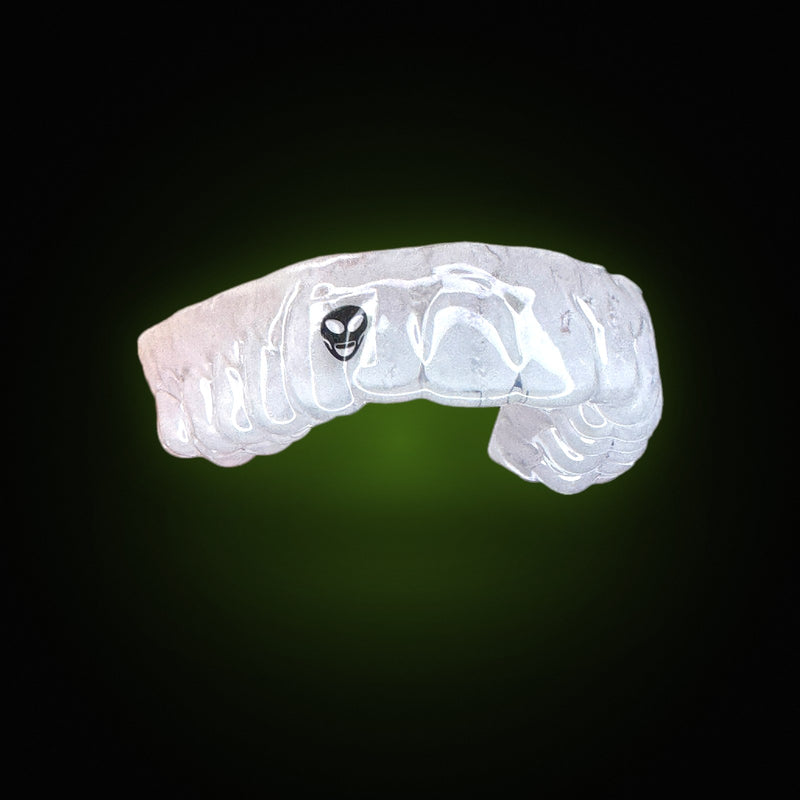
Kids play the same contact sports adults do, and their front teeth take most of the hits. A mouthguard helps protect them, but only if your child keeps it in. This parent's guide covers which youth sports require a mouthguard, what dental groups say about custom, boil-and-bite and stock guards, how growing teeth change things, and how to pick the right guard for your child's sport. When you're ready to order, here's how custom mouthguards for kids and youth athletes work at AlienGuards.
Why young athletes need a mouthguard
The American Academy of Pediatric Dentistry (AAPD) policy on preventing sports-related orofacial injuries (revised 2023) cites an average of about 22,000 dental injuries a year in children younger than 18 between 1990 and 2003. It notes that 50% to 90% of sports dental injuries involve the upper front teeth, and that the most common injuries are cuts to the lips and mouth, broken tooth crowns and knocked-out teeth. In high school injury data reviewed by the AAPD, the highest dental injury rates were in girls' field hockey and boys' basketball, and for most of the reported injuries the athlete was not wearing a mouthguard. More on the court in basketball and dental health.
The American Dental Association (ADA) guidance on athletic mouth protectors summarizes a 2019 review that found mouthguard users were 82% to 93% less likely to suffer dentofacial injuries than non-users. A mouthguard does not prevent every injury and does not prevent concussions, but it is a proven, low-cost way to lower the risk of chipped, cracked or knocked-out teeth. How a guard does its job: the science behind mouthguard protection. For other common misconceptions, see mouthguard myths debunked.
How common are dental injuries in kids?
Dental injuries are common in childhood, with or without sports. A 2018 meta-analysis in Dental Traumatology (Petti, Glendor and Andersson) pooled studies from around the world and estimated that 22.7% of children have injured a baby tooth and 18.1% of 12-year-olds have had a dental injury. The authors estimated that more than a billion people alive today have had one. An earlier review by Glendor pointed out that dental injuries often happen at a young age and that treatment may continue for the rest of the patient's life, which is why preventing them matters so much for kids.
Not all of those injuries come from sports, but sports are the part a mouthguard helps with. The authors of a 2021 study of young Gaelic football players in Ireland note that up to 40% of dental injuries in children happen during sports.
Which youth sports require a mouthguard?
According to the AAPD and the ADA, the National Federation of State High School Associations (NFHS) requires mouthguards in four sports: football, ice hockey, lacrosse and field hockey. It also requires them for wrestlers who wear braces. The AAPD adds that Maine, Massachusetts and New Hampshire have extended mouthguard requirements to more sports, such as soccer, wrestling and basketball. Youth leagues can add their own rules, so check with yours. For Pop Warner, AYF and flag football, see youth football mouthguard rules.
Required or not, the ADA recommends a properly fitted mouthguard for a long list of contact and limited-contact activities, including basketball, soccer, wrestling, martial arts, boxing, rugby, volleyball, gymnastics, cheerleading, baseball and softball. For every sport we cover, see our guide to mouthguard rules by sport, or go straight to the football mouthguard rules, lacrosse mouthguard rules or field hockey mouthguard rules. Soccer parents can check soccer mouthguard rules. They can also read why soccer players need a custom mouthguard.
Custom vs. boil-and-bite vs. stock for kids
Dental groups describe three types of mouthguards:
- Stock guards come ready to wear in a few sizes. The AAPD notes they must be held in place by clenching, which can interfere with breathing and speaking. The ADA calls them the least effective type.
- Boil-and-bite guards are softened in hot water and shaped by biting. The AAPD says they are the most used among athletes but vary greatly in protection, retention, comfort and cost.
- Custom guards are made on a model of the athlete's own teeth. The AAPD states that the custom-fabricated type is superior in retention, protection and comfort, and that a mouth-formed (boil-and-bite) guard is preferable to a stock guard when custom isn't available.
For a kid, fit matters for one more reason: comfort decides whether they wear it. The AAPD says players' perceptions of mouthguard use and comfort largely determine compliance. We break down the differences in more detail in custom vs. boil-and-bite mouthguards.
Growing teeth: how often to replace a child's mouthguard
Children's mouths change fast. The AAPD explains that baby teeth falling out, adult teeth coming in and orthodontic tooth movement mean a custom mouthguard may stop fitting a young athlete not long after the impression is taken.
Here's how to handle it:
- Tell us your child's age when you build their guard. There is no age limit for AlienGuards.
- Check the fit at the start of every season, and any time your child loses a baby tooth or a new adult tooth comes in.
- Replace the guard if it feels loose, pinches, needs to be held in by biting, or has tears or thin spots. More in why does my mouthguard fall out?
See how often to replace a mouthguard for the full checklist.
How to get your child to actually wear it
Buying the guard is the easy part. In one study cited by the AAPD, children who received mouthguards at no cost often didn't use them: 29% never wore it, 32% wore it occasionally, and only 23.2% wore it whenever they needed it. The AAPD names comfort and speech as big reasons kids stop, and coaches and parents as the biggest influences.
- Start with a fit they don't notice. A slim guard that stays in place without clenching is easier to keep in for a full game. If your child says it's hard to talk, read can you breathe and talk with a mouthguard?
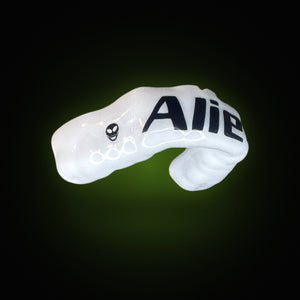
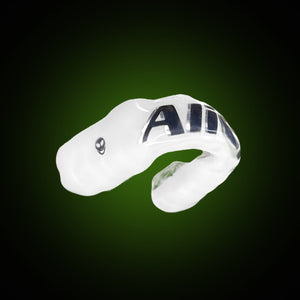
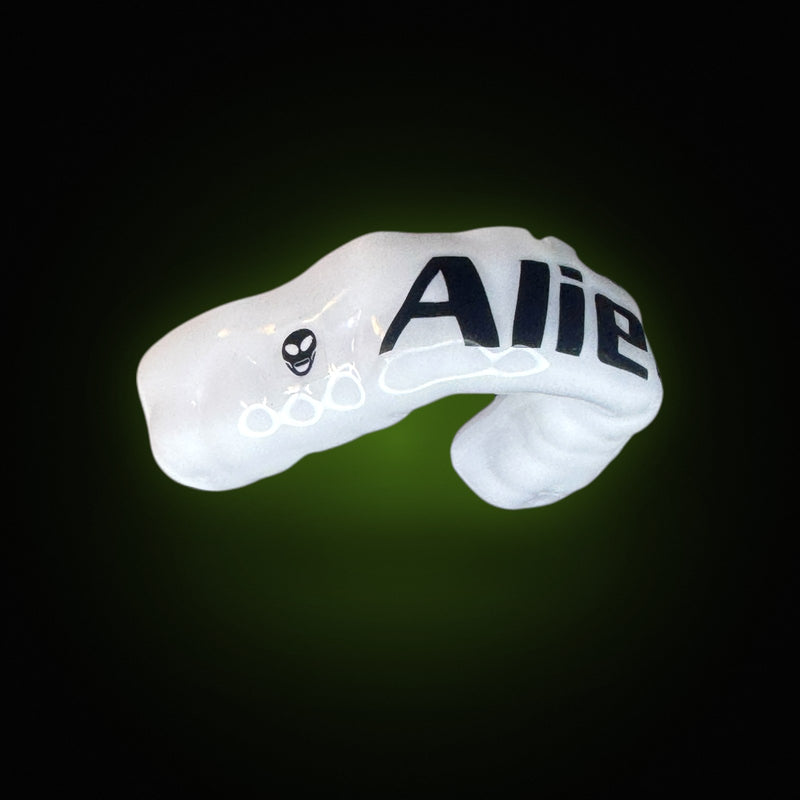
- Let them design it. Kids are prouder of gear they picked. Choose colors and add a name, initials or a jersey number. Metallic, satin and holographic text colors are included at no extra charge. Ideas are in choosing the right color and design.
- Make it part of the gear routine. Mouthguard goes in at the first whistle of practice, not just on game day. Keep it in a ventilated case in the bag.
What studies of kids' mouthguards found
Two studies from the same team at Trinity College Dublin looked at 9- to 16-year-old Gaelic football players, a sport with mouthguard rules. They show the gaps parents can close:
- Training counts too. In the 2021 study of 121 children and 118 parents, 99.2% of players said they wore a guard in games but only 80.8% in training, and older kids were less likely to follow the rule at practice. Only 27.1% of parents and 14% of children said the child wore a guard for every sport they played.
- Parents rate custom highly, but few kids have one. In the same study, 73.7% of parents believed custom guards gave better protection, yet only 3.8% of the children had one.
- Most guards didn't fit well. In a 2023 study, trained dentists checked the guards of 106 children. Two-thirds were boil-and-bite and only four were custom. 81% had inadequate retention, and 84% didn't extend far enough over the front of the teeth toward the gums. The authors said parents and coaches need to know which features maximize protection.
To check your child's current guard, make sure it stays on the upper teeth when they open their mouth, covers all the upper teeth back to the molars, comes up over the front of the teeth toward the gums, and has no bite-through spots or torn edges. If it fails any of those, it's time for a new one.
Which AlienGuard is right for your child's sport?
Every AlienGuard is made from your child's impression. The model changes with the kind of contact in their sport:
- NanoBite is our thinnest guard at 4 mm and the best of our models for breathing and talking. It's the pick for team and limited-contact sports and grappling: football, hockey, lacrosse, basketball, soccer, volleyball, rugby, field hockey, wrestling and jiu-jitsu. NanoBite comes in clear, white or black with up to 3 characters of custom text. Sport guides: football, basketball, soccer, volleyball and wrestling. Kids competing in jiu-jitsu? See BJJ mouthguard rules.
- Origin and Origin Pro are our 5 mm combat guards, for boxing, MMA, Muay Thai, kickboxing, karate and taekwondo only. Origin Pro adds more breathability and comfort. See custom boxing mouthguards and karate and taekwondo mouthguards.
- PowerBite is for powerlifting and weightlifting only, so it's for teen lifters, not team or combat sports. See weightlifting mouthguards.
Not sure? Our guide to choosing the right mouthguard for your sport walks through it, and the model comparison shows all four.
Braces, retainers and loose teeth
Kids with braces can get AlienGuards. Their dentist or orthodontist needs to take the impression instead of using our at-home kit, so the braces don't get damaged. The dentist can take an impression or 3D scan, then ship it to us or email it to impressions@alienguards.com. Every order includes a liability waiver with the checkbox "If the athlete has braces, my dentist will take the impression." If your child has a retainer, another dental appliance or loose teeth, talk to your dentist before using the kit. More detail is in our guide to mouthguards for orthodontic patients.
How ordering works for parents
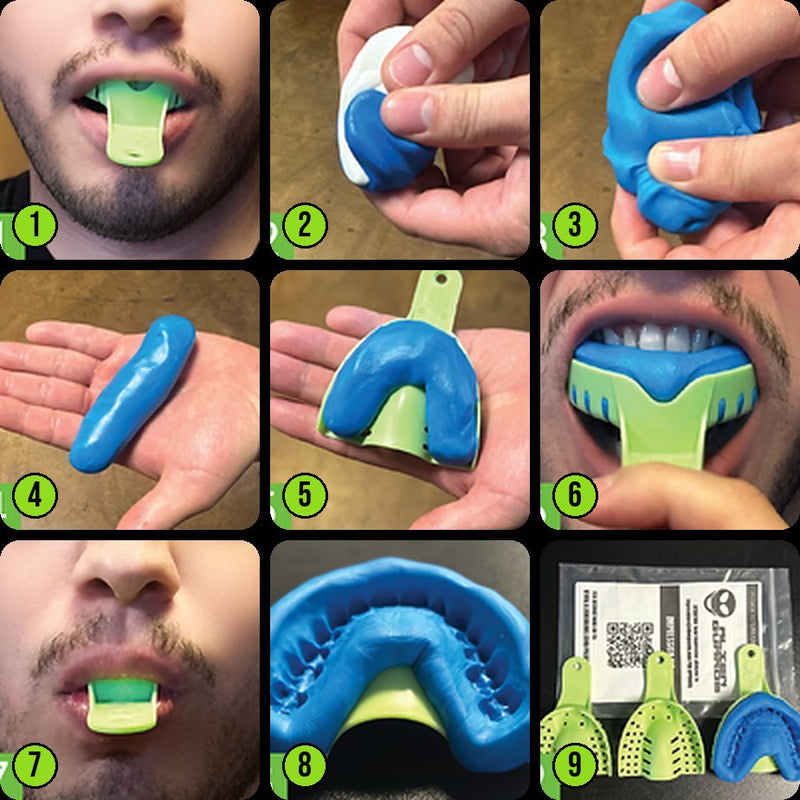
- Build and order. Pick the model, colors and your child's name or number. We ship you an impression kit.
- Take the impression together. Follow the impression guide at home. It takes about 10 minutes, and the putty sets in 2 minutes 30 seconds, so it helps to have a parent run the timer and mix the putty. The sizing and fit guide explains how the tray is sized. Email a photo of the impression to support@alienguards.com before you mail it back, and we'll confirm it looks good.
- We make it. The guard is pressure-formed on a model of your child's teeth and finished by hand in the USA within 10–14 business days after we receive a good impression, then shipped with tracking. See how long a custom mouthguard takes.
No dentist visit is needed unless your child wears braces. Here's how a custom mouthguard is made without a dentist. Orders for accessories only, such as a case or a spare impression kit, ship in a couple of business days.
Caring for a child's mouthguard
Rinse it with cool water before and after each use, brush it gently with a soft toothbrush and mild soap, and let it air dry in a ventilated case. Keep it away from heat, including hot cars, dishwashers and boiling water, so it keeps its shape. Teach your child never to share a mouthguard. Full steps are in how to clean and care for your custom mouthguard.
If a tooth gets knocked out
Dental trauma guidelines say a knocked-out baby tooth should not be put back in, but a knocked-out adult tooth should be replanted or stored in milk and seen by a dentist right away. Our knocked-out tooth first aid guide covers every step for parents and coaches.
Youth teams and clubs
Coaching a youth team or running a club? Teams, clubs and schools that order through team orders get 20% off mouthguards and merch with a minimum order of 5 mouthguards. Each guard can carry the team logo plus athlete names or numbers, on-site fitting help is available (minimum order and location apply), and we keep models on file for quick replacements for athletes 14 and older without braces. Learn more about custom team and gym mouthguards. If your child grinds their teeth at night, see teeth grinding and bruxism. If your child plays hockey, see our guide to mouthguards for hockey players.
Kids' custom mouthguard FAQ
What age should a child start wearing a mouthguard?
Once your child plays a sport with a risk of falls, collisions or contact with a ball, stick or another player. The ADA recommends a properly fitted mouthguard for contact and limited-contact sports at every level, and there is no age limit for AlienGuards. Check the fit each season. Our parent guide on what age kids should start wearing a mouthguard goes through it age by age.
Is a custom mouthguard worth it if my child's teeth are still changing?
For many families, yes. The AAPD says custom guards are superior in retention, protection and comfort, and comfort is what keeps kids wearing them. The trade-off is that a growing child may outgrow the fit when baby teeth fall out or adult teeth come in, so plan on replacing it more often than an adult would.
Which youth sports require a mouthguard?
The NFHS requires mouthguards in high school football, ice hockey, lacrosse and field hockey, and for wrestlers who wear braces. Some states and many youth leagues add other sports, so check your league's rules. Our hockey mouthguard rules and wrestling mouthguard rules cover two of the most common questions from parents.
Can my child get a custom mouthguard with braces?
Yes. Your child's dentist takes the impression or a 3D scan instead of using our at-home kit, so the braces don't get damaged. The dentist can ship it to us or email it to impressions@alienguards.com, and we make the guard from that.
Which AlienGuard is best for my child?
NanoBite, our thinnest 4 mm guard, for team sports and grappling. Origin or Origin Pro for combat sports only: boxing, MMA, Muay Thai, kickboxing, karate and taekwondo. PowerBite is only for powerlifting and weightlifting.