

Protecting Hockey Players: Custom Mouthguards for Maximum Safety
Hockey combines a hard puck or ball, sticks, boards and full-speed collisions, so it's no surprise that mouthguards are required in U.S. high school ice hockey, in USA Hockey youth play from 12 & Under up, and in school and college field hockey. This guide covers what hockey does to your teeth, what USA Hockey, the NFHS and the NCAA require or recommend, why a cage doesn't replace a mouthguard, what to look for in a guard you'll keep in for every shift, and which AlienGuard we recommend.
Why hockey players need a mouthguard
The American Dental Association (ADA) lists hockey, ice and field, among the contact and collision sports where it recommends a properly fitted mouthguard. It summarizes a 2019 systematic review and meta-analysis that found mouthguard users were 82% to 93% less likely to suffer dentofacial injuries than non-users. Broken tooth crowns and knocked-out teeth were the most common injuries. That review compared athletes who wore a mouthguard with athletes who didn't, across sports. It doesn't show that one brand beats another, and no mouthguard prevents every injury.
Field hockey stands out in the youth data. The American Academy of Pediatric Dentistry's policy on sports-related orofacial injuries reports that in girls' high school sports, the highest rate of dental injuries (3.5 per 100,000 athletic exposures) occurs in field hockey. It adds that more than 87% of dental injuries in field hockey (as in baseball and softball) come from player-object contact, meaning the ball or a stick, not another player. More in which mouthguard is right for contact sports.
What hockey does to your mouth
- Pucks, balls and sticks: a deflected shot or a high stick lands a lot of force on a small area, and the upper front teeth take most of it. More in how mouthguards protect teeth from chips and cracks.
- Boards, ice and turf: a fall or a check into the boards can drive the jaw shut or the face into a hard surface. See mouthguards and jaw injuries.
- Cuts to lips and cheeks: without a guard, your own teeth cut the inside of your mouth on contact. A guard puts a smooth, cushioned layer in between.
- Knocked-out teeth: a tooth knocked out of its socket is a dental emergency, and the first few minutes matter. Every coach should know what to do if a tooth is knocked out.
What the injury numbers show
Hockey's mouth injuries aren't rare, one-off accidents. Two large studies give a sense of the pattern:
- Alberta, Canada. Rattai and Levin (2018) reviewed 15 years (2001 to 2016) of injury reports from Hockey Alberta's minor hockey events. Of 12,433 recorded injuries, the mouth was the third most commonly injured body part, at 16% of all injuries, behind the arms and legs. Oral injuries happened at a steady rate every year, usually came from being struck by a stick or the puck rather than from collisions, and usually kept players out for a week or less. The authors encouraged mouthguards, custom over boil-and-bite, along with continued full-face protection.
- Finland. Lahti and colleagues (2002) studied insurance records covering 479 injured players with 650 mouth, face and dental injuries in 1991 and 1992. The most common dental injury was an uncomplicated crown fracture (a chipped or broken tooth crown), making up 43.5% of all injuries, and almost 70% of those happened in games. A blow from a stick was the most common cause, and stick injuries were about three times as common in games as in practice. Only 10% of the injured players wore any kind of protective guard.
Low mouthguard use shows up in other leagues too: a 2005 survey of Turkish premier league players (Caglar and colleagues) found limited mouthguard use and little awareness of dental injury. The takeaway for players and parents is simple. Most hockey mouth injuries come from sticks and pucks, they happen more in games, and they happen to players who aren't wearing a guard.
Do hockey players have to wear a mouthguard?
In U.S. high school hockey, yes; in college ice hockey, a mouthguard is recommended rather than required. The ADA states that the NFHS (high school) and NCAA (college) mandate mouthguards in football, field and ice hockey, and lacrosse. The NFHS Sports Medicine Advisory Committee's mouthguard position statement lists the same sports for high school. College ice hockey is the exception today: Rule 9.5 of the current NCAA ice hockey rules book says only that it is recommended that all players wear an internal mouth guard covering all the teeth of one jaw. The NCAA first required mouthguards in ice hockey in 1975; see the history of mouthguards.
USA Hockey. Under Rule 304 (Protective Equipment), all players, including goalkeepers, in the 12 & Under through Youth 18 & Under (including High School) and Girls' 19 & Under classifications must wear a colored (non-clear) internal mouthpiece that covers all the remaining teeth of one jaw, usually the upper. USA Hockey strongly recommends, in all classifications, that players wear a mouthpiece form fitted by a dentist. Adult players aren't listed under that requirement, but the rule still strongly recommends an internal mouthpiece for skaters and goalkeepers at every age.
Field hockey. NFHS high school field hockey requires a mouthguard, and its 2026 rules say tooth and mouth protectors can't carry non-functional or unsafe attachments. NCAA field hockey requires field players to wear a mouthguard at all times. Club leagues set their own rules.
For the full detail, read our hockey mouthguard rules and field hockey mouthguard rules, or see mouthguard rules by sport. Also play lacrosse? See lacrosse mouthguard rules.
Clear or colored? Pick a color that meets the rule
Because USA Hockey requires a colored, non-clear mouthpiece for players from 12 & Under through 18 & Under and Girls' 19 & Under, a fully clear guard may not pass an equipment check at those ages. If you play in those classifications, choose a White or Black NanoBite rather than Clear. For team color ideas, see mouthguard colors for team uniforms.
Do you still need a mouthguard with a full cage?
Yes. A cage or full facemask and a mouthguard do different jobs. The cage keeps sticks and pucks off your face, while the mouthguard cushions your teeth and keeps them away from your lips and cheeks when your jaw takes a hit or snaps shut. That's why USA Hockey strongly recommends that players at every age wear an internal mouthpiece along with a certified helmet and full facemask.
Concussion: what a mouthguard can and can't do
The ADA says the evidence on mouthguards and concussion is mixed and less consistent than the evidence for dental injuries. It cites studies that linked mouthguard use to fewer concussions in youth and college ice hockey, and a 2009 systematic review that found no significant effect in professional ice hockey. In one Canadian youth ice hockey study, players wearing any mouthguard had lower odds of concussion, and the authors concluded mouthguards should be required in youth hockey. That study was observational, and it didn't find that custom guards did better than off-the-shelf ones. For how oral health affects training, see dental health and sports performance.
The NFHS position statement says current research doesn't support using a mouthguard to reduce concussion risk or severity. Choose a mouthguard to protect your teeth, lips and jaw. Read do mouthguards prevent concussions? for more.
What to look for in a hockey mouthguard
The ADA says an ideal mouthguard is properly fitted, covers all the remaining teeth on one arch (usually the upper), stays in place comfortably and securely, and absorbs impact energy. For hockey, that means:
- It stays in without clenching, through shifts, falls and contact. A loose guard ends up tucked in a glove. If yours slips, read why does my mouthguard fall out?
- You can breathe and talk. Short, hard shifts need air, and you need to call for the puck or a switch. See can you breathe and talk with a mouthguard?
- The right thickness. Read how thick should a mouthguard be? for how 4, 5 and 6 mm guards compare.
Custom vs. boil-and-bite for hockey
The ADA describes three types. Stock guards have to be held in by closing your mouth, so the ADA calls them the least effective type. Boil-and-bite guards are shaped by biting into softened plastic, and imprecise shaping can leave a poorly fitted guard. Custom guards are made from an impression of your own teeth. In a 1994 study of 40 high school athletes cited by the ADA, both custom-made and self-adapted guards offered adequate protection, but players preferred the custom-made guard. More in why custom mouthguards outperform boil-and-bite. More on mouthguard materials and thickness.
Which AlienGuard for hockey: NanoBite
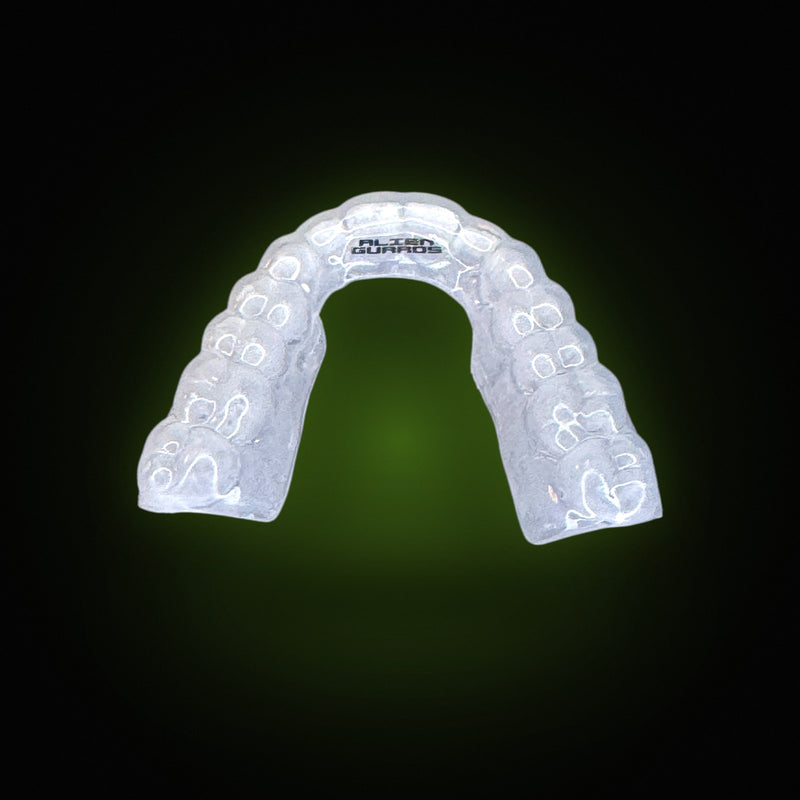
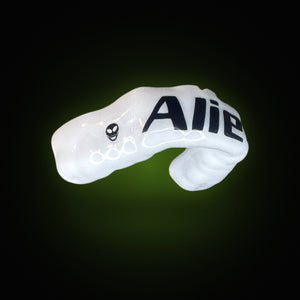
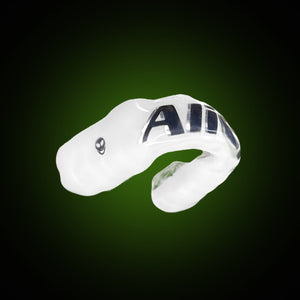
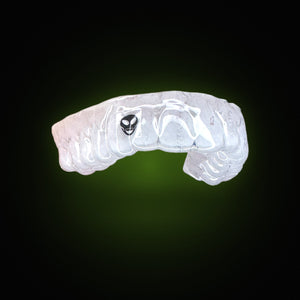
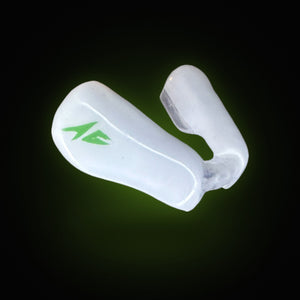
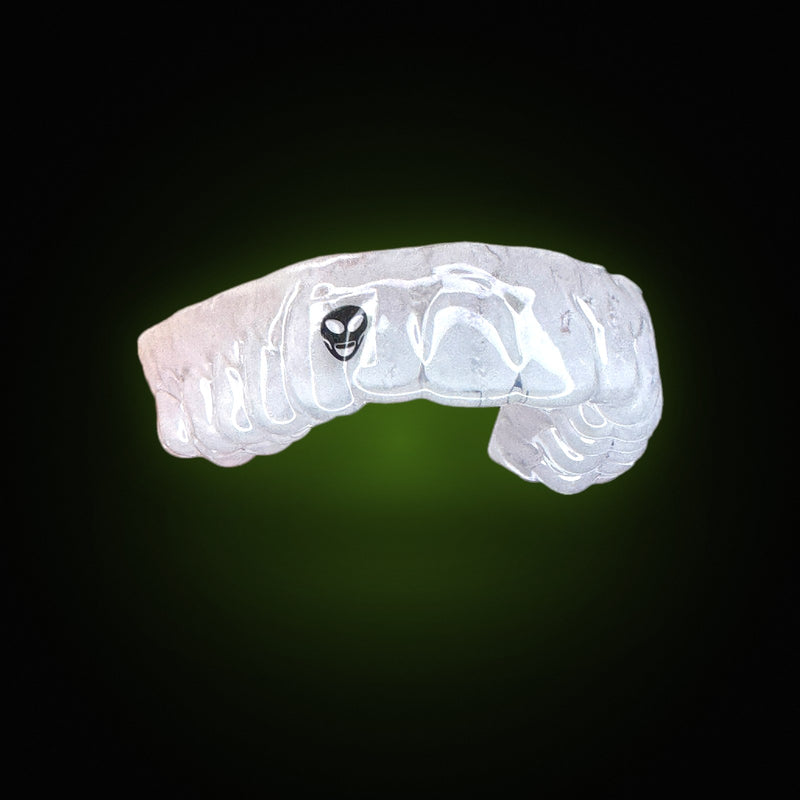
Our pick for ice hockey and field hockey is NanoBite, our thinnest guard at 4 mm. It's our lowest-profile model and the best of our guards for breathing and talking on long shifts. It's formed on a model of your own teeth, so it stays in place.
- Base colors: Clear, White or Black. Pick White or Black where USA Hockey's non-clear rule applies.
- Custom text: up to 3 characters, like your number or initials. Metallic, satin and holographic text colors are free.
Origin and Origin Pro are our combat guards, made only for boxing, MMA, Muay Thai, kickboxing, karate and taekwondo. They are not our recommendation for hockey. PowerBite is for powerlifting and weightlifting only. Compare all four models, or shop the hockey collection. Also play football? See football mouthguard rules.
How to order a custom hockey mouthguard
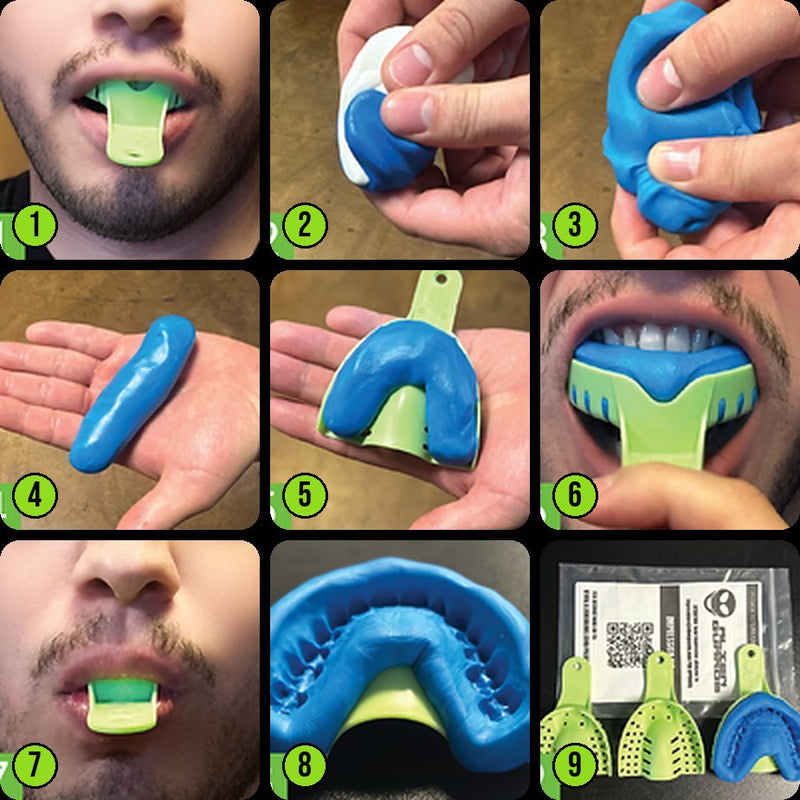
- Build your NanoBite. Pick your base color and custom text, and take a quick smile photo so we can pick your tray size. See sizing and fit.
- Take your impression at home. We ship you an impression kit. Taking the impression takes about 10 minutes. Follow the impression instructions, then mail it back. Here's how a custom mouthguard is made without a dentist visit.
- We make it. Your guard is crafted within 10–14 business days after we receive a good impression, then shipped with tracking. More in how long a custom mouthguard takes.
Order before tryouts so you can wear it in practice before your first game.
Players with braces
Athletes with braces can get AlienGuards. Your dentist takes the impression or a 3D scan instead of using our at-home kit, so your braces don't get damaged. The dentist can ship it to us or email it to impressions@alienguards.com. More in can you wear a mouthguard with braces?
Youth hockey
There's no age limit, so youth players can order too. Younger players' teeth and jaws are still changing, so check the fit often and replace the guard as they grow. Parents can read our guide to custom mouthguards for kids and youth athletes. For the research on kids and mouthguards, see custom mouthguards for kids.
Care and replacement
Rinse your guard in cool water after every skate or practice, brush it gently with a soft toothbrush and mild soap, and let it air-dry in a vented case rather than loose in your hockey bag. Keep it away from hot water, dishwashers and hot cars so it keeps its shape. See how to clean and care for your custom mouthguard. Replace it every year, or sooner if it's chewed, torn or loose. More in how often to replace your mouthguard.
Ordering for a whole team
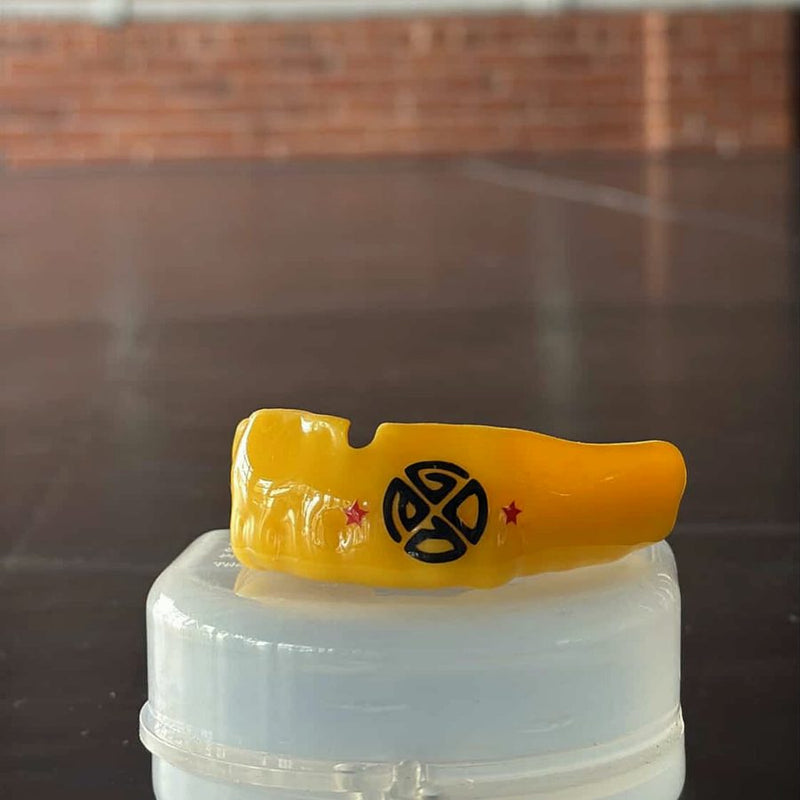
Teams, clubs and schools that order 5 or more mouthguards get 20% off through team orders, including NanoBite, with your team logo plus each player's name or number on every guard. We can also help with on-site fitting so every player takes a good impression (minimum order and location apply), and keep models on file for quick replacements (minimum order; athletes 14+ without braces). See custom mouthguards for teams and gyms, and our hockey and lacrosse mouthguard guide and field hockey mouthguard guide.
Keep reading: custom mouthguards for soccer players, why rugby players need a custom mouthguard and why mouthguards matter in basketball. For colors that meet hockey rules, see custom mouthguard designs.
Hockey mouthguard FAQ
Is a mouthguard required in hockey?
In U.S. high school ice hockey and in high school and college field hockey, yes. In college ice hockey, the current NCAA rules book (Rule 9.5) recommends a mouth guard rather than requiring one. USA Hockey requires a colored, non-clear internal mouthpiece for players from 12 & Under through 18 & Under and Girls' 19 & Under, and strongly recommends a dentist-fitted mouthpiece at every age.
Can you wear a clear mouthguard in hockey?
Not in the USA Hockey classifications where Rule 304 requires a colored, non-clear mouthpiece. Choose a White or Black NanoBite for those ages, and check your league's rulebook.
Do you need a mouthguard if you wear a full cage?
Yes. A cage protects your face, while a mouthguard cushions your teeth and protects your lips and cheeks when your jaw takes a hit. USA Hockey recommends wearing both.
Which AlienGuard is best for hockey?
NanoBite, our thinnest guard at 4 mm and the best of our models for breathing and talking, for both ice hockey and field hockey. Origin and Origin Pro are for combat sports only, and PowerBite is for lifting.
Can hockey players with braces get a custom mouthguard?
Yes. Your dentist takes the impression or a 3D scan instead of using our at-home kit, then ships it to us or emails it to impressions@alienguards.com.