

How Mouthguards Protect Your Teeth from Chips and Cracks
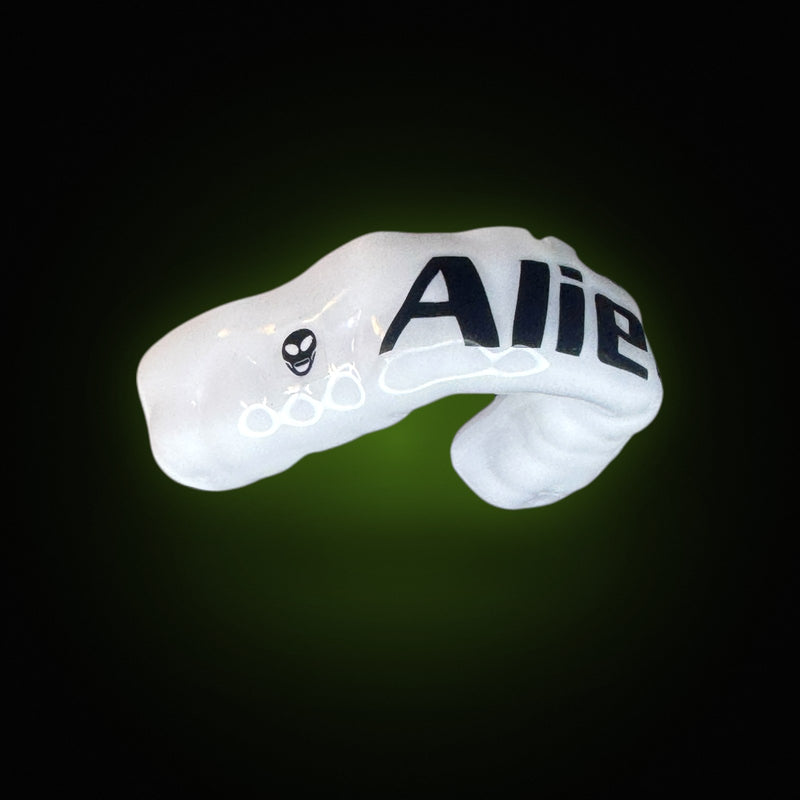
A chipped or cracked front tooth is one of the most common ways a game ends with a trip to the dentist. It's also the injury mouthguards are best at preventing.
Here's why teeth chip and crack in sports, what the research shows, what to do if it happens mid-game, and how to pick a guard you'll actually wear.
Why chipped and cracked teeth are so common in sports
The International Association of Dental Traumatology (IADT) 2020 guidelines say crown fractures and luxations (teeth knocked loose or out of position) are the most common of all dental injuries in permanent teeth, and that these injuries happen frequently in children and young adults. That's the age range playing school, club and college sports.
The way they happen is predictable. A large U.S. study of high school athletes (Collins et al., Dental Traumatology, 2016) recorded 222 dental injuries over 6 school years and found:
- 61.3% came from contact with another player, and 31.5% from contact with the ball, stick or other equipment.
- The rate in competition was about three times the rate in practice.
- Girls' field hockey and boys' basketball had the highest rates.
- In 72.5% of the dental injuries, the athlete wasn't wearing a mouthguard.
Dental injuries were still uncommon overall (0.90 per 100,000 athlete exposures). But when a tooth did break, it was usually a player without a guard in.
What the research says about mouthguards and tooth fractures
The American Dental Association (ADA) summarizes several lines of evidence:
- 2019 meta-analysis: Fernandes et al. (Dental Traumatology) pooled studies of contact-sport athletes. Dental trauma affected about 7.5% to 7.75% of mouthguard users, compared with 48.31% to 59.48% of non-users. The ADA describes this as mouthguard users being 82% to 93% less likely to suffer dentofacial injuries. Coronal fractures (breaks in the visible part of the tooth) and knocked-out teeth were the most frequent injuries.
- 2007 review: Knapik et al. (Sports Medicine) found the risk of an orofacial injury was 1.6 to 1.9 times higher when a mouthguard wasn't worn. In lab impact tests, mouthguards made of many different materials reduced the number of fractured teeth compared with no guard.
- College basketball: in a season-long study of 50 men's Division I teams (Labella et al., 2002), players wearing custom-fitted mouthguards had a dental injury rate of 0.12 per 1,000 athlete exposures, compared with 0.67 for non-users, roughly five times lower.
A fair caveat: most of this research is observational, and studies define "dental injury" differently. The Fernandes review rated its evidence as moderate quality. But the direction is consistent across decades of studies, which is why the ADA, the American Academy of Pediatric Dentistry and the NFHS all recommend mouthguards for sports with a risk of mouth injury.
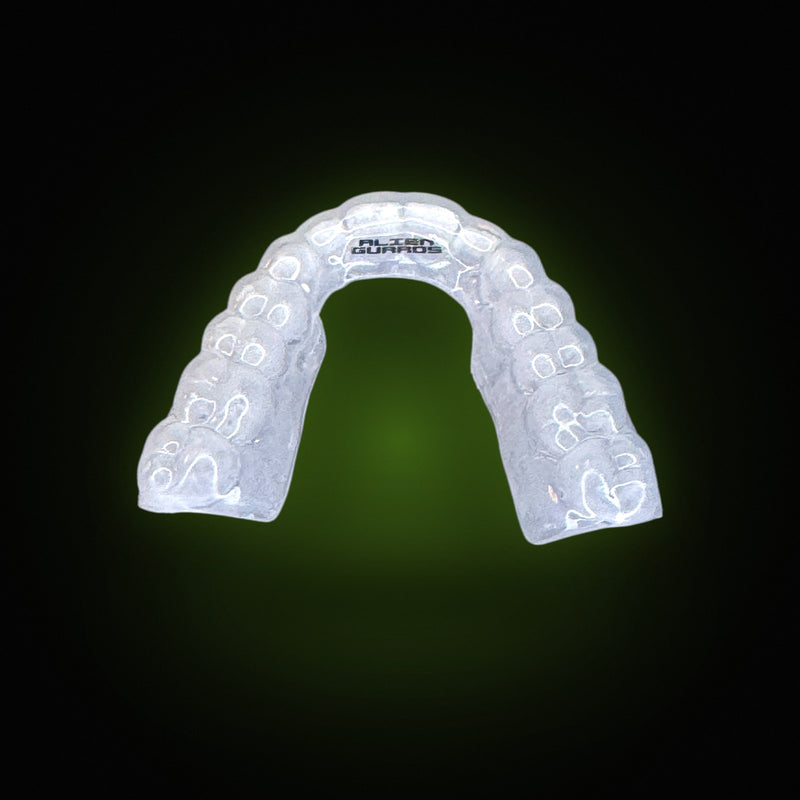
How a mouthguard protects your teeth from chips and cracks
Researchers describe a few ways a guard is thought to protect your teeth (Knapik et al., 2020):
- It absorbs and spreads the force. A resilient layer over your teeth takes some of the energy of a hit and spreads the rest across the whole arch, instead of letting it land on the edge of one or two front teeth.
- It keeps your upper and lower teeth apart. A shot to the chin can slam your teeth together. A guard between them helps keep tooth from hitting tooth, which is one way back teeth and cusps crack.
- It covers the teeth most at risk. The ADA says an ideal guard covers all the remaining teeth on one arch, usually the upper teeth, which take most hits. The NFHS Sports Medicine Advisory Committee adds that a guard should separate the biting surfaces and fully cover the upper teeth (or the lower teeth, if your lower teeth stick out past your upper teeth).
- It protects your lips and cheeks. The ADA notes that a guard also protects the soft tissue of the lips and cheeks from being cut against your teeth.
None of that works if the guard isn't in your mouth or shifts out of place. The ADA calls stock guards the least effective type because of their poor fit and the need to keep repositioning them. The NFHS also says a guard should not be altered in any way that reduces protection, so cutting it down or chewing on it works against you. For daily care that protects the fit, see how to clean and care for your mouthguard.
Chips, cracks and fractures: what the terms mean
Dentists sort these injuries by how deep they go. The IADT guidelines use these categories for permanent teeth:
- Enamel infraction: a crack or crazing in the enamel with no tooth structure missing.
- Enamel fracture: a small chip of enamel is missing.
- Enamel-dentin fracture: a bigger chip that exposes the yellowish dentin under the enamel. These teeth are often sensitive.
- Crown fracture with pulp exposure: the break reaches the nerve, often showing a pink or bleeding spot.
- Crown-root and root fractures: the break runs below the gumline. These need a dentist's exam and X-rays to diagnose.
You can't always tell how deep a crack goes, so any chipped or cracked tooth is worth a dental visit, even if it doesn't hurt. If your front teeth already have crowns, veneers or bonding, see mouthguards with dental work.
What to do if you chip or crack a tooth during a game
This is general first-aid information, not a substitute for a dentist. Based on the IADT guidelines:
- Find the piece. If you can find the broken fragment, keep it. The IADT guidelines say an available fragment can be bonded back onto the tooth. For larger fragments, they advise rehydrating it in water or saline, so keep it moist in a clean container.
- Check your lip. If the piece is missing and your lip or cheek is cut, tell your dentist. The guidelines recommend X-rays to check that no fragment is stuck in the soft tissue.
- See a dentist promptly. They'll check for a crack that goes deeper, a loose tooth or an injury to the nerve, and plan follow-up visits.
- Follow your dentist's return-to-play advice. The IADT guidelines advise avoiding contact sports while an injured tooth heals.
If a whole tooth is knocked out, minutes matter. See what to do when a tooth is knocked out in sports.
Custom vs. boil-and-bite vs. stock for tooth protection
The ADA lists three types of guards. Stock guards come pre-formed in a few sizes and aren't adapted to your mouth. Boil-and-bite guards are softened in hot water and shaped by biting. Custom guards are made on a model of your teeth from an impression. The ADA says custom guards are considered by many to be the most protective option, and that other guards can be effective if they're properly fitted and worn consistently. For how a guard absorbs and spreads force, see the science behind mouthguard protection.
The NFHS position statement lists custom guards as giving an accurate fit, comfort and possibly superior protection. It lists boil-and-bite guards as inexpensive but notes they deteriorate over time and may not last a whole season.
We'll be straight about the research: studies haven't proven that custom guards prevent more chipped teeth than a well-fitted boil-and-bite guard that's worn every time. In the Collins study, almost all injured athletes who were wearing a guard had a self-fitted one (95.9%), but most athletes wear self-fitted guards, so that number can't show which type works better. What custom fit does is make it easier to keep your guard in, which matters because the guard on the bench protects nothing. High school athletes in a 1994 JADA study preferred custom-made guards for comfort and wearability. More in custom vs. boil-and-bite. Worried a guard will get in the way? See breathing and talking with a mouthguard.
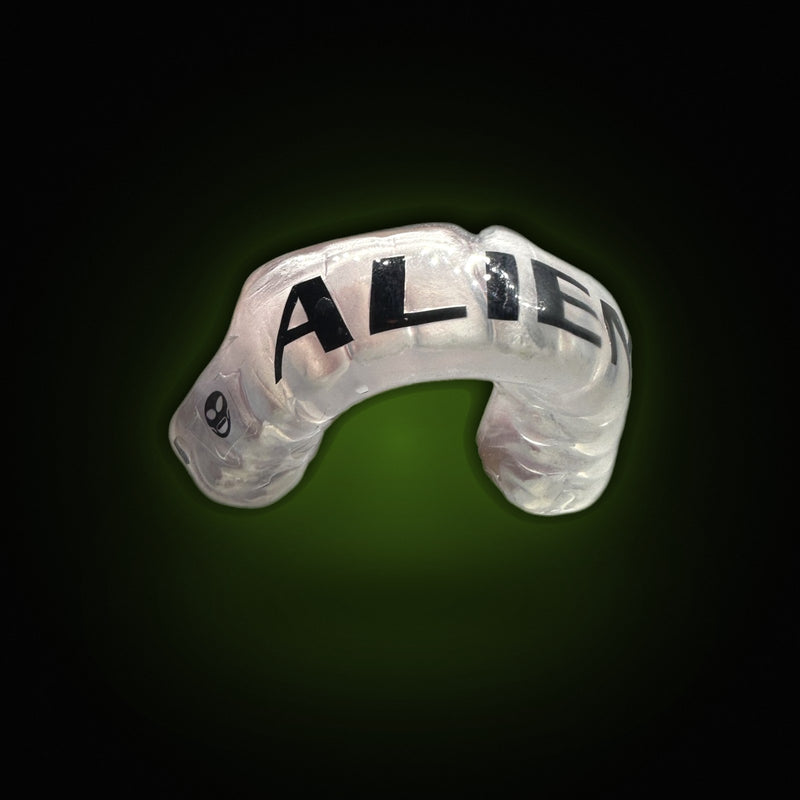
Keep your guard able to protect you
- Wear it in practice too. You practice far more hours than you compete.
- Don't chew it or cut it down. Thin, bitten-through spots leave less material where you need it.
- Keep it away from heat. Hot water, dishwashers and hot cars can warp a guard so it no longer fits. Store it in a ventilated case.
- Replace it when it's worn. We recommend a new guard every year, or sooner if it's torn, thin or loose. See how often to replace your mouthguard.
Not sure how much material you need? Read how thick should a mouthguard be?
Which AlienGuard for your sport
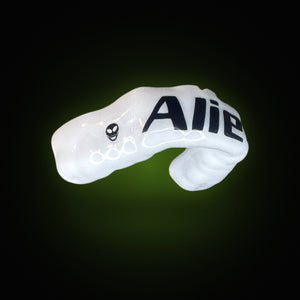
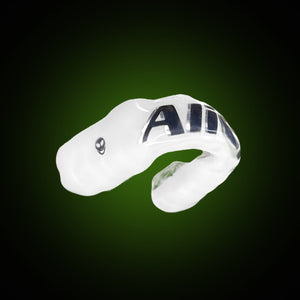
- Football, basketball, soccer, lacrosse, hockey, field hockey, rugby, wrestling and BJJ: NanoBite, our slim 4 mm guard. Shop it by sport: basketball mouthguards, hockey mouthguards, rugby mouthguards. Guides: football, basketball, soccer, lacrosse, field hockey, rugby, wrestling. Soccer players can also check soccer mouthguard rules. Rugby players can read how rugby players can protect their smile.
- Boxing, MMA, Muay Thai, kickboxing, karate and taekwondo: Origin (5 mm, reinforced impact zones) or Origin Pro (same 5 mm, more breathable and comfortable, optional High Impact 6 mm). These are for combat sports only. Guides: boxing, Muay Thai, kickboxing, karate and taekwondo. Competing in Muay Thai? See Muay Thai mouthguard rules. More for fighters in combat sports and dental protection.
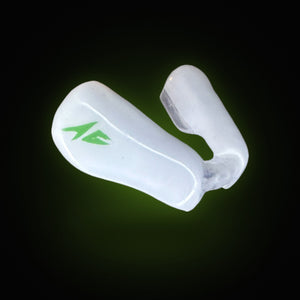
- Powerlifting and weightlifting: PowerBite, for lifting only. See weightlifting mouthguards.
Metallic, satin and holographic text colors are free on every model. Compare all four models.
How to order
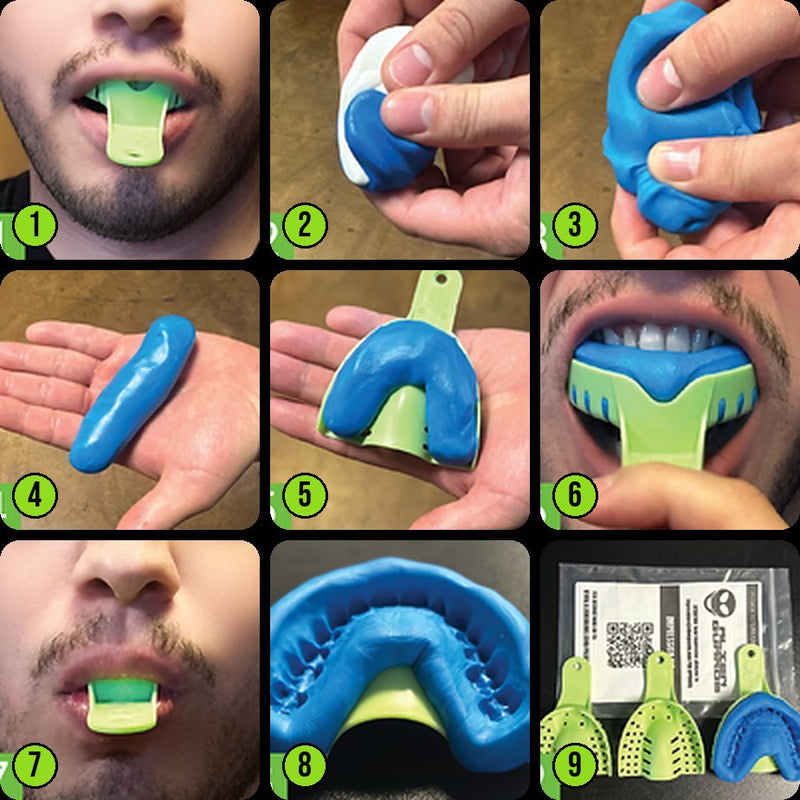
- Build your guard. Pick your model, color and text, and take a quick smile photo so we can pick your tray size. See sizing and fit.
- Take your impression at home. We ship you an impression kit. It takes about 10 minutes. Follow the impression instructions, then mail it back.
- We make it. Your guard is crafted within 10–14 business days after we receive a good impression, then shipped with tracking.
Athletes with braces can get AlienGuards, but their dentist needs to take the impression or a 3D scan instead of using our at-home kit, so the braces don't get damaged. The dentist can ship it to us or email it to impressions@alienguards.com. Teams and gyms get 20% off every model with a minimum of 5; see team orders. Have braces? See mouthguards for orthodontic patients.
Keep reading: basketball and dental health, mouthguards and jaw injuries and how much a custom mouthguard costs. Also see dental health and sports performance. What about the brain? Read do mouthguards prevent concussions? Playing hockey, where sticks and pucks cause most of these? See our guide to mouthguards for hockey players.
Chipped and cracked teeth FAQ
Do mouthguards prevent chipped teeth?
They greatly lower the risk. A 2019 meta-analysis found dental trauma in about 7.5% to 7.75% of mouthguard users versus 48% to 59% of non-users, and a 2007 review found orofacial injury risk was 1.6 to 1.9 times higher without a guard. No guard makes teeth unbreakable, but it's the best protection you can wear.
What should I do with a broken piece of tooth?
Keep it moist in water or saline in a clean container and bring it to your dentist. The IADT guidelines say an available fragment can be bonded back onto the tooth. If the piece is missing and your lip is cut, tell your dentist so they can check that it isn't in the lip.
Is a small chip or crack an emergency?
A small chip that doesn't hurt is usually not a middle-of-the-night emergency, but see a dentist soon. Cracks can go deeper than they look, and pain, a pink spot or a loose tooth needs prompt care.
Is a custom mouthguard better than boil-and-bite for chipped teeth?
The ADA says custom guards are considered by many to be the most protective, and the NFHS says they may offer superior protection, but studies haven't proven custom prevents more chipped teeth than a well-fitted guard worn every time. The real advantage is fit and comfort, which make it easier to keep your guard in.
Can I get a mouthguard if I have braces?
Yes. Athletes with braces can get AlienGuards, but your dentist needs to take the impression or a 3D scan instead of our at-home kit, then ship it to us or email it to impressions@alienguards.com.