

Can You Wear a Mouthguard in Handball? Rules and Tips
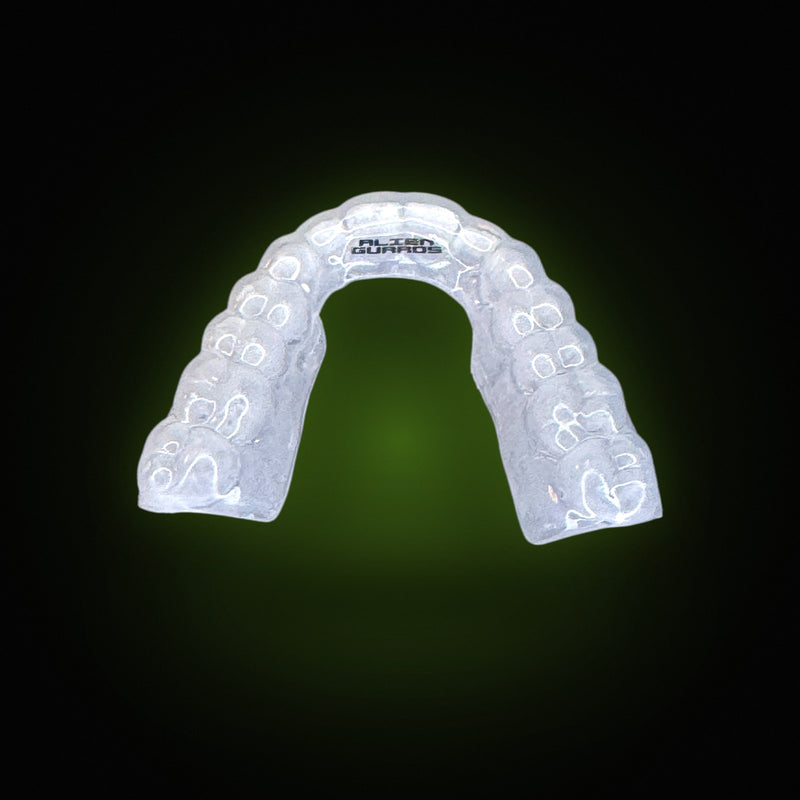
Handball looks like a passing game from the stands. On the court it's a contact sport: pivots wrestle for position at the 6-meter line, defenders step into jumping shooters, and hands and elbows fly at head height. Yet very few handball players wear a mouthguard, and many aren't sure the rules even allow one.
This guide covers what the International Handball Federation (IHF) and USA Team Handball rules say about mouthguards, including a color rule many players have never heard of. It also covers what research shows about mouth and tooth injuries in handball and how to choose a guard that won't slow you down. It's general information, not legal or dental advice. Your referees, event organizer and club have the final say.
The short answer
- Mouthguards are not required in handball. The IHF Rules of the Game don't make one mandatory, and USA Team Handball applies the IHF rules at its sanctioned events.
- They are allowed, with a color rule. The IHF's Regulations on Protective Equipment and Accessories say transparent and single-coloured mouth guards are allowed, and non-transparent and multi-coloured ones are not.
- Face masks and helmets are banned. Since you can't wear face protection in handball, a mouthguard is one of the few ways to protect your teeth.
- The injury risk is real. In a survey of 507 Swiss top-league players, 19.7% had suffered dental trauma in their handball careers. Only 5.7% wore a mouthguard.
What the IHF Rules of the Game say
The IHF Rules of the Game for Indoor Handball (edition in force from July 1, 2025) cover equipment in Rule 4:9. Players must wear sports shoes, and it is not permitted to wear objects that could be dangerous to the players or give them an improper advantage. The rule lists examples: head protection, face masks, gloves, bracelets, watches, rings, visible piercings, necklaces or chains, earrings, glasses without restraining bands or with solid frames, and objects that could cause cuts or abrasions (fingernails must be trimmed short).
Mouthguards aren't on that list, and the Rules of the Game never require one. A few other points from Rule 4 and the IHF guidelines matter here:
- No face protection. The guidelines on Rule 4:9 say all types and sizes of face masks and helmets are forbidden, including masks that cover only part of the face. Federations and referees are not allowed to grant exceptions.
- The team official signs off on equipment. Before the game, the responsible team official confirms by signing the match report that all players are correctly equipped. If the referees spot faulty equipment after the start, the official is punished progressively and the player has to leave the court until the problem is fixed.
- Ask before the game if in doubt. If a team has any doubt about equipment, the responsible team official should contact the referees or the delegate before the start of the game.
- Bleeding means leaving the court. Under Rule 4:10, a player who is bleeding or has blood on the body or uniform must leave the court right away through a normal substitution and can't come back until the bleeding has stopped, the wound is covered and the body and uniform are cleaned.
The IHF mouthguard color rule
The detail most players miss is in a separate document. The IHF Regulations on Protective Equipment and Accessories (July 1, 2025 edition) has a head and face section with pictured examples. It says:
- "Transparent and single-coloured mouth guards are allowed."
- "Non-transparent and multi-coloured mouth guards are not allowed."
The same document allows nose protection made of soft, single-coloured materials and tapes, sport glasses with special sports headbands and elastic temples, and soft, elastic headbands. Helmets and masks are not allowed. It also notes that national federations have the right to apply different regulations in lower-level club competitions.
In practice, the safe choice for an IHF-rules match is a clear guard or a guard in one solid color. A guard with multi-color graphics, flags or a logo in several colors may be turned away. If your guard has a name or logo in a second color, ask the referees or the delegate before the game rather than at the bench check.
More on picking colors and designs: choosing the right color and design for your mouthguard. For other sports' rules on decorated guards, see fang and grill mouthguard rules.
USA Team Handball rules
The USA Team Handball Competition Rulebook (Revision 10, October 2026) says that USATH, as a member of the IHF, applies all handball rules in the IHF Rules of the Game in all USATH-sanctioned events. So the same Rule 4:9 applies at U.S. sanctioned events.
There is one American twist. To lower the barrier to entry, the rulebook gives local organizing committees flexibility on enforcing the IHF Regulations on Protective Equipment and Accessories. Organizers can decline to enforce certain rules, but only cosmetic ones (the example given is color matching between base layers and jerseys), never anything that would endanger athlete safety, and only with the head referee or the national referee committee. Whether that covers a mouthguard's color is up to the event. If you're unsure, ask the organizer before you travel.
Handball mouthguard rules at a glance
| Level | Mouthguard required? | What the rules say |
|---|---|---|
| IHF (Olympics, World Championships) | No | Allowed if transparent or single-coloured; non-transparent, multi-coloured guards not allowed; face masks and helmets banned |
| USA Team Handball sanctioned events | No | IHF rules apply; organizers may relax some cosmetic equipment rules with the head referee, not safety rules |
| National federations, lower club levels | No | May apply different equipment regulations; check with your federation |
| Practice | No | Up to you and your club |
For more sports in one place, see mouthguard rules by sport.
What research shows about handball mouth injuries
Most handball dental research comes from Europe, where the sport is biggest. The studies use different methods, so treat the numbers as estimates, but they point the same way:
- Swiss top leagues (2016). In interviews with 507 players and 35 coaches from the two highest Swiss leagues, 19.7% of players had experienced dental trauma in their handball careers, and crown fractures were by far the most frequent injury (40.8%). Only 5.7% of players wore a mouthguard.
- Croatian professionals (2017). In a survey of 100 professional players, 49% had head or facial trauma in the past year and 22% had dental injuries. Of the affected teeth, 76.9% were upper incisors. Players who wore a mouthguard had a 5.55 times lower chance of dental injury, and guards had a statistically significant protective role against tooth fractures and knocked-out teeth. Two thirds (67%) knew mouthguards could prevent injuries, but only 28% used one regularly, and 76.9% of regular users had been advised to by their dentist.
- French club players (2021). In a survey of 263 players in Lorraine, 24.7% reported at least one orofacial injury and 9.9% reported dental injuries. Almost all (97.3%) knew about mouthguards, and 95.3% of those thought they work, but only 3.0% used one.
- Young athletes (2018). A study of 229 young athletes found a dental injury rate of 21.8% in handball, similar to karate (17.2%), but only 14.5% of the handball players used a mouthguard, compared with 70.7% in karate. The authors suggested mouthguards should be mandatory in medium-risk sports too.
- Children in Istanbul (2013). In interviews with 212 young players (average age 12), 19.3% had sustained a dental injury, mostly from a blow by another player. Only 15.6% were aware of mouthguards, and none used one.
- Across contact sports (2020). A systematic review and meta-analysis estimated that about 25% of adult handball players (24.59%) had had a dentofacial injury, between basketball (27.26%) and field hockey (19.07%).
Mouthguards don't protect the nose or eyes. A survey of 41 handball coaches in South Korea found the nose was the most common facial injury site (51.7%), and the most common causes were being hit by a hand (37.5%), an elbow (30.3%) or the ball (16.1%). None of the coaches said their players wore a mouthguard. More on what guards can and can't do: mouthguard myths debunked and do mouthguards prevent concussions?
What teams and coaches do
Even at the top level, prevention is patchy. In a 2024 survey of supervisors of German Bundesliga handball teams (28 handball teams responded), 39% recommended sports mouthguards, but only 15% of players used them. During the 2022/2023 season, 29% of teams reported at least one dental trauma. Only 64% of supervisors knew about dental rescue boxes for knocked-out teeth, and 46% didn't have one at the court. Mouthguard use and rescue boxes were both more common in the first Bundesliga than in the second.
If you coach or manage a team, two cheap steps help: talk about mouthguards at the start of the season, and keep the first-aid steps for a knocked-out tooth in your team bag. See knocked-out tooth first aid.
Will a mouthguard slow you down?
Breathing and talking are the usual worries, and handball is one of the few sports where they have been tested on the court:
- Handball-specific course (2021). In a randomized crossover study, 15 youth professional players ran a validated handball-specific course with no mouthguard, a normal custom-made guard and a custom guard with breathing channels. Under maximum stress there were no differences in ventilation, oxygen uptake, heart rate, blood lactate or cortisol between the three conditions. The authors concluded that a custom-made mouthguard doesn't negatively affect handball-specific performance and strongly recommended custom guards in handball.
- Vented guard (2020). In a study of 14 male professional players on a handball-specific course, oxygen uptake was similar with and without a vented guard, and maximum load was not significantly affected. Breathing in and out took about the same time either way.
- Jumps and balance (2021). A crossover study of 12 young professional players found jump height, rotation and balance were unchanged with a customized mouthguard.
These are small studies of custom guards in trained players. They don't tell you how a bulky stock guard would do. More in can you breathe and talk with a mouthguard? and why custom mouthguards outperform boil-and-bite.
What a good handball mouthguard needs
The American Dental Association lists handball among the contact and collision sports where it recommends a mouthguard. It says an ideal guard is properly fitted, covers all remaining teeth on one arch (usually the upper) and stays in place comfortably and securely. The FSEM position statement on mouthguards (2025) says athletes at risk of mouth injury should wear a well-fitting guard throughout training and competition, that custom guards fitted by a dental professional offer the highest level of protection against dental trauma, and that a guard should at minimum stay in place with jaws clenched, while breathing and with the mouth open.
For handball, that means:
- Clear or one solid color, so it passes the IHF equipment rule.
- Thin and low-profile, so you can sprint back on defense, breathe hard and call plays.
- Retained without biting down, so it stays put when you open your mouth on a jump shot or take a hit at the line.
- Nothing hard or sharp attached. Rule 4:9 bans objects that could be dangerous, so skip charms and add-ons.
- Worn in practice first. The FSEM suggests about a month of use before competition so you get used to it.
Related reading: how should a mouthguard fit?, why does my mouthguard fall out? and how thick should a mouthguard be?
Goalkeepers
Handball goalkeepers face hard shots from close range, and the face mask and helmet ban applies to them too. A mouthguard can't stop a ball to the nose or eye, but it can help protect teeth and lips. Some keepers worry about talking to their defense with a guard in; a slim, well-fitted guard is the best bet, and practice is the place to try it.
Junior handball players
Two of the studies above were in children and teens, and dental injury rates were around one in five. The FSEM notes that mouthguards for young athletes should allow for changes in the position and number of teeth and for orthodontic treatment. A custom guard made from an impression of a child's mouth today may need replacing as teeth come in. More in our kids and youth mouthguards guide and how often to replace a mouthguard.
Handball with braces
The IHF rules don't have a separate braces rule. Brackets and wires sit right behind your lips, though, and a hand or elbow to the mouth can cut the lips against them.
Athletes with braces can get AlienGuards, but don't use our at-home impression kit over braces, because it can damage them. Have your dentist take an impression or 3D scan, then ship it to us or email it to impressions@alienguards.com. More in mouthguards for orthodontic patients. If you wear a removable retainer, see can you wear a mouthguard with a retainer?
Which AlienGuard for handball?
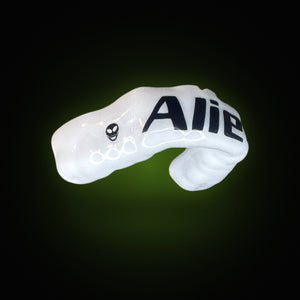
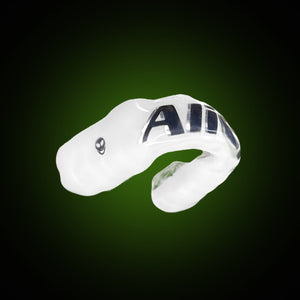
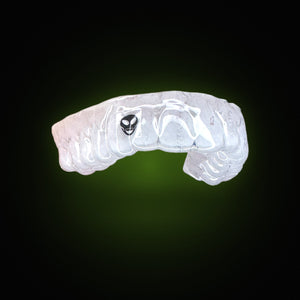
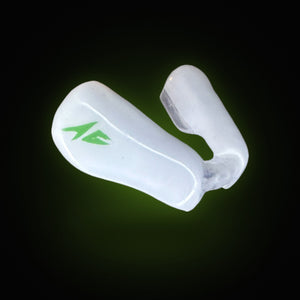
Our pick for handball is NanoBite. At 4 mm it is our thinnest, lowest-profile guard and the best of our models for breathing and talking. NanoBite comes in a Clear, White or Black base, so it's easy to stay within the IHF's transparent or single-coloured rule. It's the same guard we recommend for other contact team sports such as basketball, water polo, field hockey and soccer.
If you play in IHF-rules competition, think twice about multi-color text or logos. A clear or solid-color guard is the safe choice for match day. If your league allows designs, you can still add them.
Origin and Origin Pro are our 5 mm combat guards for boxing, MMA, Muay Thai, kickboxing, karate and taekwondo. They are not our recommendation for handball. PowerBite is for powerlifting and weightlifting, not handball. AlienGuards makes upper mouthguards; see upper vs. lower mouthguards.
Keeping your guard clean
The ADA's MouthHealthy mouthguard tips say to rinse your guard before and after each use or brush it, clean it regularly in cool, soapy water, store it in a sturdy case with vents, and never leave it in the sun or in hot water. Handball resin gets on everything, so keep your guard in its case rather than in your hands or pocket at the bench. Full routine: how to clean and care for your custom mouthguard.
Ordering and team orders
Every AlienGuard is made from your own impression. We ship an at-home impression kit, and your custom guard is made from the impression you send back. If your season is coming up, see how long a custom mouthguard takes and order early enough to train in it. Step-by-step help is on our impression instructions page.
Clubs and school teams with 5 or more players get 20% off through team orders, including NanoBite. Team orders can carry your logo plus player names or numbers, and metallic, satin and holographic text colors are free. If your team plays under IHF equipment rules, talk to us about a clear or single-color version for match day. See custom team and gym mouthguards for how team orders work.
Related rules: mouthguard rules by sport, water polo mouthguard rules, basketball mouthguard rules and volleyball mouthguard rules. Comparing sports? See mouthguards for contact sports.
Handball mouthguard FAQ
Do you have to wear a mouthguard in handball?
No. The IHF Rules of the Game don't require one, and USA Team Handball applies the IHF rules at its sanctioned events. Some clubs or federations may set their own rules, so ask your coach.
Are mouthguards allowed in handball?
Yes. The IHF Regulations on Protective Equipment and Accessories say transparent and single-coloured mouth guards are allowed. Non-transparent and multi-coloured mouth guards are not allowed.
Can I wear a colored mouthguard in handball?
A single solid color is allowed under the IHF regulations. A multi-colored guard is not. If your guard has a logo or text in a second color, ask the referees or delegate before the game.
Can handball players wear face masks?
No. IHF guidelines say all types and sizes of face masks and helmets are forbidden, including masks that cover only part of the face. Soft, single-coloured nose protection and tape are allowed.
How common are tooth injuries in handball?
Common enough to matter. In a survey of 507 Swiss top-league players, 19.7% had suffered dental trauma in their careers, and in a survey of 100 Croatian professionals, 22% had a dental injury in one year.
Will a mouthguard affect my breathing or performance?
Small studies on handball-specific courses found no differences in ventilation, oxygen uptake, heart rate or lactate with custom-made guards, and jump height and balance were unchanged.
What happens if a player is bleeding from the mouth?
Under IHF Rule 4:10, the player must leave the court right away through a normal substitution and can't return until the bleeding has stopped, the wound is covered and the body and uniform are cleaned. If a tooth is knocked out, follow first aid steps and see a dentist right away.
Which AlienGuard is best for handball?
NanoBite, our thinnest guard at 4 mm and the best of our models for breathing and talking. It comes in a Clear, White or Black base. Origin and Origin Pro are for combat sports, and PowerBite is for lifting.
Sources: International Handball Federation, Rules of the Game: Indoor Handball (July 1, 2025), Rules 4:9 and 4:10 and the Guidelines and Interpretations on Rule 4:9; IHF, Regulations on Protective Equipment and Accessories (July 1, 2025); USA Team Handball, Competition Rulebook, Revision 10 (October 2026), Sections 3.01–3.02; Petrović et al., Swiss Dental Journal 2016; Bergman et al., Dental Traumatology 2017; Hacquin et al., Dental Traumatology 2021; Galic et al., Dental Traumatology 2018; Ozbay et al., European Archives of Paediatric Dentistry 2013; Oliveira Werlich et al., Dental Traumatology 2020; Hwang and Kim, Journal of Craniofacial Surgery 2019; Kurz et al., Clinical and Experimental Dental Research 2025; Lässing et al., Injury 2021; Schulze et al., Journal of Strength and Conditioning Research 2020; Lässing et al., Sports Medicine Open 2021; Faculty of Sport and Exercise Medicine UK, Mouthguards position statement (2025); American Dental Association, Athletic mouth protectors (mouthguards); ADA MouthHealthy, Mouthguards. Checked November 15, 2026.