

How Should a Mouthguard Fit? Signs, Checklist and Fixes
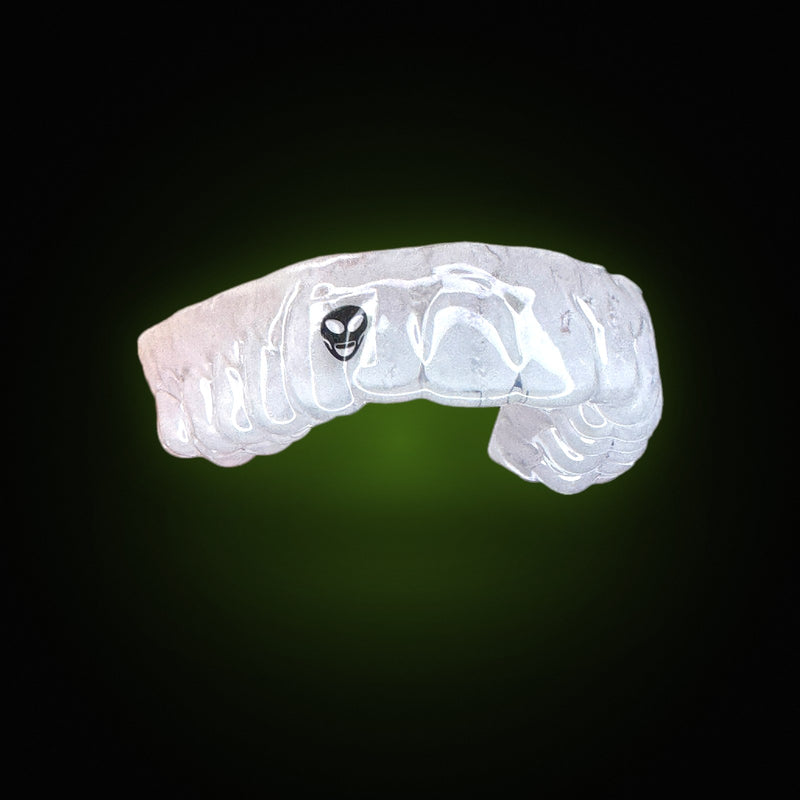
Most people never check whether their mouthguard actually fits. They put it in, bite down and play. But fit is what decides whether a guard stays on your teeth, lets you breathe and talk, and spreads the force of a hit the way it should. This guide explains how a mouthguard should fit, which teeth it should cover, how tight it should feel, and the signs that yours doesn't fit, with a one-minute check you can do at home.
It draws on the American Dental Association (ADA), its MouthHealthy site, the American Academy of Pediatric Dentistry (AAPD), the National Federation of State High School Associations (NFHS) and published studies. It's general information, not dental advice. If you have braces, loose teeth, a retainer or recent dental work, talk to your dentist.
The short answer
- Coverage: it should fully cover all of your upper teeth, back teeth included. The ADA says an ideal guard covers all remaining teeth on one arch, customarily the upper.
- Grip: it should stay on your upper teeth when you open your mouth, without you biting down or pushing it up with your tongue.
- Comfort: it should feel snug, not painful. The edges shouldn't dig into your gums, cheeks or the roof of your mouth.
- Bite: it should separate your top and bottom teeth, and your bottom teeth should meet it evenly.
- Breathing and talking: a properly fitted guard shouldn't make breathing or talking hard. If it does, fit or bulk is usually the problem.
What dental groups say a good fit looks like
The ADA lists what an ideal mouthguard should do. It should be properly fitted to the wearer's mouth and accurately adapted to their oral structures, cover all remaining teeth on one arch (customarily the upper), stay in place comfortably and securely, be relatively easy to clean, and absorb impact energy to limit the force passed on to the teeth. The ADA also says guards should have adequate retention, the dental word for how well a guard stays on your teeth.
The NFHS position statement on mouthguards (2022) is even more specific. It says a properly fitted mouthguard should separate the biting surfaces of the teeth, protect the lips, gums and teeth, and fully cover all of the upper teeth. It strongly recommends that guards be properly fitted and not altered in any way that reduces protection, and it names two ways proper fit is achieved: building the guard on a model made from an impression of your teeth, or fitting it by pressing the teeth into the guard itself.
Put together, those two documents give you a practical definition: full coverage, a secure hold, comfortable edges, and a bite that lands on the guard instead of on your teeth.
Which teeth should a mouthguard cover?
All of your upper teeth, front to back. The AAPD policy on sports-related orofacial injuries notes that the ASTM, the standards body that classifies mouthguards, recommends that for maximum protection, cushioning and retention, a mouthguard should cover all teeth in at least one arch, customarily the upper arch, less the third molar (the wisdom tooth). A guard that stops at your canines or first premolars leaves the back teeth exposed and has less surface to grip.
Why the top? MouthHealthy explains that mouthguards typically cover the upper teeth, and quotes a hockey team dentist: your top teeth take the brunt of trauma because they stick out more, while the bottom teeth sit further back. The MouthHealthy mouthguard page also notes that guards protect the soft tissues of your tongue, lips and cheek lining.
When a lower guard makes sense. The NFHS says a guard covering the lower teeth is preferred if your lower teeth stick out farther than your upper teeth. The AAPD recommends a lower (mandibular) guard for people with a Class III bite, the dental term for an underbite. MouthHealthy adds that your dentist or orthodontist may suggest a guard on the lower teeth if you have braces on them. If any of that sounds like you, ask your dentist before you order. More in upper vs lower mouthguards.
Some sports federations also publish their own mouthguard rules. Check your sport in our mouthguard rules by sport guide.
How tight should a mouthguard be?
Snug enough to stay put on its own, not so tight that it hurts. A good test: put the guard on your upper teeth, relax your jaw and open your mouth. It should stay up. If it drops, or you have to bite or suck to hold it in place, the grip isn't right.
Research explains where that grip comes from. In a 2009 lab study, Maeda and colleagues found that mouthguard retention was closely related to how accurately the guard fit the undercut area near the gumline, more than to where its edges ended. Guards formed on a wet model, which fit less accurately, held on with far less force than guards formed on a dry model or with pressure forming. A 2019 study of six custom designs (Karaganeva and colleagues) found design and thickness were both key factors in retention.
So a guard isn't held in by squeezing. It's held in by matching the shape of your teeth closely, especially just above the gumline. That is also why a guard can feel firm when you push it on and still be comfortable once it's seated.
What about too tight? A new guard can feel snug for the first few wears. But real pain, pressure on one tooth, or soreness that doesn't settle is a sign something is off. Don't wear a guard that hurts; get the fit checked.
Edges: gums, lips, cheeks and the roof of your mouth
The NFHS says a properly fitted guard should protect the lips, gums and teeth, and its comparison of guard types lists pressure on the cheeks and gums as a drawback of poorly fitted mouth-formed guards. Edges matter in both directions:
- Toward the lips. The guard should extend up over the front of your teeth toward your gums so your lips have something to cushion against. When dentists checked the guards of 106 children aged 9 to 16 playing Gaelic football in Ireland, a 2023 study (Shore and O'Connell) found that 84% had inadequate labial extension (not enough coverage on the lip side) and 81% had inadequate retention. Most were mouth-formed or stock guards; only four were custom.
- Toward the roof of your mouth. A guard doesn't need to cover your whole palate. In a 2006 study in the British Journal of Sports Medicine, Maeda and colleagues trimmed the palatal edge of custom guards back toward the gumline, smoothed the finish and adjusted the bite. Comfort, breathing, speaking and swallowing improved significantly, with no significant change in retention. That trimming was done by a lab on a precise fit; cutting a guard with scissors at home is a different story, as the NFHS warns against altering guards.
- Sore spots. Rough or sharp edges that rub a cheek, a frenum (the small fold of tissue under your lip) or your gums are a fit problem, not something to push through.
Your bite on the guard
The NFHS says a guard should separate the biting surfaces of your teeth. When you close, your bottom teeth should meet the guard evenly on both sides, not hit one spot first. The ADA notes that one study recommended making custom guards with balanced occlusion and as many contacts as possible with the lower front teeth, to reduce the risk of the guard being knocked out of place by a hit. A guard you can only bite on with one side, or that tilts your jaw, should be checked.
Breathing and talking
A guard that fits well shouldn't get in the way of either. The NFHS says a properly fitted and unaltered mouthguard has been shown not to impede communication or breathing. The AAPD notes that the Academy for Sports Dentistry recommends a properly fitted guard allow adequate speech for the athlete's level of play, and that clenching a stock guard in place can interfere with breathing and speaking.
Studies comparing guard types point the same way:
- In a 2024 randomized trial of professional basketball players (Doğan and colleagues), boil-and-bite guards had the least favorable ratings, scoring significantly lower than custom guards on measures including comfort, stability, speaking and breathing at different points in the study. There was no significant difference between 3 mm and 5 mm custom guards.
- In a 2012 randomized trial of 18 college athletes (Duddy and colleagues), athletes reported custom guards as comfortable and not causing breathing difficulty, while the boil-and-bite guard was reported as uncomfortable and causing breathing difficulties.
- A 2025 systematic review and meta-analysis (Ingle and colleagues) found custom guards scored significantly better than self-adapted guards for fit, speech difficulty and breathing difficulty, while noting that few clinical studies were available.
Thickness plays a part too. A thicker guard has more material to absorb a hit but more bulk in your mouth, which is why we match thickness to the sport. More in can you breathe and talk with a mouthguard? and how thick should a mouthguard be?
Gagging and a guard that won't stay in
Two of the most common fit complaints are connected. A guard that runs too far back can touch the soft palate and set off your gag reflex, and a loose guard keeps shifting toward the back of your mouth, which can do the same. If yours makes you gag, read why a mouthguard makes you gag and what helps. On Origin, you can add Trim for Gag Reflex when you build.
If your guard drops when you open your mouth or comes out on contact, the usual causes are a guard that was never shaped to your teeth, an inaccurate impression or molding, heat warping, or teeth that have changed. We walk through each one in why does my mouthguard fall out?
How fit differs by mouthguard type
The ADA, AAPD and NFHS all describe the same three types:
- Stock (ready-made). Pre-formed in a few sizes and worn as-is. The ADA calls stock guards the least effective type because of their generic design, improper fit and inadequate retention, and says they need your mouth shut to stay in place. The NFHS lists poor fit, being easily dislodged and making intelligible speech very difficult as drawbacks. One upside the NFHS notes: they easily fit over braces.
- Boil-and-bite (mouth-formed). Softened in hot water, then shaped by biting into it. The AAPD says these are the most used among athletes but vary greatly in protection, retention, comfort and cost. The ADA says to follow the maker's instructions closely, because imprecise or shallow molding can leave you with a poorly fitted guard.
- Custom. Made on a model of your teeth from an impression. The AAPD says the custom-fabricated type is superior in retention, protection and comfort, and that when it isn't available, a mouth-formed guard is preferable to a stock one. The ADA notes that other guards can also be effective if properly made and consistently worn.
The fit check below works for all three. If you're weighing the options, see why custom mouthguards outperform boil-and-bite.
The 60-second mouthguard fit check
Do this when you get a new guard, at the start of each season, every few weeks during the season, and after any dental work:
- Coverage. Look in a mirror with the guard in. It should cover all of your upper teeth, including the back molars.
- Open wide. Relax and open your mouth. The guard should stay on your upper teeth without biting or sucking.
- Tongue push. Push on the guard with your tongue. It shouldn't rock, click or lift away from your teeth.
- Bite. Close gently. Your bottom teeth should meet the guard evenly on both sides.
- Edges. Run your tongue and a finger along the edges. Nothing should dig into your gums, cheeks or the roof of your mouth.
- Lips. Your lips should close comfortably over the front of the guard.
- Breathe and talk. Breathe hard through your mouth for a few seconds, then say a short sentence out loud. You should be able to do both without fighting the guard.
- Swallow. Swallow a few times. You shouldn't gag or feel the guard touching the back of your mouth.
- Look it over. Out of your mouth, check for bite-through spots, cracks, warping, sharp edges or areas that have gone thin.
- Remember the history. Has it been left in a hot car or hot water? Have you had braces, new fillings or crowns, or (for kids) new teeth since it was made? Any of those can change the fit.
If it fails any step, it's time to fix the fit or replace the guard.
Braces and growing kids
MouthHealthy says a properly fitted mouthguard may be especially important for people with braces or fixed bridgework, because a blow to the face can damage brackets, and a guard puts a barrier between the braces and your cheeks and lips. It also says not to wear a retainer or other removable appliance during contact sports. See can you wear a mouthguard with a retainer?
Braces and growth both change the fit. The AAPD notes that because teeth keep shifting during orthodontic treatment, baby teeth fall out and adult teeth come in, a custom guard may not fit a young athlete for long after the impression is taken, and that labs can build in space for some of that change. In a 2022 randomized trial of 24 orthodontic patients with fixed braces (median age 13), custom and mouth-formed guards were rated better than a prefabricated braces guard for comfort and stability, and patients preferred the custom guard overall.
At AlienGuards, braces orders go through your dentist or orthodontist, who takes the impression or a 3D scan so the at-home kit never goes over brackets. The full process is in mouthguards for orthodontic patients. For growing athletes, check the fit every season. Parents can find more in our kids and youth mouthguards guide.
When to refit or replace
MouthHealthy says to talk to your dentist about when to replace your mouthguard, but to replace it immediately if it shows signs of wear, is damaged or fits poorly, and that teens and children may need to replace theirs more often because their mouths are still growing. It also suggests bringing your guard to dental checkups so your dentist can look at it, and never leaving it in the sun or hot water.
Our standard is to replace your mouthguard every year, or sooner if it's damaged, worn or no longer fits. Don't try to re-boil a custom guard to tighten it; heat can warp it and make the fit worse. See how often should you replace your mouthguard? and how to clean and care for your mouthguard to keep the fit longer.
How we get the fit right at AlienGuards
Every AlienGuard is made from an impression of your own teeth, so there's no size chart. You take the impression at home with our kit, following the impression guide, and we pressure-form and hand-finish your guard on a model poured from it in our own lab. The sizing and fit guide explains how tray sizes and thickness work. If you choose Impression Storage when you build, we keep your model on file for future reorders, as long as your teeth haven't changed.
Fit also depends on choosing the right model for your sport:
- NanoBite (4 mm), our slimmest guard, for wrestling, BJJ, football, rugby and team sports such as hockey, field hockey, basketball, lacrosse and soccer.
- Origin and Origin Pro (5 mm) for combat sports only: boxing, MMA, Muay Thai, kickboxing, karate and taekwondo.
- PowerBite for weightlifting and powerlifting.
Not sure which? Compare all models. If your AlienGuard doesn't fit when it arrives, email support@alienguards.com with your order number and a photo of the guard on your teeth. Under our refund and remake policy, we'll review it and make it right. For how a good fit helps on the field or in the ring, see how a custom fit helps you perform.
How a mouthguard should fit: FAQ
Should a mouthguard cover your back teeth?
Yes. The NFHS says a properly fitted guard should fully cover all of the upper teeth, and the AAPD notes the ASTM recommends covering all teeth in at least one arch, usually the upper, except the wisdom teeth.
How tight should a mouthguard be?
Snug enough to stay on your upper teeth when you open your mouth, without biting down, but never painful. Research shows grip comes from an accurate fit near the gumline, not from squeezing.
Should a mouthguard touch your gums?
It should cover the teeth and extend toward the gums on the lip side, since the NFHS says a guard should protect the lips, gums and teeth. It shouldn't press into them or leave sore spots.
Should my bottom teeth touch the mouthguard?
Yes. The NFHS says a guard should separate the biting surfaces of the teeth. When you close, your bottom teeth should meet it evenly on both sides.
Can a mouthguard be too big?
Yes. A guard that runs too far back can make you gag, and a bulky or oversized one can make breathing and talking harder. Stock guards come in a limited range of sizes, and the ADA calls them the least effective type because of their generic design and improper fit.
Should a mouthguard cover the bottom teeth?
Usually not. Guards normally cover the upper teeth. The NFHS prefers a lower guard if your lower teeth stick out past your upper teeth, and a dentist may suggest a lower guard if you have braces on the bottom teeth.
How do I know my child's mouthguard no longer fits?
It falls out, has to be clenched to stay in, no longer covers the back teeth, or rubs. Kids' teeth keep changing, so MouthHealthy says children and teens may need new guards more often. Check the fit every season.
Is it normal for a mouthguard to make talking hard?
Not with a well-fitted guard. The NFHS says a properly fitted, unaltered guard has been shown not to impede communication or breathing. If you can't talk clearly, check the fit and thickness.
Sources: American Dental Association, Athletic mouth protectors (mouthguards); ADA MouthHealthy, Mouthguards; American Academy of Pediatric Dentistry, Policy on prevention of sports-related orofacial injuries, Reference Manual of Pediatric Dentistry 2026; NFHS Sports Medicine Advisory Committee, Position statement and recommendations for mouthguard use in sports (2022); Maeda et al., Quintessence International 2009; Maeda et al., British Journal of Sports Medicine 2006; Karaganeva et al., Dental Traumatology 2019; Shore and O'Connell, European Archives of Paediatric Dentistry 2023; Doğan et al., Dental Traumatology 2024; Duddy et al., Dental Traumatology 2012; Ingle et al., Quintessence International 2025; Kalra et al., European Journal of Orthodontics 2022. Checked November 14, 2026.