

Can You Wear a Mouthguard With a Retainer?
Finished braces or clear aligners and now wear a retainer? Then you've probably wondered what happens at practice. Can the retainer stay in under your mouthguard? Can it do the mouthguard's job? And will a guard still fit if your retainer keeps your teeth where they are now?
This guide sums up what the American Association of Orthodontists (AAO) and the American Dental Association (ADA) say about retainers, aligners and sports mouthguards, and how that affects a custom guard. It's general information, not dental advice. Your orthodontist knows your retainer plan, so their instructions come first.
The short answer
- A retainer is not a mouthguard. It's built to hold your teeth in place after treatment, not to absorb a hit.
- Removable retainers come out for contact sports. The ADA's MouthHealthy site says that if you have a retainer or other removable appliance, you shouldn't wear it during any contact sports. Wear a sports mouthguard instead and put the retainer back in afterward.
- Clear aligners come out too. The AAO says that if you use aligners, you should remove them and wear a mouthguard for contact play.
- Fixed (bonded) retainers stay in. They're a thin wire bonded behind your front teeth, so your mouthguard is worn with the wire in place. Talk to your dentist or orthodontist before taking an at-home impression.
- Keep wearing your retainer as prescribed. A custom guard is made from an impression of your teeth. If your teeth shift because the retainer sat in a drawer, the guard can stop fitting as well.
Why a retainer can't do a mouthguard's job
The AAO's retainers page describes a retainer as a device that keeps your teeth in their straightened position after orthodontic treatment. Retainers are made from clear plastic, acrylic or wire that fits snugly over or behind the teeth. That's a holding job. Nothing about it is designed to spread the force of an elbow, a ball or a fall.
A sports mouthguard is a different tool. The ADA recommends a properly fitted mouthguard to reduce the incidence and severity of oral injury in sports, and says an ideal guard should cover all remaining teeth on one arch, usually the upper. The AAO's oral health tips for athletes say a good mouthguard reduces the chances of broken and chipped teeth, lip cuts and jaw injuries.
The AAO makes the same point about night guards in its orthodontic FAQs: a night guard and a sports mouthguard are each built for a very different job, so you can't replace one with the other, and a sports guard is thicker and designed to absorb impact. A thin retainer tray is even further from that job. For how a guard actually protects teeth, see the science behind mouthguard protection.
Removable retainers: take them out for sport
The AAO lists two common removable types:
- Clear retainers: removable plastic trays that sit over your teeth.
- Hawley (wire) retainers: acrylic or hard plastic with a metal wire, sitting on the roof of your mouth or under your tongue.
Either way, the advice is the same. The ADA's MouthHealthy mouthguard page says: "If you have a retainer or other removable appliance, do not wear it during any contact sports." Take it out before practice or the game, wear your mouthguard, and put the retainer back in when you're done.
Don't try to stack the two. A custom mouthguard is formed on a model of your bare teeth, so a retainer underneath changes the shape it was made for, and the guard won't seat the way it should. The AAO gives similar advice about night guards: layering two separate devices can alter your bite and is rarely recommended.
The biggest risk with a removable retainer at a game isn't damage. It's losing it. The AAO's rule for retainers is short: "If it's not in your face, it should be in your case." Pack the retainer case in your bag next to your mouthguard case, and never wrap a retainer in a napkin or leave it loose on the bench.
How long you can leave it out depends on your treatment stage. The AAO says daily wear time varies with your orthodontist's advice and your stage after treatment, and that a retainer is typically needed for a lifetime, though how often you wear it may drop over time. If you're still in full-time wear, ask your orthodontist how to fit practice and game time around it.
Fixed (bonded) retainers: the wire stays in
The AAO describes a fixed or permanent retainer as a custom-fitted slender wire cemented or bonded to the inner side of the upper or lower teeth. Its FAQs add that fixed retainers work 24/7 but need careful flossing and periodic checks to make sure the bond hasn't failed.
Because you can't take it out, a fixed retainer is simply part of your mouth when you play. What that means for a mouthguard:
- Lower fixed retainer: sports guards are usually made for the upper teeth, so a wire behind the lower front teeth sits under the guard rather than inside it. AlienGuards are upper guards. See upper vs lower mouthguards for why.
- Upper fixed retainer: the wire sits behind the upper front teeth, inside the arch the guard covers. Talk to your dentist or orthodontist before taking an at-home impression, and ask whether they'd rather take the impression or a 3D scan themselves.
- After a hit: the AAO notes that a blow to the mouth can bend orthodontic wires, and that bonded retainers need periodic checks to make sure the bond hasn't failed. If your retainer feels different after contact, have your orthodontist check it before your next game.
The AAO's mouthguards page says a well-fitted mouthguard covers braces and retainers and protects against potential dental trauma. If you still have braces on, the rules are a little different; see can you wear a mouthguard with braces?.
Clear aligners and sports
Aligners are clear trays too, but they're active treatment, not retention. The AAO's tips for athletes cover them directly:
- "If you use aligners, remove them and wear a mouthguard for contact play."
- A blow to the mouth can bend wires, break brackets or crack aligners, delaying treatment by weeks and increasing costs.
- Aligners worn during workouts can trap sugary, acidic liquid against enamel. The AAO says not to sip sugary or acidic drinks with aligners in: remove them, fuel, rinse with water, then reinsert.
One practical catch: your teeth are moving while you're in aligners. A custom guard is made from an impression of your teeth at one point in time, so a guard made early in treatment may not fit as well later. Ask your orthodontist what kind of guard they recommend during treatment and when a custom one makes sense. The AAO says orthodontists can set clear aligner "game-time" protocols and fit sport-appropriate mouthguards over braces.
Taking a mouthguard impression when you wear a retainer
A custom guard is only as good as the impression it's made from. If you wear a retainer, keep these points in mind:
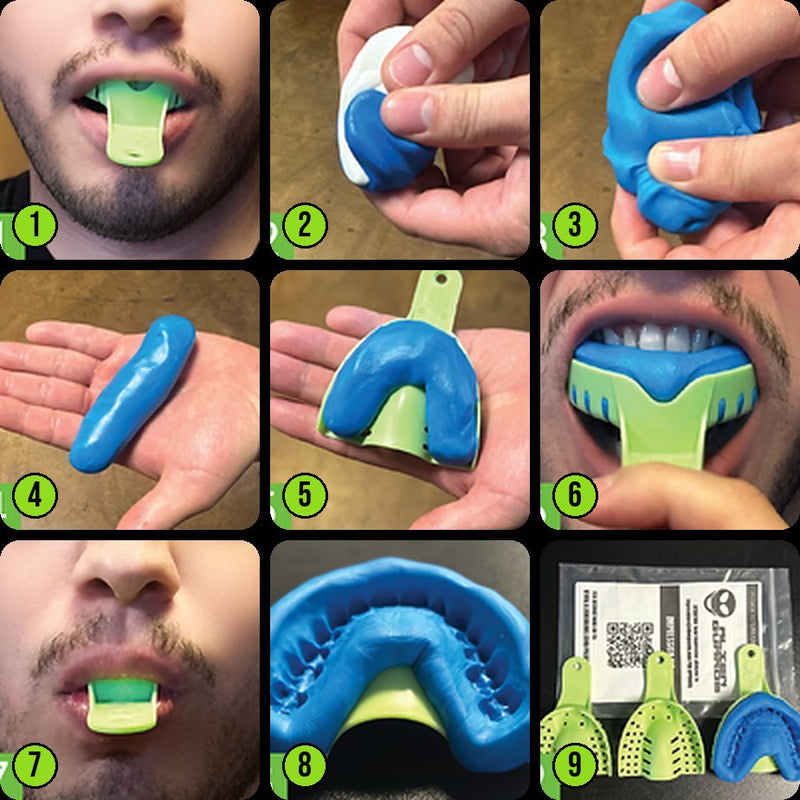
- Talk to your dentist first. Our impression instructions say that if you have braces, retainers or other dental appliances, or loose teeth, you should talk to your dentist before using the kit.
- Removable retainers out. Our impression kit safety page says to remove removable appliances and food from your teeth before you take the impression. The guard is made for your bare teeth, the same way you'll wear it.
- Wait for the final retainer stage. If you've just come out of braces or aligners, ask your orthodontist when your teeth are settled enough for a mouthguard impression.
- A dentist impression works too. Your dentist can take an impression or 3D scan, then ship it to us or email it to impressions@alienguards.com. We make your guard from that model just like one from an at-home kit.
If you're unsure whether your impression came out well, email a photo to support@alienguards.com before you mail it. Our impression guide walks through each step.
Your retainer keeps your mouthguard fitting
Here's the part most people miss. Your retainer and your custom guard depend on the same thing: your teeth staying where they are.
The AAO says retainers keep teeth straight and minimize relapse, and that if a retainer feels tight, your teeth may have shifted slightly. If that happens, the model your guard was made on no longer matches your mouth exactly, and the guard can feel loose, tight or uneven. Wearing your retainer as prescribed protects your smile and the fit of your guard.
Check your guard's fit at the start of each season, and any time your retainer starts to feel different. Our guide to how a mouthguard should fit has a quick checklist. Our safety page says to replace your guard about once a year, or sooner if your teeth have changed. More on timing in how often to replace your mouthguard.
If you choose Impression Storage when you build your guard, we keep your model on file for future reorders. If your teeth have moved since then, a new impression is the better choice. Ask us before reordering from a stored model.
Practice and game-day routine
- Before you leave home, pack both cases: one for your retainer, one for your mouthguard.
- At the field, gym or rink, take a removable retainer or aligners out and put them straight in their case.
- Rinse your mouthguard and put it in for warm-ups, practice and games, not just games.
- After you play, rinse your mouth with water, rinse the guard, and put your retainer or aligners back in as your orthodontist directs.
- Let the mouthguard air-dry in a ventilated case.
- If you have a fixed retainer, run your tongue along it after contact. If anything feels loose or sharp, call your orthodontist.
Cleaning a retainer and a mouthguard
The care rules are close. The AAO says to brush a retainer gently with a soft-bristled toothbrush and water, soak it at least once a week in a retainer-cleaning solution, avoid hot water, and avoid products with alcohol or bleach. For a mouthguard, rinse it in cool water before and after use, brush it gently with a soft toothbrush and mild soap, and keep it away from hot water, dishwashers, hot cars and direct sun so it keeps its shape. An effervescent denture or retainer tablet in cool water works for a deeper clean. The full routine is in how to clean and care for your custom mouthguard.
Keep each device in its own case. Don't store a damp guard and a retainer together in a closed container.
Which AlienGuard to get
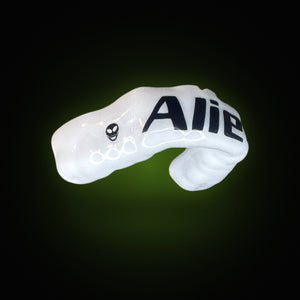
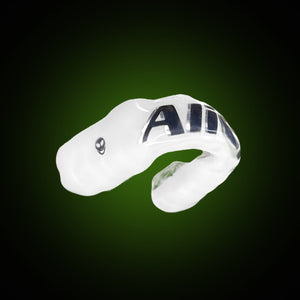
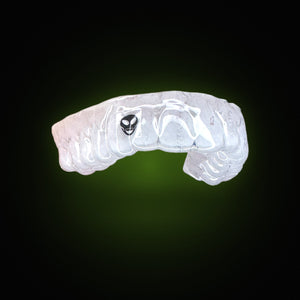
A retainer doesn't change which guard fits your sport. AlienGuards are upper guards, made from an impression of your own teeth:
- NanoBite: our slim 4 mm guard for wrestling, BJJ, football, rugby and team sports like hockey, field hockey, basketball, lacrosse and soccer.
- Origin and Origin Pro: 5 mm combat guards for boxing, MMA, Muay Thai, kickboxing, karate and taekwondo. Origin Pro is more breathable, with an optional High Impact 6 mm upgrade.
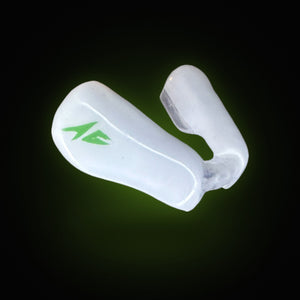
- PowerBite: built for lifting.
Not sure? Compare models or read how to choose the right mouthguard for your sport. If you need a new retainer rather than a mouthguard, our sister brand Traybite makes custom retainers.
Mouthguards and retainers: FAQ
Can you wear a mouthguard with a retainer?
Yes, but not on top of a removable one. Take a removable retainer out for contact sports and wear your mouthguard instead. A fixed (bonded) retainer stays in, and the guard is worn with it in place.
Can I use my retainer as a mouthguard?
No. A retainer is made to hold your teeth in position after treatment, not to absorb impact. The ADA's MouthHealthy site says not to wear a retainer or other removable appliance during contact sports.
Can I wear a mouthguard with a permanent retainer?
Yes. A permanent retainer is a thin wire bonded behind your front teeth, so it stays in when you play. Talk to your dentist or orthodontist before taking an at-home impression, especially if the wire is on your upper teeth.
Should I take my clear aligners out for sports?
For contact sports, yes. The AAO says to remove aligners and wear a mouthguard for contact play, and notes a blow to the mouth can crack aligners. Ask your orthodontist how to fit game time into your daily wear time.
Do I take my retainer out before taking a mouthguard impression?
Yes, remove any removable retainer or appliance first. If you have a retainer, talk to your dentist before using an at-home kit. A dentist can also take the impression or a 3D scan for us.
Will my mouthguard still fit if I stop wearing my retainer?
Maybe not. If your teeth shift without a retainer, the model your guard was made on no longer matches your mouth. Wear your retainer as prescribed and check your guard's fit each season.
Do I need a new mouthguard after braces come off?
Usually, yes. Your teeth change shape and position during treatment, so get a new impression once your braces are off and your orthodontist says your teeth are settled in retention.
How do I keep from losing my retainer at practice?
Put it straight into its case when you take it out, and pack the case next to your mouthguard case. The AAO's rule: "If it's not in your face, it should be in your case."
Sources: American Association of Orthodontists, Retainers; Mouthguards; Orthodontic FAQs; Oral Health Tips for Athletes from the Orthodontic Experts; American Dental Association, Athletic mouth protectors (mouthguards); ADA MouthHealthy, Mouthguards. Checked November 14, 2026.