

Do You Need a Mouthguard for Water Polo? Rules and Tips
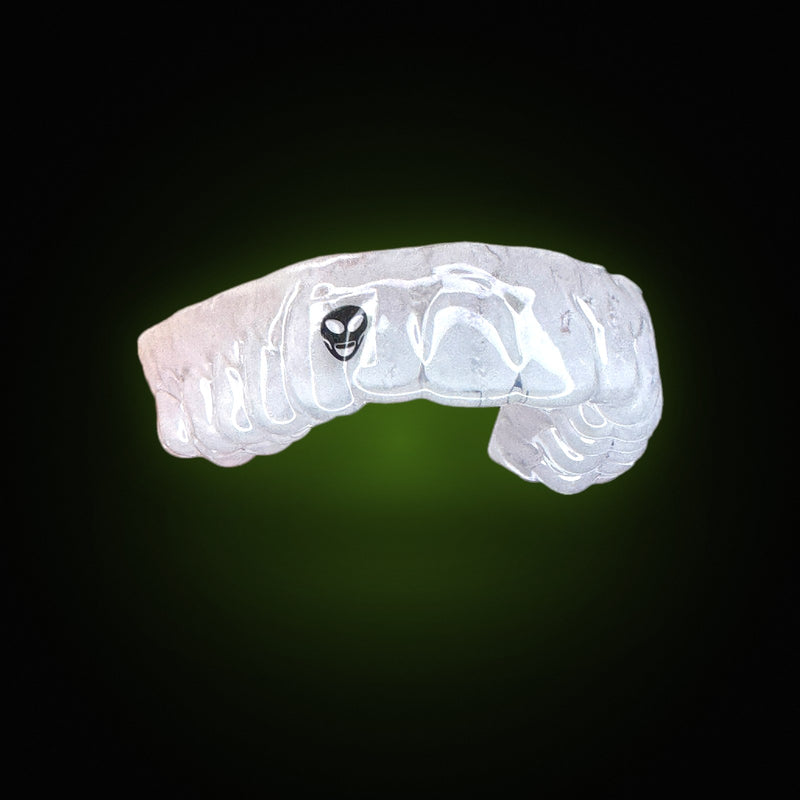
Water polo is a contact sport, and much of the contact happens where it's hard to see: under the surface, at the 2-meter line and in the scramble for position. Elbows, hands, heads and hard shots all end up near your mouth. Even so, few water polo players wear a mouthguard, and many aren't sure whether the rules even allow one.
This guide sums up what the World Aquatics, USA Water Polo, high school (NFHS) and college (NCAA) rules say, what research shows about mouth and tooth injuries in water polo, and how to pick a guard you can actually breathe, shout and swim in. It's general information, not legal or dental advice. Your league, referee and club have the final say.
The short answer
- Mouthguards are not required in water polo. None of the four rulebooks we checked makes one mandatory. The only head protection they require is the cap with ear protectors.
- High school and college rules say you can wear one. NFHS rules say a mouth protector is permitted with no special permission, and NCAA rules list a mouthguard as permitted protective equipment.
- World Aquatics and USA Water Polo rules don't mention them. Both tell players to remove articles likely to cause injury. Neither names mouthguards in that list.
- The injury risk is real. In a Swiss survey, 21.0% of water polo players said they had injured a tooth playing the sport, and in a Spanish study 57.9% reported at least one mouth or face injury in a single season.
- Almost nobody wears one. Mouthguard use was 7.7% or lower in every water polo survey below.
What World Aquatics rules say
World Aquatics (formerly FINA) sets the rules for the Olympics, the World Championships and other events played under its Competition Regulations. We searched the full February 2026 version, including Part Six (Water Polo Rules). It never mentions a mouthguard, gum shield or mouthpiece. What it does say about safety:
- Remove anything that could injure. Players must wear compliant swimwear and "remove any articles that could cause injury or obstruction to any other Player, themselves or any Technical Official." Fingernails must be cut to reduce the risk of injury.
- Caps protect the ears. Water polo caps "must be fitted with malleable ear protectors" and are fastened under the chin. That's the only protective gear the rules require.
- Bleeding players leave the pool. A player who is bleeding must leave the water immediately and can only come back once the bleeding has stopped. A cut lip or a broken tooth that bleeds can take you out of the game.
- It's called a contact sport. The regulations state that water polo "is a contact sport and there is therefore an inherent risk of traumatic injuries," and that the incidence of such injuries "is the highest of any Aquatic sport."
- Dental services are suggested. Dental services are not mandatory, but organizers of World Aquatics events and the Olympics "should consider providing dental services," including treating and stabilizing players with oro-facial injuries.
So World Aquatics plans for mouth injuries at its events but leaves mouthguards to the player. A soft custom guard isn't on any banned list, but the rules don't say how a referee should treat one either.
USA Water Polo rules
The USA Water Polo Rules 2026–2027 follow the same pattern. WP 5.4 says players "before taking part in a game shall remove any articles likely to cause injury," and WP 4.2 says caps "shall be fitted with malleable ear protectors." The rules don't mention mouthguards.
Two other rules are worth knowing. Under WP 26.2, a bleeding player is ordered out of the water and a substitute comes in. Under WP 26.3(b), if a player takes a substantial blow to the head, the referee stops the game for up to three minutes so the player can be assessed, and a player suspected of a concussion can't take further part in that game. A mouthguard protects teeth, lips and cheeks. It is not shown to prevent concussions; more in do mouthguards prevent concussions?
High school water polo (NFHS)
High school water polo is the clearest. The NFHS water polo uniform rules (Rule 2-4) say: "The use of a mouth protector is permitted requiring no special permission." Goggles, face masks and nose guards for medical reasons need state association authorization shown to the referee before each game, but a mouthguard doesn't.
The same rule lists articles players must remove, including jewelry, medical or religious medals, watches and swim goggles, and adds that devices worn "shall not compromise the fit of the water polo cap, including the ear guards." Water polo isn't one of the sports where the NFHS mandates mouthguards. The NFHS mouthguard position statement (October 2022) lists football, field hockey, ice hockey, lacrosse and wrestling (for wrestlers wearing braces). Some schools and clubs may set their own rules, so ask your coach.
College water polo (NCAA)
The 2026–27 and 2027–28 NCAA Water Polo Rules Book (Rule 2, Section 4) says players must remove articles likely to cause injury, such as jewelry, watches, swim goggles and sharp fingernails or toenails. It then says "a player will be permitted to wear a mouthguard," along with contact-sport prescription goggles, a face mask or nose guard and similar devices prescribed by a physician, which need written approval from the NCAA secretary-rules editor.
A January 2025 NCAA rules interpretation on protective equipment makes the mouthguard part plain: "Mouth guards worn inside the mouth or routine use of athletic tape with no underlying supporting material do not require prior approval." So college players can wear a mouthguard without paperwork.
Water polo mouthguard rules at a glance
| Level | Mouthguard required? | What the rules say |
|---|---|---|
| World Aquatics (Olympics, Worlds) | No | No mention of mouthguards; remove articles that could cause injury; caps with ear protectors; organizers should consider dental services |
| USA Water Polo (2026–2027) | No | No mention of mouthguards; remove articles likely to cause injury; head-blow assessment rule |
| High school (NFHS) | No | Mouth protector permitted with no special permission |
| College (NCAA) | No | Mouthguard permitted; no prior approval needed for guards worn inside the mouth |
| Club practice | No | Up to you and your club |
What research shows about water polo mouth injuries
Water polo has more dental research than most sports its size, much of it from Spain, Switzerland and Croatia:
- Swiss players (2012). In a survey of 415 water polo players in Switzerland, 44.6% had witnessed a dental injury in water polo and 21.0% had suffered a tooth injury playing the sport, most often a tooth fracture. Men and women had similar rates. Only 7.7% wore a mouthguard, and the most common reason for not wearing one was that it seemed unnecessary (40.7%).
- Spanish players (2018). In a study of 347 water polo players, 57.9% reported at least one orofacial injury in the 2015–2016 season, with an average of 2.7 cuts inside the mouth per player. Only 35 players (10.1%) had ever tried a mouthguard, and only four (1.2%) wore one habitually.
- Croatian professionals (2023). In a survey of 114 first-league players, 27.2% (31 of 114 players) reported dental injuries directly related to water polo. More than half happened in games (54.8%), most involved the upper front teeth (71.0%), and most came from contact with another player (87.1%). Awareness of mouthguards was 93.9%, but use was 7.0%, and 35.1% said they found them uncomfortable.
- Young athletes (2018). A study of 229 young athletes found a dental injury rate of 18.6% in water polo, similar to karate (17.2%), but only 5.1% of the water polo players used a mouthguard, compared with 70.7% in karate. The authors suggested that sports with medium risk of dental injury should also make mouthguards mandatory.
- Youth players (2026). In a study of 161 youth water polo players in Croatia, 31.7% reported a history of orofacial injury.
These are surveys, so treat the numbers as estimates. They all point the same way: mouth injuries are common in water polo, and guards are rare.
What coaches know and say
Coaches see these injuries too. In a survey of 51 Croatian water polo coaches, 90.2% had seen a dental injury in one of their players, but only 13.7% had had any training on dental injuries, and none would store a knocked-out tooth in milk. In a study of 72 coaches in Catalonia, coaches of only 10% of teams recommended mouthguards to their players. Only 18% of coaches thought mouthguards should be mandatory, compared with 50% of club managers.
If you coach, the first-aid part is quick to learn. See knocked-out tooth first aid and keep the steps in your team bag.
Why players skip mouthguards, and what helps
The complaints are the same across studies: guards feel bulky, get in the way of breathing and talking, and seem unnecessary. In the pool you also need to shout calls, swallow water now and then, and breathe hard while you swim and tread water. Researchers have tested custom guards on water polo players to see what makes them easier to wear:
- Thinner over the bite was preferred. In a 2020 randomized crossover trial of 25 elite players in Barcelona, adding 2 mm of material over the biting surfaces of a 4 mm custom guard made players feel slightly more protected, but it interfered more with speech, swallowing, breathing and performance. Twenty-two players preferred the conventional guard and two preferred the thicker one. The authors concluded that dentists can recommend conventional mouthguards for most water polo players.
- Less coverage behind the teeth helped. In a 2019 crossover study of 18 elite players, shortening how far a 4 mm custom guard extended onto the palate (from 6 mm to 2 mm) reduced interference with speech, breathing, swallowing and performance, without lowering how protected players felt.
- Breathing held up. A 2011 crossover study of 27 field hockey and water polo players found that two custom guard designs didn't impair ventilation or oxygen uptake at any exercise intensity tested.
- Custom felt better than boil-and-bite. In the Spanish study above, players rated custom-made mouthguards as more comfortable than mouth-formed (boil-and-bite) ones. Speaking, breathing and swallowing were the main complaints about the mouth-formed type.
More in can you breathe and talk with a mouthguard? and why custom mouthguards outperform boil-and-bite.
What a good water polo mouthguard needs
The American Dental Association lists water polo among the contact and collision sports where it recommends a mouthguard. It says an ideal guard is properly fitted, covers all remaining teeth on one arch (usually the upper) and stays in place comfortably and securely. The FSEM position statement on mouthguards (2025) says athletes at risk of mouth injury should wear a well-fitting guard throughout training and competition, that custom guards fitted by a dental professional offer the highest level of protection against dental trauma, and that a guard should at minimum stay in place with jaws clenched, while breathing and with the mouth open.
For water polo, that means:
- Thin and low-profile, so you can breathe hard, call for the ball and swallow without fighting it.
- Retained without biting down, so it stays put when you open your mouth to breathe or take a hit at set.
- Nothing hard or sharp on it. Every rulebook above asks referees to remove articles likely to cause injury, so skip charms and add-ons.
- Worn in practice first. The FSEM suggests about a month of use before competition so you get used to breathing in it.
Related reading: how should a mouthguard fit?, why does my mouthguard fall out? and how thick should a mouthguard be?
Junior water polo players
Water polo starts young, and two of the studies above were in young players. The FSEM notes that mouthguards for young athletes should allow for changes in the position and number of teeth and for orthodontic treatment. A custom guard made from an impression of a child's mouth today may need replacing as teeth come in. More in our kids and youth mouthguards guide and how often to replace a mouthguard.
Water polo with braces
None of the water polo rules above has a braces rule. Brackets and wires sit right behind your lips, though, so a guard over them is worth thinking about.
Athletes with braces can get AlienGuards, but don't use our at-home impression kit over braces, because it can damage them. Have your dentist take an impression or 3D scan, then ship it to us or email it to impressions@alienguards.com. More in mouthguards for orthodontic patients. If you wear a removable retainer, see can you wear a mouthguard with a retainer?
Which AlienGuard for water polo?
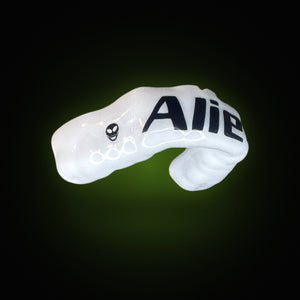
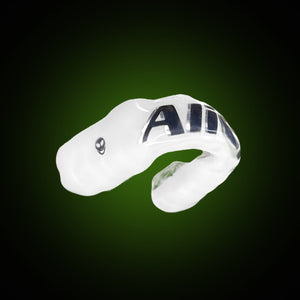
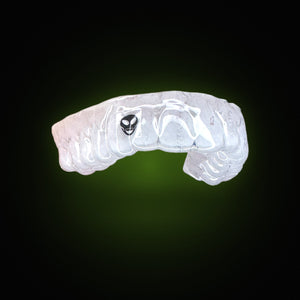
Our pick for water polo is NanoBite. At 4 mm it is our thinnest, lowest-profile guard and the best of our models for breathing and talking, which matters when you're swimming hard and calling plays. It's the same guard we recommend for other contact team sports such as field hockey, soccer, rugby and basketball.
Origin and Origin Pro are our 5 mm combat guards for boxing, MMA, Muay Thai, kickboxing, karate and taekwondo. They are not our recommendation for water polo. PowerBite is for powerlifting and weightlifting, not water polo. AlienGuards makes upper mouthguards; see upper vs. lower mouthguards.
Keeping your guard clean after the pool
The ADA's MouthHealthy mouthguard tips say to rinse your guard before and after each use or brush it, clean it regularly in cool, soapy water, store it in a sturdy case with vents, and never leave it in the sun or in hot water. After practice, rinse it in cool tap water along with your cap and suit, and keep it in its case in your bag, not loose on the pool deck. Full routine: how to clean and care for your custom mouthguard.
Ordering and team orders
Every AlienGuard is made from your own impression. We ship an at-home impression kit, and your custom guard is made from the impression you send back. If your season is coming up, see how long a custom mouthguard takes and order early enough to train in it. Step-by-step help is on our impression instructions page.
Clubs and school teams with 5 or more players get 20% off through team orders, including NanoBite, with your team logo plus player names or numbers. You can match your guards to your cap colors, and metallic, satin and holographic text colors are free. See custom team and gym mouthguards for how team orders work and mouthguard color ideas for design tips.
Related rules: mouthguard rules by sport, field hockey mouthguard rules, hockey mouthguard rules and lacrosse mouthguard rules. Comparing sports? See mouthguards for contact sports.
Water polo mouthguard FAQ
Do you have to wear a mouthguard in water polo?
No. World Aquatics, USA Water Polo, NFHS and NCAA rules don't require one. The only head protection they require is the cap with ear protectors. Some clubs or schools may set their own rules, so ask your coach.
Are mouthguards allowed in water polo?
Yes, at the levels we checked. NFHS rules say a mouth protector is permitted with no special permission, and NCAA rules list a mouthguard as permitted equipment that needs no prior approval when worn inside the mouth. World Aquatics and USA Water Polo rules don't mention mouthguards; they ask players to remove articles likely to cause injury.
Why don't water polo players wear mouthguards?
Habit, comfort and a sense that they aren't needed. In a Swiss survey, the most common reason was that a guard seemed unnecessary. In a Croatian survey of professionals, 35.1% said guards were uncomfortable. Breathing and talking were the main complaints about boil-and-bite guards in a Spanish study.
How common are tooth injuries in water polo?
Common enough to matter. In a survey of 415 Swiss players, 21.0% had injured a tooth playing water polo, and in a study of 347 Spanish players, 57.9% reported at least one mouth or face injury in one season, mostly cuts inside the mouth.
Can you breathe with a mouthguard in water polo?
Yes, with a slim guard that fits. A study of field hockey and water polo players found two custom guards didn't impair breathing or oxygen uptake, and elite water polo players preferred a conventional 4 mm guard over a thicker one.
What if a player is bleeding from the mouth?
Under World Aquatics and USA Water Polo rules, a bleeding player must leave the water, a substitute comes in, and the player can return once the bleeding has stopped. If a tooth is knocked out, follow our knocked-out tooth first aid steps and see a dentist right away.
Which AlienGuard is best for water polo?
NanoBite, our thinnest guard at 4 mm and the best of our models for breathing and talking. Origin and Origin Pro are for combat sports, and PowerBite is for lifting.
Can I wear a mouthguard in water polo with braces?
Yes. None of the water polo rules we checked bans it. For a custom guard, have your dentist take the impression or 3D scan instead of using our at-home kit, then ship it to us or email it to impressions@alienguards.com.
Sources: World Aquatics, Competition Regulations, Part Six: Water Polo Rules (February 2026); USA Water Polo Rules 2026–2027; NFHS Water Polo Uniform Rules (Rule 2-4); NFHS, Position Statement and Recommendations for Mouthguard Use in Sports (October 2022); NCAA Water Polo Rules Book 2026–27 and 2027–28; NCAA Water Polo Rules Interpretation, Approval of Protective Equipment (January 2025); Hersberger et al., Dental Traumatology 2012; Zamora-Olave et al., Dental Traumatology 2018; Galic et al., Dental Traumatology 2018; Tadin and Buzov, Sports 2023; Galić et al., Journal of Functional Morphology and Kinesiology 2026; Bazina et al., Dental Traumatology 2020; Iglesias-Porqueras et al., Dental Traumatology 2021; Flores-Figueiras et al., Dental Traumatology 2020; Gómez-Gimeno et al., Dental Traumatology 2019; Gebauer et al., Clinical Journal of Sport Medicine 2011; Faculty of Sport and Exercise Medicine UK, Mouthguards position statement (2025); American Dental Association, Athletic mouth protectors (mouthguards); ADA MouthHealthy, Mouthguards. Checked November 15, 2026.