

Do Mouthguards Help Lifting? What the Research Says
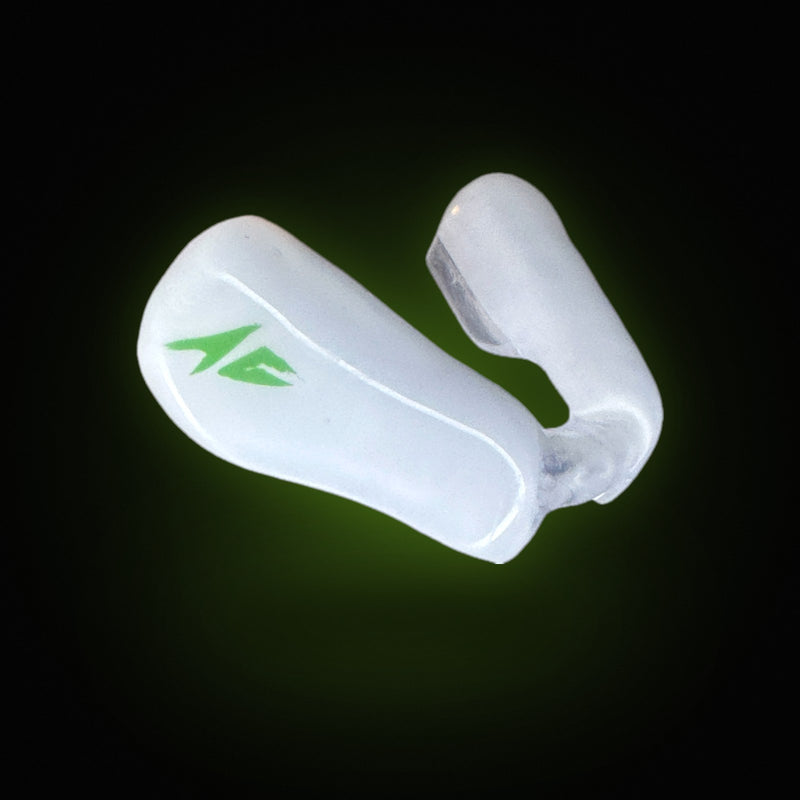
Lifters usually want to know two things about mouthguards: do they help you lift more, and do they protect your teeth when you clench under a heavy bar? This article covers what the published research says on both. For model picks, fit and ordering, use our weightlifting mouthguards page.
This is general information, not dental or medical advice. If you have jaw pain, cracked teeth or worn enamel, see your dentist.
Short answer
- Rules: lifting is not a sport where mouthguards are typically mandated, so wearing one is your choice.
- Performance: some studies show small gains in power and rate of force development when athletes clench on a mouthguard, but reviews call the overall evidence mixed and inconsistent.
- No harm found: a 2019 review found custom-made mouthguards neither impaired nor improved performance compared with no guard.
- Teeth: lifters clench a lot. Studies of weightlifters and fitness trainers report high rates of clenching, tooth wear and cracks.
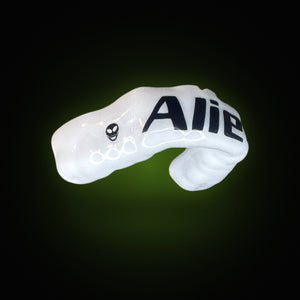
- Our pick: PowerBite, our lifting guard, made from your own impression. NanoBite (4 mm) if you want a slimmer profile.
Why lifters clench
Hard jaw clenching during a maximal effort is common, and researchers have studied it as a form of "concurrent activation potentiation": tensing one muscle group (the jaw) while another group does the main work. In a 2008 study in the Journal of Strength and Conditioning Research, 14 athletes did countermovement jumps on a force plate while clenching hard on a vinyl mouthguard or jumping with an open mouth. Rate of force development was 19.5% higher and time to peak force 20.15% shorter with clenching; peak force did not differ (Ebben et al., 2008).
Not every study agrees. A 2015 study of 24 resistance-trained men found no significant difference in jump height, peak force, rate of force development or time to peak force between jaw clenching, fist clenching, both, or neither, though the authors noted large differences between individuals (Mullane et al., 2015).
Do mouthguards improve lifting performance?
The evidence is mixed. Here is what the main studies and reviews found:
- Dunn-Lewis et al., 2012: 26 trained men and 24 trained women tested a customized over-the-counter performance mouthguard, a regular boil-and-bite guard and no guard in random order. Bench throw power and force were higher with the performance guard in both men and women; plyo press power and force were higher in men only. Flexibility, balance, reaction time and sprint time did not change (J Strength Cond Res, 2012). The performance guard was a commercial product, not a lab-made custom guard.
- 2019 systematic review (15 trials, 312 athletes): overall, custom-made mouthguards did not interfere with or improve performance compared with no mouthguard, and they showed the smallest range of changes of any guard type. The authors warned that many studies had a high risk of bias (International Dental Journal, 2019).
- 2021 systematic review (27 studies): 16 studies reported positive effects on some measures, two reported negative effects and the rest found no significant difference. The authors called the findings inconclusive, while suggesting that clenching on custom-made, bite-aligning guards may help lower-body power such as jumping (IJERPH, 2021).
- 2026 systematic review (13 trials, 335 athletes): at least four trials reported positive effects on some variables and none reported negative effects, with benefits noted in rugby, football and weightlifting and custom-made guards showing a particularly positive impact. The authors stress that the studies vary widely and the effects "cannot be considered universal" (International Journal of Dentistry, 2026).
Our honest read: don't buy a mouthguard expecting a bigger total. The research does not show a reliable strength gain. What it does suggest is that a well-fitted guard does not hold you back, and some lifters may get a small boost in explosive efforts.
What clenching does to your teeth
The stronger reason lifters wear a guard is to protect their teeth from their own bite:
- Weightlifters in Chennai, India (2025): among 272 professional weightlifters aged 25–40, 68.0% self-reported awake bruxism (clenching or grinding while awake), and clinical exams found tooth wear in 64.0% (Dental Traumatology, 2025).
- Fitness trainers vs. non-exercisers (2024): in a small Korean study, 13 of 15 trainers with 5+ years of weight training reported a clenching habit, compared with 7 of 15 non-exercisers. The trainers had higher bite force (about 1,224 N vs 909 N) and more tooth cracks (12 of 15 vs 2 of 15), and smaller maximum mouth opening (Journal of Dental Hygiene Science, 2024). The authors suggest that long-term high-intensity training with clenching may contribute to tooth damage and jaw problems.
A lifting guard gives you a cushioned surface to bite on instead of grinding enamel against enamel. If you also clench or grind at night, that is a separate problem; see teeth grinding: night guards vs. sports guards and talk to your dentist.
How common are weight training injuries?
Most gym injuries have nothing to do with teeth, but they are common. A study of U.S. emergency department data estimated 970,801 weight training injuries from 1990 to 2007. Free weights were involved in 90.4% of them, and the most common mechanism was weights dropping on the person (65.5%). Sprains and strains were the most common diagnosis (46.1%), and the upper and lower trunk were the most injured areas (Kerr et al., American Journal of Sports Medicine, 2010). A mouthguard won't prevent those injuries. Good technique, spotters and safety bars still matter most.
Custom vs. boil-and-bite for lifting
If you clench hard on every rep, fit matters. A boil-and-bite guard is molded by guesswork and can shift or thin out where you bite hardest. A custom guard is made on a model of your teeth, so the bite surface is even and sits the same way each time. Reviewers in the 2019 and 2026 studies above also found custom-made guards gave the most consistent results. More on the difference: why custom mouthguards outperform boil-and-bite and how thick a mouthguard should be.
Which AlienGuard for lifting?
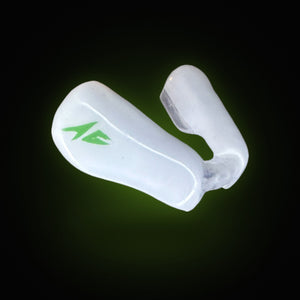
- PowerBite: our lifting guard. It gives you a stable, even platform to clench on during heavy lifts, shaped to your bite from your own impression.
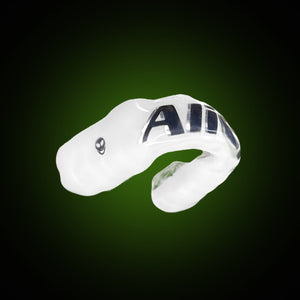
- NanoBite: our 4 mm ultra-slim guard, if you want a thinner profile in the gym or also play a team sport.
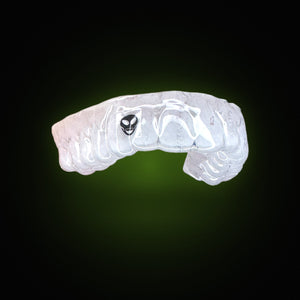
- Origin and Origin Pro: for combat sports (boxing, MMA, Muay Thai, kickboxing, karate, taekwondo). Use one of those if you fight; PowerBite is the pick when lifting is the main job.
Compare every model on the model comparison page, or browse our custom weightlifting mouthguards.
Ordering and gym orders
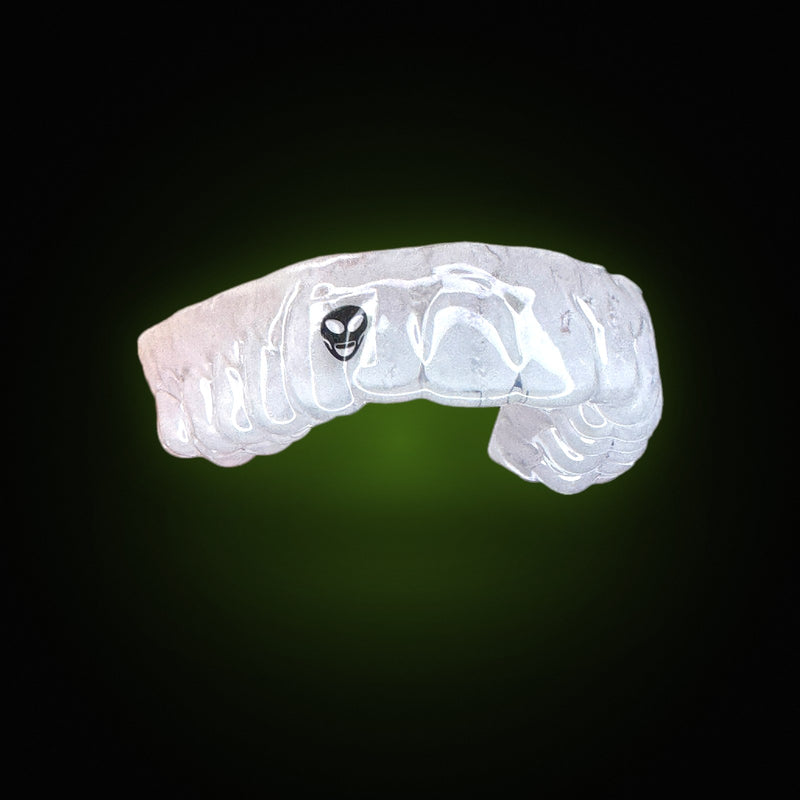
Every AlienGuard is made from your own impression. We ship an at-home kit, you take the impression (about 10 minutes), and your custom mouthguard is crafted within 10–14 business days after we receive a good impression, then shipped with tracking. Athletes with braces need their dentist to take the impression; see mouthguards with braces.
Gyms and lifting teams ordering 5 or more get 20% off through team orders, and PowerBite qualifies. Metallic, satin and holographic text colors are free. See custom mouthguards for gyms and teams.
Related reading: how custom mouthguards affect performance, mouthguard rules by sport, and how to clean and care for your mouthguard.
Weightlifting mouthguard FAQ
Do mouthguards help you lift more weight?
Not reliably. Some studies show small gains in power or rate of force development when athletes clench on a guard, but systematic reviews call the evidence mixed. A well-fitted custom guard has not been shown to hurt performance.
Is a mouthguard required in powerlifting or weightlifting?
Mouthguards are not typically mandated for lifting the way they are in football or ice hockey. Wearing one is your choice. Check your meet or gym rules if you are unsure.
Why do lifters wear mouthguards?
Mostly to give their teeth something to bite on. Lifters clench hard under load, and studies of weightlifters report high rates of clenching and tooth wear.
Can clenching while lifting damage your teeth?
It can contribute. A 2025 study of 272 weightlifters found tooth wear in 64%, and a 2024 study found more tooth cracks in long-time weight trainers than in non-exercisers. See your dentist if you notice pain, cracks or wear.
Which AlienGuard is best for lifting?
PowerBite, our lifting guard made from your own impression. NanoBite works if you want a thinner 4 mm profile.