

Roller Derby Mouthguard Rules: What WFTDA and JRDA Require
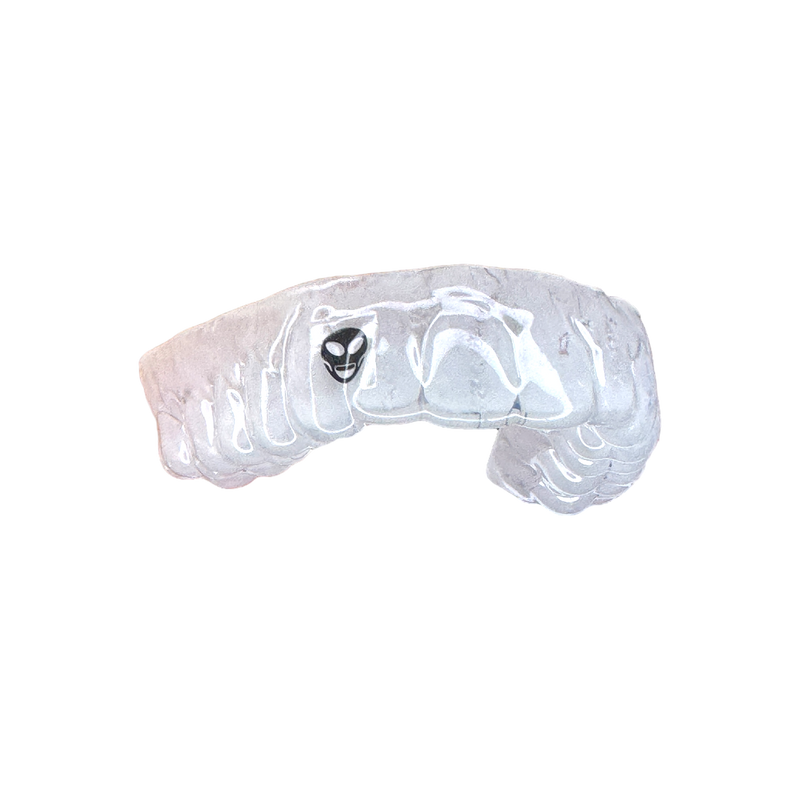
Roller derby is one of the few sports where the mouthguard isn't a suggestion. Skaters hit, block and fall at speed on hard floors, and the main rulebook lists a mouthguard right next to the helmet and pads. Lose it during a jam and the officials can stop play. Leave the penalty box without it and you can earn another penalty.
This guide covers what the Women's Flat Track Derby Association (WFTDA) rules say about mouthguards, how the Men's Roller Derby Association (MRDA) and Junior Roller Derby Association (JRDA) fit in, what research shows about derby injuries, and how to pick a guard you'll actually keep in. It's general information, not legal or dental advice. Your head referee, league and event organizer have the final say.
The short answer
- Yes, a mouthguard is required. The Rules of Flat Track Roller Derby say skaters must wear a helmet, mouthguard, wrist guards, elbow pads and knee pads during play.
- It can't come out during play. If an official sees a mouthguard on the track and no skater is trying to get it back right away, the jam is called off and the skater without one gets a penalty.
- The penalty box is the one exception. You may take your mouthguard out while seated in the box, but it has to be back in before you leave.
- MRDA and junior leagues follow the same rule book. MRDA plays under the WFTDA rules, and JRDA uses a youth edition of them.
What the WFTDA rules say
The Rules of Flat Track Roller Derby (the January 1, 2025 edition, also published online at rules.wftda.com) cover gear in Section 1. Skaters must wear quad-style roller skates and protective gear during play. Protective gear may not be removed during play, and it may not impair or interfere with the safety or play of other skaters, support staff or officials.
The glossary defines protective gear as a helmet, mouthguard, wrist guards, elbow pads and knee pads, "so long as they provide additional protection and the Skater is physically able to wear them." The rules add that skaters won't be penalized if a piece of equipment doesn't provide additional protection for them. That line matters for the no-teeth exception below.
WFTDA's Risk Management Guidelines (updated October 2024) repeat the requirement for anyone on skates: wrist guards, elbow pads, knee pads, mouth guards and helmet at a minimum. Skaters competing in WFTDA-sanctioned games and WFTDA insurance holders must also meet these gear standards, according to WFTDA's Guide for Equipment Check.
If your mouthguard falls out during a jam
The rules casebook that comes with the WFTDA rules answers this directly. In Scenario C4.2.4.G, an official notices a mouthguard on the track during a jam and no skater is making an immediate attempt to retrieve it. The outcome: the jam is called off right away and an Illegal Procedure penalty goes to the skater without a mouthguard.
The casebook's reasoning is simple: "A mouthguard is required safety equipment for all Skaters." If a skater is completely missing a required piece of safety equipment and doesn't replace it immediately, the jam should be called and the skater penalized.
There's some leeway for accidents. If the mouthguard wasn't removed on purpose and the skater immediately picks it up and puts it back in before the officials call off the jam, play can continue with no penalty. Each penalty in WFTDA play is 30 seconds of jam time in the box, so a guard that keeps popping out costs your team.
A guard that falls out often usually doesn't fit well. If that's you, read why does my mouthguard fall out? and how should a mouthguard fit?
Mouthguards in the penalty box
Rule 4.4.4 says skaters may remove their mouthguard, but no other protective gear, while seated in the penalty box, and must replace it before leaving the box. The casebook (Scenario C4.4.4.A) clarifies that you can keep it out while standing for the last part of your penalty, too.
The catch is the exit. If you leave the box without putting your mouthguard back in, the casebook says that should be penalized, even if you put it back in before you return in bounds. Make putting it back in part of your routine when you stand up, so you aren't fumbling with it as you're released.
Taking it out in the box is also a good moment to drink. If you'd rather leave it in, see can you breathe, talk and drink with a mouthguard?
Who can skip the mouthguard
There are three exceptions in WFTDA documents:
- Skating officials. The Risk Management Guidelines say skating officials may forgo mouth guards. They still wear the rest of the required gear.
- Skaters not in contact. Skaters not actively competing or engaging in contact drills may forgo mouth guards. In practice, that means you can take it out for non-contact skills work, but it goes back in for scrimmage and contact drills.
- Skaters with no teeth. The Guide for Equipment Check says that if a skater does not have any teeth, a mouthguard is not required. WFTDA still strongly recommends one, saying it protects against jaw fractures and that a mouthguard reduces the likelihood of jaw dislodgement or neck trauma during an impact.
Missing only some teeth, or wearing dentures, a bridge or implants? See mouthguards with crowns, bridges, implants and veneers before you order.
MRDA and junior roller derby rules
MRDA. The Men's Roller Derby Association has used the WFTDA rules as its official rule set since it began. When the two groups announced an MRDA-branded edition, WFTDA said there are no differences in rules content between the WFTDA and MRDA versions. So the same mouthguard rules apply in MRDA games.
JRDA. The Junior Roller Derby Association follows the WFTDA rules, licensed by WFTDA, with changes to meet the needs of youth athletes. JRDA publishes a combined Rules of Flat Track Roller Derby, JRDA Edition, for the 2026 season. The JRDA Code of Conduct (January 2019 version) says everyone on skates must have full protective gear on at all times, with two mouthguard exceptions: skating officials, and skaters not actively competing in a jam or doing contact drills. Even then, it says mouth guards are highly recommended anytime they are on skates. JRDA has also said that protective gear checks are required for all sanctioned and regulation JRDA games.
Other formats, such as banked track or leagues that use a different rule set, publish their own documents. If your league doesn't play WFTDA rules, check that rulebook. For more on kids' guards, see our kids and youth mouthguard guide.
Roller derby mouthguard rules at a glance
| Situation | What the WFTDA documents say |
|---|---|
| During play | Required. Protective gear may not be removed during play. |
| Guard on the track, no immediate attempt to get it | Jam called off; Illegal Procedure penalty to the skater without a mouthguard |
| Falls out by accident, put straight back in | Play can continue with no penalty if it's back in before the jam is called off |
| Seated in the penalty box | May be removed; must be back in before leaving the box |
| Skating officials | May forgo a mouthguard |
| Not competing or doing contact drills | May forgo a mouthguard (JRDA: highly recommended anytime on skates) |
| Skater with no teeth | Not required, but strongly recommended |
For rules in other sports, see mouthguard rules by sport.
Face shields and mouthguards
Some skaters add a visor. The Risk Management Guidelines permit full-face and half-face shields, including tinted visors, but not mirrored or iridium visors, because they aren't transparent on both sides. Visors must be fixed in place during play, non-form-fitting shields must be designed for the brand and type of helmet they're paired with, and cage-style face shields are not permitted.
A face shield is optional gear. The mouthguard stays on the required list either way, so a visor doesn't replace it. The same idea applies in other sports; see must-have gear for athletes.
What research shows about roller derby injuries
Roller derby hasn't been studied as much as football or hockey, but the surveys that exist show a sport where injuries are common:
- In a survey of 1,395 female skaters (Cathorall and Peachey, 2018), 48.7% reported at least one injury in the previous 12 months. The most common were to the ankles (22.5%), knees (21%) and head (11%), and 75% of the head injuries were diagnosed as concussions.
- A pilot study of a Kansas City league (Markey and Hutchison, 2017) found 79% of respondents reported injuries, 50% had more than one, and 64% needed medical attention.
- In an international survey of 665 players from 25 countries (Stockbridge and colleagues, 2022), current players reported an average of 2.2 concussions and former players 3.1, roughly one concussion every two years of play once years skated were taken into account.
We couldn't find a published study that counts tooth injuries in roller derby specifically. The closest data comes from inline skating. In a survey of 612 inline skaters in Switzerland and Germany (Fasciglione and colleagues, 2007), 9.2% had already had a tooth injury while skating, and only 1.9% wore a mouthguard. The American Dental Association lists inline skating and skateboarding among the activities where it recommends a properly fitted mouthguard, and notes that dental injuries are prevalent in high-velocity activities such as skating, not just collision sports.
On concussion, be realistic. The ADA says the evidence that mouthguards reduce concussions is elusive or inconsistent. Wear a mouthguard to protect your teeth, lips and jaw, and rely on your helmet, good falling skills and your league's concussion protocol for your head. More in do mouthguards prevent concussions?
What WFTDA's gear check looks for
WFTDA's Guide for Equipment Check includes a short mouthguard checklist:
- Snug fit: stays in place on its own
- Must be made for high impact sports
- Covers all teeth on upper or lower jaw
The guide says these are minimum standards and that leagues and skaters can adopt stricter practices. It also says proper fit and maintenance of gear is the skater's responsibility, and that skaters should follow the manufacturer's instructions on sizing, use and care.
That lines up with the ADA's description of a good mouthguard: it should cover all remaining teeth on one arch (usually the upper), stay in place comfortably and securely, be easy to clean and absorb impact. A guard that stays in on its own is also the one that keeps you out of the Scenario C4.2.4.G situation above. Why most guards go on the top teeth: upper vs. lower mouthguards.
What a good derby mouthguard needs
- It stays put when you fall. Derby falls are fast and frequent. A guard that only stays in when you bite down will end up on the track.
- You can talk with it in. Jammers, pivots and blockers call to each other constantly. A slimmer guard leaves your tongue more room.
- You can breathe through a full jam. Jams last up to two minutes. A bulky guard makes hard breathing harder, and skaters who can't breathe in it tend to take it out.
- It's comfortable enough for a full practice. The rules only help if you wear it for every contact drill, not just on game day.
Comparing types? Read custom vs. boil-and-bite mouthguards and how thick a mouthguard should be.
Roller derby with braces, retainers or dental work
The WFTDA rules don't have a separate braces rule, so skaters with braces still need a mouthguard. Athletes with braces can get AlienGuards, but don't use our at-home impression kit over braces, because it can damage them. Have your dentist take an impression or 3D scan, then ship it to us or email it to impressions@alienguards.com. More in mouthguards for orthodontic patients. If you wear a removable retainer, see can you wear a mouthguard with a retainer?
Which AlienGuard for roller derby?
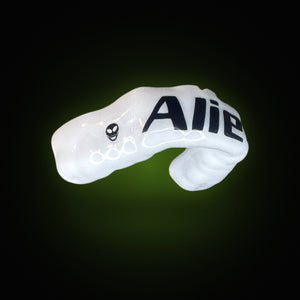
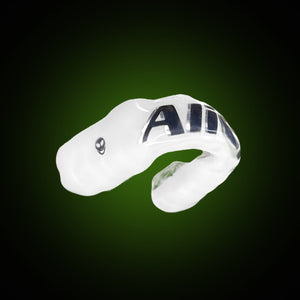
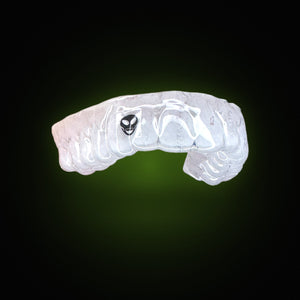
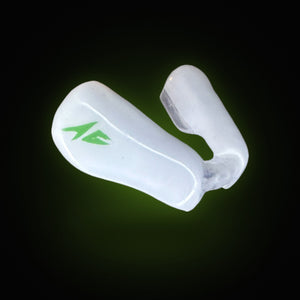
Our pick for roller derby is NanoBite. At 4 mm it is our thinnest, lowest-profile guard and the best of our models for breathing and talking, which matters when you're calling plays in the pack. It's the same guard we recommend for other contact team sports such as rugby, hockey and football. NanoBite comes in a Clear, White or Black base, and you can add your roster number or initials (up to 3 characters).
Origin and Origin Pro are our 5 mm combat guards for boxing, MMA, Muay Thai, kickboxing, karate and taekwondo. They are not our recommendation for roller derby. PowerBite is for powerlifting and weightlifting. AlienGuards makes upper mouthguards; see upper vs. lower mouthguards.
Keeping your guard clean
The ADA's MouthHealthy mouthguard tips say to rinse your guard before and after each use or brush it, clean it regularly in cool, soapy water, store it in a sturdy case with vents, and never leave it in the sun or in hot water. A derby bag is full of sweaty pads, so keep your guard in its case, not loose in the bag or tucked into your helmet. Full routine: how to clean and care for your custom mouthguard.
Ordering and team orders
Every AlienGuard is made from your own impression. We ship an at-home impression kit, and your custom guard is made from the impression you send back. If bootcamp, a scrimmage or a tournament is coming up, see how long a custom mouthguard takes and order early enough to skate in it before game day. Step-by-step help is on our impression instructions page.
Leagues and teams with 5 or more skaters get 20% off through team orders, including NanoBite. Team orders can carry your logo plus skater names or numbers, and metallic, satin and holographic text colors are free. See custom team and gym mouthguards for how team orders work.
Related reading: mouthguards for contact sports, what to do if a tooth gets knocked out and how often to replace your mouthguard.
Roller derby mouthguard FAQ
Do you have to wear a mouthguard in roller derby?
Yes. Under the Rules of Flat Track Roller Derby, skaters must wear a helmet, mouthguard, wrist guards, elbow pads and knee pads during play, and protective gear may not be removed during play.
What happens if your mouthguard falls out during a jam?
If no skater makes an immediate attempt to get it back, the jam is called off and the skater without a mouthguard gets an Illegal Procedure penalty. If it fell out by accident and you put it straight back in before the jam is called off, play can continue with no penalty.
Can you take your mouthguard out in the penalty box?
Yes. You may remove your mouthguard, but no other gear, while in the penalty box. It must be back in before you leave the box, or you can be penalized.
Do roller derby referees have to wear a mouthguard?
No. WFTDA's Risk Management Guidelines say skating officials may forgo mouth guards. They still wear the rest of the required protective gear.
Do I need a mouthguard at practice?
For contact drills and scrimmage, yes. WFTDA says skaters not actively competing or engaging in contact drills may go without one, and JRDA still highly recommends one anytime you're on skates.
Do junior skaters and MRDA skaters follow the same mouthguard rules?
Yes. MRDA plays under the WFTDA rules with no differences in rules content, and JRDA uses a youth edition of the WFTDA rules. JRDA's Code of Conduct requires full protective gear on skates, with the same mouthguard exceptions.
Can I play roller derby without teeth?
WFTDA's Guide for Equipment Check says a skater with no teeth doesn't need a mouthguard, but strongly recommends one to help protect against jaw fractures. If you have some teeth or dental work, ask your dentist what fits your situation.
Which AlienGuard is best for roller derby?
NanoBite, our thinnest guard at 4 mm and the best of our models for breathing and talking. It comes in a Clear, White or Black base. Origin and Origin Pro are for combat sports, and PowerBite is for lifting.
Sources: Women's Flat Track Derby Association, The Rules of Flat Track Roller Derby (January 1, 2025), Sections 1.1, 1.2 (Equipment), 4.4 and 4.4.4, Glossary (Protective Gear) and Casebook Scenarios C4.2.4.G and C4.4.4.A; WFTDA, Risk Management Guidelines (October 2024), Section 4; WFTDA, Guide for Equipment Check; WFTDA, MRDA-branded edition of the rules announcement; Junior Roller Derby Association, Rules page and Code of Conduct (January 2019) and 2019 rules update announcement; Cathorall and Peachey, International Journal of Injury Control and Safety Promotion 2018; Markey and Hutchison, Missouri Medicine 2017; Stockbridge et al., Frontiers in Neurology 2022; Fasciglione et al., Dental Traumatology 2007; American Dental Association, Athletic mouth protectors (mouthguards); ADA MouthHealthy, Mouthguards. Checked November 15, 2026.