

Baseball and Softball Mouthguards: Rules, Risks and What to Wear
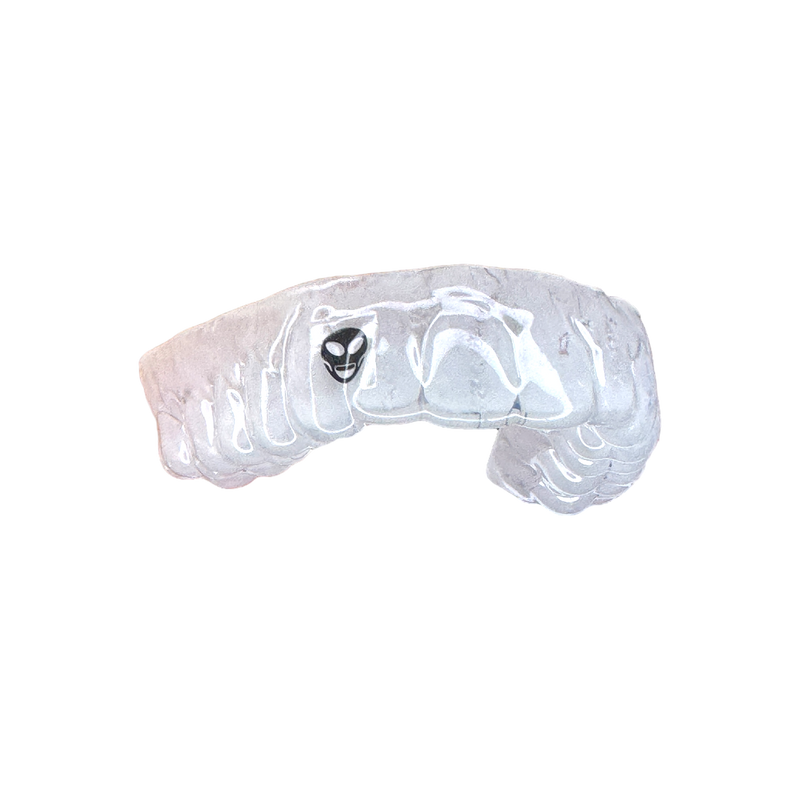
Baseball and softball don't feel like contact sports, so most players never think about a mouthguard. But bad hops, foul tips, line drives, wild pitches and collisions at the bag all happen, and the ball doesn't always miss the face. This guide covers what the rule books actually require, what dental organizations recommend, and what the injury research shows, so you can decide for yourself or your kid.
This is general information, not dental or medical advice, and rules change. Check with your league, school or tournament host before the season.
Short answer
- High school (NFHS): not required. Baseball and softball are not on the NFHS mouthguard mandate list, but the NFHS sports medicine committee recommends a properly fitted mouthguard for any sport where a bat or ball can hit the face.
- Little League: optional. Little League lists mouth guards among optional safety equipment that players can choose to wear.
- Dentists: the ADA lists baseball and softball among the sports where it recommends a mouthguard, and the AAPD encourages mandating mouthguards in organized sports with a risk of mouth injury.
- Research: baseball and softball accounted for 12.4% of sports and recreation dental injuries in U.S. children treated in emergency departments, and most baseball facial injuries come from being hit by the ball.
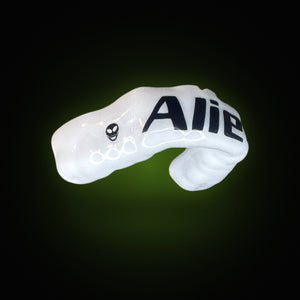
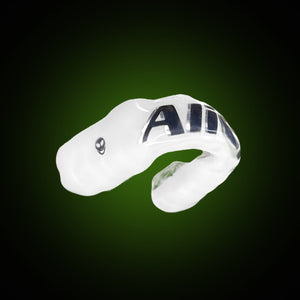
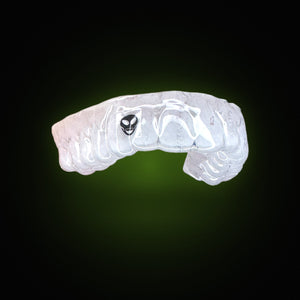
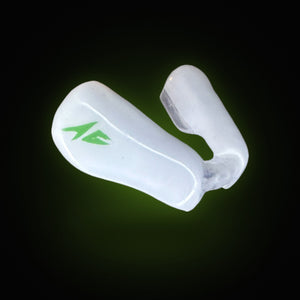
- Our pick: NanoBite, our 4 mm ultra-slim guard, so you can still breathe and call the ball.
Are mouthguards required in high school baseball and softball?
No. The NFHS mouthguard position statement (October 2022) says the NFHS mandates mouthguards in football, field hockey, ice hockey, lacrosse and wrestling (for wrestlers wearing braces). Baseball and softball aren't on that list. The same statement says the NFHS Sports Medicine Advisory Committee recommends that athletes consider a properly fitted, unaltered mouthguard "for participation in any sport that has the potential for orofacial injury from body or playing apparatus (stick, bat, ball, etc) contact." So a mouthguard is legal and recommended, just not required.
The high school rules focus on head and face gear instead. According to the NFHS summary of rules changes affecting risk (1982–2025):
- Baseball: batting helmets must meet the NOCSAE standard, a pitcher may wear a head or face protector with a non-glare surface (2004), and starting with the 2006 season, defensive players are allowed to wear face and eye protection.
- Softball: effective January 1, 2006, all fast pitch batting helmets must be equipped with a NOCSAE-approved face mask or guard.
Your state association, school or coach can still set stricter team rules, so ask before the first practice.
Little League and youth leagues
Little League's own parent guide, Get the Gear and What to Wear for Little League Practices, says there are many optional pieces of safety equipment, "from mouth guards to face protectors to arm sleeves," that parents and players can choose to wear but that are not mandatory. Male catchers are required to wear a protective cup, and players who bring their own batting helmet should make sure it is NOCSAE-approved. Travel ball, tournaments and local leagues can add their own rules, so check your league's equipment page.
What dental organizations recommend
The American Dental Association lists baseball and softball among the limited-contact sports where it recommends a mouthguard, alongside volleyball, gymnastics and skateboarding. Its councils recommend a properly fitted mouthguard to reduce how often sports dental injuries happen and how bad they are.
The American Academy of Pediatric Dentistry policy on preventing sports-related orofacial injuries goes further for kids. It encourages:
- requiring an ASTM-certified face protector for youth baseball and softball,
- mandating properly fitted mouthguards in other organized sports that carry a risk of orofacial injury, and
- coaches and administrators talking to a dentist before the season about how to handle injuries like a knocked-out tooth.
The AAPD policy also notes that baseball, basketball, soccer, softball, volleyball and gymnastics "lag far behind in injury protection" compared with sports that require gear, and that more than 87% of dental injuries in baseball, softball and field hockey come from player-object contact, such as a ball or bat, rather than another player.
What the research says
- Kids in the ER: a 2019 study of U.S. emergency department data (2000–2017) estimated 198,787 sports and recreation dental injuries in children under 18, about 11,044 a year. Baseball and softball were the third most common source (12.4%), after bicycles (28.6%) and playground equipment (15.3%). Children 7 to 12 years old had the most injuries (44.6%).
- Getting hit by the ball: a 5-year analysis of baseball-related facial injuries (2009–2013) estimated 187,533 emergency department visits. Most patients (81.5%) were 18 or younger. Lacerations (33.2%), contusions (29.7%) and fractures (26.9%) were the most common injuries, and most were caused by a baseball (70%) or a bat (12.5%).
- Few players wear one: in a survey of 1,636 Ohio high school basketball, baseball and softball players (published 2015), only 12.3% said they wore a mouthguard every time or sometimes. The top reasons for skipping it were that it wasn't required (65.3%) and that they couldn't breathe or talk with one (61.5%). Most said their coaches (87.3%) and parents (64.5%) had never talked to them about wearing one.
- High school injury surveillance: a national study of high school athletes in 2008/09–2013/14 found the athlete was not wearing a mouthguard in 72.5% of dental injuries, and 95.9% of the guards that were worn were self-fitted. A follow-up covering 2005–2020 found 75.1% of dental injuries happened without a mouthguard.
- An older warning: in a 1989 study of 2,470 junior and senior high school football players that recorded oral injuries from every sport they played, 75% of injuries happened without a mouthguard, and 40% of those happened in baseball and basketball. The authors called for mandatory mouthguards in both sports.
- Do mouthguards work? A 2019 systematic review and meta-analysis found the risk of orofacial injury was about 2.3 times higher for athletes who didn't wear a mouthguard. It found no significant effect on concussion.
Mouthguards are for teeth, lips and gums. Research does not support using one to prevent concussions, and the NFHS statement says the same. See do mouthguards prevent concussions?
Face guard or mouthguard?
They do different jobs. A face guard on a batting helmet or a fielder's mask keeps the ball off the face. A mouthguard covers the teeth and cushions the lips and gums if something gets through or you take a hit somewhere else, like a collision at a base. The AAPD notes that face masks have shown a risk reduction for player-object contact. It encourages face protectors for youth baseball and softball, and properly fitted mouthguards in organized sports with a risk of mouth injury. Many players who already wear a face guard add a mouthguard too.
The NFHS position statement says a properly fitted mouthguard should separate the biting surfaces of the teeth, protect the lips, gums and teeth, and fully cover all of the upper teeth. It also says the best fit comes from a guard made on a model of the athlete's own teeth or fitted by impressing the teeth into the guard.
"I can't breathe or talk with one"
That was the second most common reason players in the Ohio survey gave for not wearing a mouthguard. The NFHS position statement says a properly fitted and unaltered mouthguard has been shown not to impede communication or breathing, and that stock guards with a poor fit can make breathing and speech harder. A guard made from your own impression is more comfortable and secure and doesn't slip or fall out, which matters when you need to call the ball and talk to the infield. If you've had trouble before, read can you breathe and talk with a mouthguard? and why does my mouthguard fall out?
Which AlienGuard for baseball and softball?
Our pick is NanoBite, our ultra-slim, 4 mm, low-profile guard. Of all our models, it's the best for breathing and talking, and it can be customized with colors and text. It's the same guard we recommend for other team sports such as football, hockey, lacrosse, basketball, soccer and volleyball.
Origin and Origin Pro are our 5 mm guards for combat sports only: boxing, MMA, Muay Thai, kickboxing, karate and taekwondo. They're not our recommendation for the diamond. Compare all models on the model comparison page or browse the baseball and softball collection. For colors, custom text, team orders and how ordering works, see our guide to custom baseball and softball mouthguards.
Getting a custom guard
Every AlienGuard is made from an impression of your own teeth. We ship an at-home impression kit, taking the impression takes about 10 minutes, and your guard is crafted within 10–14 business days after we receive a good impression, then shipped with tracking. Follow the impression instructions for the best result.
- Kids and teens: there's no age limit, but younger players' teeth are still changing, so plan to replace their guard more often. See kids and youth mouthguards.
- Braces: don't use the at-home kit over braces. Have your dentist take an impression or 3D scan, then ship it to us or email it to impressions@alienguards.com. More in mouthguards with braces.
- Care: rinse it before and after each use, brush it gently, store it in a ventilated case and don't leave it in a hot dugout or car. Replace it every year, or sooner if it's damaged. See how to clean and care for your mouthguard.
- Whole roster: coaches can order for the team through team orders, with your logo plus athlete names or numbers.
If a tooth does get knocked out, time matters. Keep knocked-out tooth first aid handy in the dugout. For other sports' rules, see mouthguard rules by sport.
Baseball and softball mouthguard FAQ
Do you have to wear a mouthguard in high school baseball or softball?
No. The NFHS mandates mouthguards only in football, field hockey, ice hockey, lacrosse and wrestling for athletes with braces. Its sports medicine committee still recommends a properly fitted mouthguard for sports where a bat or ball can hit the face, and your school or coach can require one.
Does Little League require mouthguards?
No. Little League lists mouth guards as optional safety equipment that players can choose to wear. Local leagues and tournaments can set their own rules, so check with yours.
Should softball players wear a mouthguard if they have a face mask?
It's your call, but they protect different things. A face mask keeps the ball off the face, and a mouthguard protects the teeth, lips and gums. The AAPD encourages face protectors for youth baseball and softball and properly fitted mouthguards for organized sports with a risk of mouth injury.
Can you talk to teammates with a mouthguard in?
With a well-fitted one, yes. The NFHS says a properly fitted, unaltered mouthguard has been shown not to impede communication or breathing. NanoBite is our ultra-slim 4 mm guard and the best of our models for breathing and talking.
Does a mouthguard prevent concussions in baseball?
No. A 2019 meta-analysis found no significant effect of mouthguards on concussion, and the NFHS says research does not support the idea that mouthguards reduce concussion risk or severity. Wear one to protect your teeth and mouth.
Sources: NFHS position statement on mouthguard use (2022); NFHS rules changes affecting risk, 1982–2025; Little League; ADA; AAPD Reference Manual 2026–2027; Montero et al., Clinical Pediatrics 2019; Carniol et al., Otolaryngology–Head and Neck Surgery 2015; Collins et al., Journal of Primary Prevention 2015; Collins et al., Dental Traumatology 2016; Azadani et al., Dental Traumatology 2023; McNutt et al., Pediatric Dentistry 1989; Knapik et al., Sports Medicine 2019. Checked November 13, 2026.