

Do Cheerleaders Wear Mouthguards? Cheer Mouthguard Rules
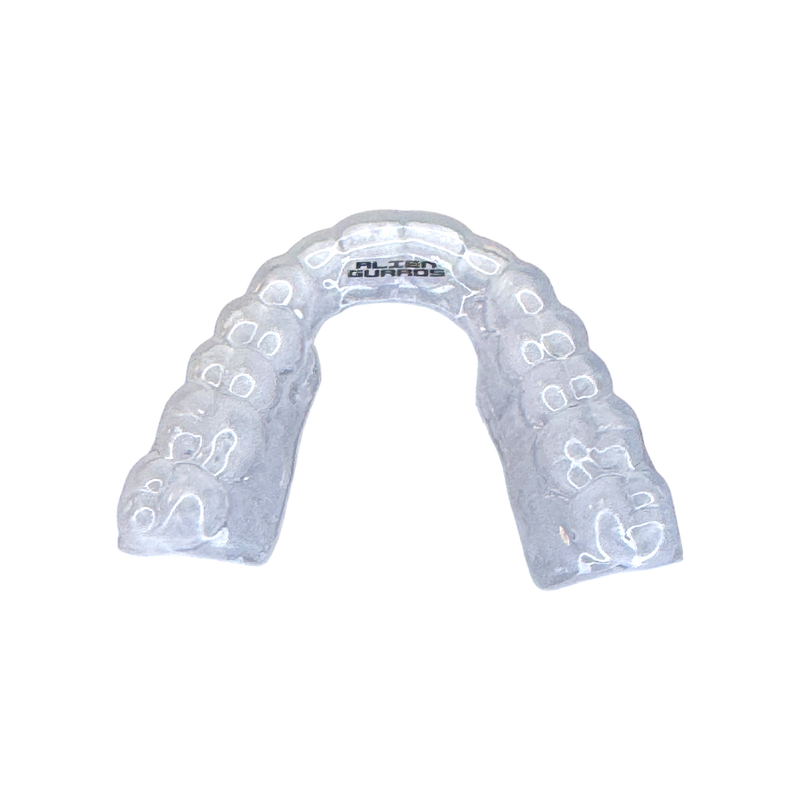
Cheerleading looks nothing like football, but a squad spends a lot of practice time catching, lifting and tossing people. Flyers come down fast, bases and spotters take elbows, heads and feet near the face, and tumbling ends on a hard landing. So parents and coaches ask a fair question: do cheerleaders wear mouthguards, and are they even allowed?
This guide covers what the main cheer rulebooks say, what the "nothing in your mouth" rule means, what injury research shows about stunting and how to choose a guard you can still yell through. It's general information, not medical or legal advice. Your coach, event producer and state association have the final say.
The short answer
- No cheer rulebook we checked requires a mouthguard. The USASF All Star rules for 2026–27 list shoes, jewelry, supports and casts, but no mouthguard rule.
- Cheer isn't on the high school mandate list either. The NFHS mandates mouthguards in football, field hockey, ice hockey, lacrosse and wrestling (for wrestlers wearing braces). Cheer and other spirit activities aren't on that list.
- Dentists still recommend one for risky skills. The NFHS Sports Medicine Advisory Committee recommends a properly fitted mouthguard in any sport where body contact can injure the mouth, and the ADA lists acrobatics and gymnastics among the activities where it recommends one.
- Check the "nothing in your mouth" rule. USASF bans gum, candy, cough drops and other items that may cause choking. It doesn't name mouthguards. If you're not sure how your event reads it, ask before competition day.
What the cheer rulebooks say
USASF All Star cheer
The USASF All Star Cheer Rules for the 2026–27 member term (June 1, 2026 to May 31, 2027) set the general safety rules most all star gyms compete under. They cover performing surfaces, spotters, soft-soled shoes, jewelry and padding for supports and hard casts. We didn't find a rule that requires or bans a mouthguard.
The rule that matters is General Rule 7: an athlete "must not have gum, candy, cough drops or other such edible or non-edible items, which may cause choking, in her/his mouth during practice and/or performance." That rule is aimed at loose items in the mouth. A mouthguard isn't named. A custom guard is made to fit your teeth, while gum and cough drops sit loose in the mouth. Still, the rule is enforced by the people running your event, so if you plan to compete in a guard, ask your gym owner or event producer how they apply it.
High school and school squads
School squads follow their state association's spirit rules. The NFHS's Position Statement and Recommendations for Mouthguard Use in Sports (October 2022) lists the sports where it mandates mouthguards, and cheer isn't one of them. The same statement recommends that athletes "consider the use of a properly fitted, unaltered mouthguard" in any sport with a chance of mouth injury from body or equipment contact. Partner stunts and pyramids put athletes in body contact on almost every rep.
State rules on what's in the mouth look a lot like the USASF rule. For example, the Iowa cheerleading information for the state wrestling tournament says cheerleaders are not to chew gum or have candy, including cough drops, in their mouths while cheering. It doesn't mention mouthguards. Your coach will know whether your state or conference has its own wording.
Youth recreation leagues
Youth recreation leagues write their own handbooks, so check yours. If it doesn't mention mouthguards, the answer is the same: not required, allowed unless an official tells you otherwise, and worth asking about if you're unsure.
Why cheerleaders get mouth and face injuries
Sprains and strains are the most common cheer injuries (38% in the emergency department study below), not teeth. But the head and face do get hit, and the research points at stunting.
- Emergency department data, 2010–2019. A study of U.S. emergency department visits for cheerleading injuries (Xu and colleagues, Orthopaedic Journal of Sports Medicine, 2021) counted head and neck injuries, a group that includes the face and mouth. Their share of injuries rose from 28% in 2010 to 33% in 2019. Stunts caused 25% of injuries and were more likely than other skills to injure the head or neck. Head and neck injuries were most common in cheerleaders aged 5 to 11 (32% of their injuries).
- Bases get hurt too. In the same study, 44% of stunt injuries happened to bases and 39% to flyers, and the head and neck injury pattern didn't differ significantly between the two positions. It isn't only the athlete in the air who takes a hit.
- Teeth in high school sports. A national high school injury surveillance study (Collins and colleagues, Dental Traumatology, 2016) found that in 72.5% of dental injuries across high school sports, the athlete wasn't wearing a mouthguard.
These numbers show where injuries happen. They don't prove a mouthguard would have prevented any one of them. The ADA's guidance on athletic mouth protectors notes that dental injuries also happen in limited-contact and high-velocity activities such as gymnastics and skating, not just collision sports. The American Academy of Pediatric Dentistry goes further and encourages mandatory, properly fitted mouthguards in organized sports that carry a risk of mouth and face injury.
One thing a mouthguard won't do is prevent concussions. The NFHS statement says research doesn't support the idea that a mouthguard reduces the risk or severity of a concussion. In the emergency department study, concussions and closed head injuries rose 44% from 2010 to 2019 even as total injuries fell, so spotting, progressions and the right surface still come first. More in do mouthguards prevent concussions?
Who on the squad should think about a guard
- Bases and back spots. They're under the flyer on every catch and dismount, and a knee, foot or the back of a head can land on the face.
- Flyers. Falls and awkward cradles can drive the face into a teammate's arm or shoulder.
- Tumblers. Hard landings and short passes can snap the jaw shut, which is how teeth chip.
- Athletes with braces. Brackets and wires can cut the lips and cheeks on contact. A guard gives the soft tissue a barrier. See mouthguards with braces.
- Young athletes. Kids aged 5 to 11 had the highest share of head and neck injuries in the emergency department study, and their teeth are still changing. See custom mouthguards for kids.
The real problem: talking and yelling
Cheerleaders have to be heard. Sideline cheers, counts and calls for a stunt all need a clear voice, and that's the main reason athletes skip a guard. The ADA's MouthHealthy site says stock guards "can be bulky and can make breathing and talking difficult." The NFHS statement says a properly fitted, unaltered mouthguard has been shown not to impede communication or breathing.
So if you're going to wear one, fit and thickness matter more than anything else:
- Thin enough to talk through. Cheer isn't a striking sport, so a slim guard makes more sense than a thick combat guard.
- Stays put without biting down. You shouldn't have to clench to hold it in while you yell. A guard that drops when you open your mouth is the wrong guard.
- Doesn't make you gag. A guard that is too long at the back can trigger the gag reflex. See mouthguard gag reflex.
- Covers the upper teeth. Most sports guards cover the top teeth, which stick out further and take most hits. See upper vs. lower mouthguards.
More on talking with a guard in can you breathe and talk with a mouthguard? and on what a good fit feels like in how should a mouthguard fit?
Stock, boil-and-bite or custom for cheer?
Stock guards are pre-formed and cheap, but they're the bulky kind that makes talking hard. Boil-and-bite guards are softened in hot water and bitten into for a closer fit. Custom guards are made from an impression of your own teeth, which gives the closest, most comfortable fit. For a sport where you need to talk all the time, a slim custom guard is the easiest to keep in. More in custom vs. boil-and-bite.
Which AlienGuard for cheerleading?
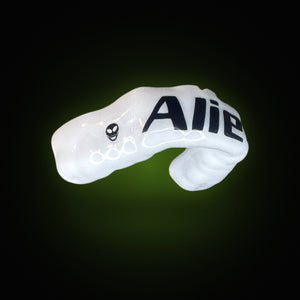
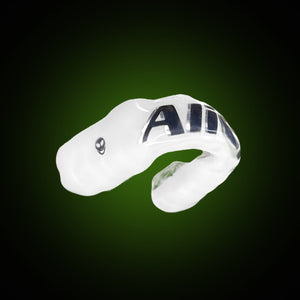
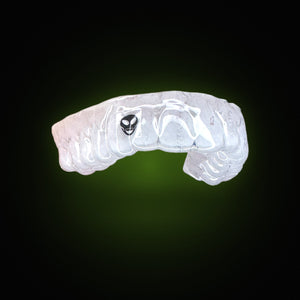
Our pick is NanoBite, our thinnest guard at 4 mm and the best of our models for breathing and talking. It's the same guard we recommend for team sports and grappling.
- Base colors: Clear, White or Black.
- Custom text: up to 3 characters, such as initials or a squad abbreviation, in a choice of 16 fonts and a range of text colors. Metallic, satin and holographic text colors are free.
- Made from your own impression. We ship an impression kit, you take the impression at home, and we make the guard from a model of your teeth.
Origin and Origin Pro are our combat guards for boxing, MMA, Muay Thai, kickboxing, karate and taekwondo, so they aren't our pick for cheer. PowerBite is for lifting. See every option in the NanoBite collection or compare all models.
Braces
Cheerleaders with braces can get AlienGuards, but a dentist needs to take the impression instead of using our at-home kit, so the braces don't get damaged. Your dentist can take an impression or a 3D scan and send it to us. Teeth move during treatment, so ask your orthodontist how often to check the fit. Full details are in our braces mouthguard guide.
Competition-day checklist
- Ask first. If you'll compete in a guard, check with your coach or event producer that they're fine with it under the "nothing in your mouth" rule.
- Practice in it. Wear it through full-outs so your voice and timing are used to it before you take the mat.
- Keep it in a vented case, not loose in a bag with shoes and bows, and away from a hot car. See our mouthguard case.
- Clean it after practice. Rinse in cool water and brush gently. See how to clean a mouthguard.
- Replace it when it's worn or loose. Growing athletes need new guards more often. See when to replace a mouthguard.
- Know dental first aid. If a tooth is knocked out, act fast. See knocked-out tooth first aid.
Ordering for a squad or gym
Coaches, all star gyms and school programs can order through our team orders: 20% off mouthguards and merch with a minimum order of 5 mouthguards, plus on-site fitting to help every athlete take a good impression (minimum order and location apply). Read more about custom mouthguards for gyms and teams, or pick squad colors with our guide to mouthguard colors. For other sports, see mouthguard rules by sport.
Cheerleading mouthguard FAQ
Do cheerleaders have to wear a mouthguard?
No. The USASF All Star rules and the NFHS mouthguard mandate list don't require one for cheer. It's a personal or program choice, and the NFHS and ADA recommend a properly fitted guard where contact can injure the mouth.
Are mouthguards allowed in cheer competitions?
The USASF rules we checked don't ban them. General Rule 7 bans gum, candy, cough drops and other items that may cause choking, and doesn't name mouthguards. Ask your event producer if you're unsure how they apply it.
Do flyers or bases need a mouthguard more?
Both get hurt. In a study of emergency department visits, 44% of stunt injuries were to bases and 39% to flyers, and head and neck injuries didn't differ significantly between the two positions.
Can you cheer and yell with a mouthguard in?
Yes, with a slim guard that fits well. Bulky stock guards make talking hard. A thin custom guard that stays put without biting down is the easiest to talk through.
Does a mouthguard prevent concussions in cheer?
No. The NFHS says research doesn't support the idea that mouthguards reduce concussion risk or severity. A mouthguard is for your teeth, lips and jaw.
Can high school cheerleaders wear a mouthguard?
Yes, unless your state or school says otherwise. The NFHS doesn't mandate one for cheer, and state rules we checked, such as Iowa's, ban gum, candy and cough drops while cheering without mentioning mouthguards. Ask your coach if you're unsure.
Can cheerleaders with braces get a custom mouthguard?
Yes. Your dentist takes the impression or 3D scan instead of using our at-home kit, so the braces don't get damaged.
Which AlienGuard is best for cheerleading?
NanoBite, our thinnest guard at 4 mm and the best of our models for breathing and talking. It comes in a Clear, White or Black base.
Sources: U.S. All Star Federation, US All Star Cheer Rules, 2026–27 member term, General Rules and Routine Requirements (rule 7); NFHS Sports Medicine Advisory Committee, Position Statement and Recommendations for Mouthguard Use in Sports (October 2022); Iowa High School Athletic Association, State Individual Wrestling Tournament Cheerleading Information; American Dental Association, Athletic mouth protectors (mouthguards); ADA MouthHealthy, Mouthguards; American Academy of Pediatric Dentistry, Policy on prevention of sports-related orofacial injuries; Xu et al., Orthopaedic Journal of Sports Medicine 2021 (cheerleading injuries in U.S. emergency departments, 2010–2019); Collins et al., Dental Traumatology 2016 (dental injuries in U.S. high school athletes, 2008/09–2013/14). Checked November 16, 2026.