

Youth Football Mouthguard Rules: Pop Warner, AYF and Flag
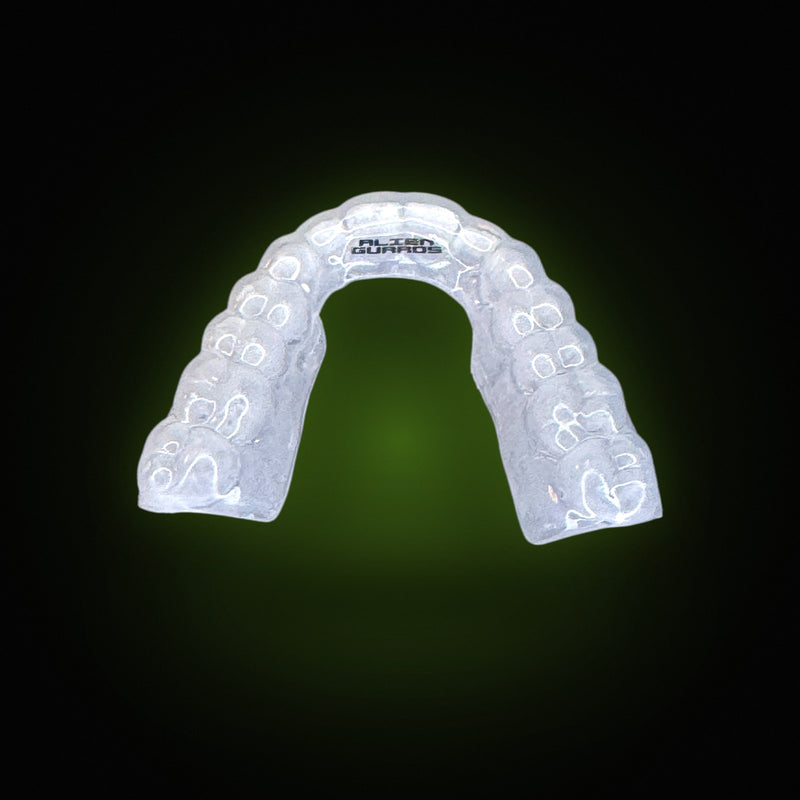
Every youth football season starts with an equipment list, and the mouthguard line on it is easy to skim past. It shouldn't be. Youth leagues don't all follow the same rule book, so a guard that is perfectly legal in one league can get your child pulled off the field in another. Pop Warner wants a strap, some local leagues ban clear and white guards, flag football programs want a guard too, and high school rules are different again.
This guide walks through what the main youth football organizations actually require in their current rule books, as of November 2026: Pop Warner tackle and flag, American Youth Football (AYF), NFL FLAG and the NFHS high school rules that many youth leagues borrow. It also covers how to pick a guard a growing child will keep in, what changes with braces, and how to order for a whole team. It's general information, not dental advice, and it doesn't replace your league's own handbook. When the two disagree, your league wins.
The short answer
- Pop Warner tackle: a mouth guard is required equipment, and it must have a keeper strap attached to the helmet face mask at all times.
- Pop Warner flag: all players must wear a mouthguard whenever they're on the field.
- AYF: the national rule book points to state and high school (NFHS) rules, so the details depend on where you play. Some local AYF leagues ban clear or white guards.
- NFL FLAG: all players must wear a mouth guard at all times on the field and bring their own.
- Leagues that follow NFHS rules: a tooth and mouth protector is required; clear and white have been allowed since 2016; from 2026, attachments that don't protect the teeth or mouth are out.
- Our pick for youth football: NanoBite, our slim 4 mm team-sports guard, in a colored base if your league bans clear or white.
Why youth football rules vary so much
High school football has one national rule writer, the National Federation of State High School Associations (NFHS), and college football has the NCAA. Youth football doesn't. Pop Warner writes its own rule book. American Youth Football is a membership organization whose local members run their own leagues. NFL FLAG has its own playing rules. And thousands of independent town and rec leagues write their own equipment sheets, often starting from the NFHS book and changing a few lines.
That's why the same eight-year-old can need a strapped guard in fall tackle, a strapless guard is fine in spring flag, and the color rule can change when the team travels to a tournament. The safest habit is to read your league's current equipment rule every season, before you buy anything. For the high school, college and NFL rules in full, see football mouthguard rules.
Pop Warner tackle football: a keeper strap is required
The Pop Warner Official Rules for football, 2026-2027 (covering July 15, 2026 to July 14, 2027) list the required equipment in Rule 14 of the 11-man tackle playing rules. The rule says the listed items "shall be worn by players in all divisions beginning with physical contact in practice sessions." Item J is the mouth guard, and it reads: "All mouth guards must have a keeper strap, and be attached to helmet face mask at all times."
That rule has two parts. First, a mouth guard is required from the start of contact practice, not just on game day. Second, the guard has to be the strapped kind and the strap has to be clipped to the face mask. A strapless guard, whether it's a cheap stock guard, a boil-and-bite or a custom guard made from an impression, doesn't meet that rule as written. Pop Warner publishes its rule books free on its official rules page, and local associations can add their own equipment notes, so check both.
If your child plays Pop Warner tackle, ask the league or your head coach whether a strapless guard is ever accepted before you buy one. AlienGuards guards are strapless: they sit inside the mouth and don't clip to the helmet. We'd rather you know that before you order than find out at an equipment check.
Pop Warner flag football
Pop Warner's flag program has its own section of the same rule book. Under its equipment rules, Section 5 (Mouth Guards) says: "All players MUST always wear mouthguards while on the field." There's no strap requirement in that section, so a well-fitted strapless guard works there. The flag rules also bar hard-surface padding and metal cleats, and require jewelry to come off, so the mouthguard is one of the few pieces of protective gear a flag player wears.
American Youth Football (AYF): national rules point to NFHS
The 2026 AYF National Rulebook (June 2, 2026 edition) explains that AYF is a support organization and that its local members run their own programs. On which rules apply, it says members committed to regional and national competition "shall follow their state and/or high school governing rulebook for their regular season games," and that NFHS rules, except where AYF supersedes them, govern inter-conference, tournament, regional and national games. We didn't find a separate mouthguard specification in the national rule book itself.
So in AYF, the mouthguard rule usually comes from your state's high school rules or from your local league. Local leagues can be stricter. For example, the NYS Nevada / AYF Nevada tackle football rules list "a mouthpiece that is not clear or white" as required player equipment, and they say equipment can't be altered, with a 15-yard unsportsmanlike conduct penalty for a player wearing improper equipment during a play. That's stricter than the current NFHS rule, which has allowed clear and white guards since 2016. If your AYF league has a rule like that, pick a colored guard.
NFL FLAG: a mouth guard every time you're on the field
Flag football still has falls, collisions and stray elbows, and the biggest flag program in the country treats the mouthguard as required gear. The NFL FLAG Official Playing Rules (revised March 24, 2025) say: "All players MUST wear mouth guards at all times while on the field," and "Participants must bring their own official NFL FLAG belts and mouth guards to the field." At tournaments, the rules add that players are checked before every game and can be ruled ineligible if they aren't properly equipped.
NFL FLAG's safety and injury prevention page repeats that every NFL FLAG player must wear a mouthguard. A USA Football youth sports column, Time to check your child's mouthpiece, puts it simply: "Regardless of the age of your child, the level of football they are playing, or whether it's tackle or flag, mouthpieces are required." Your local flag league may still have its own wording, so check it.
Leagues that follow NFHS rules
Many youth and middle school programs borrow the NFHS football rules, so it helps to know what they say. Three points matter for the mouthguard:
- What the guard must do. The NFHS 2016 football rules change to Rule 1-5-1d(5)a says a tooth and mouth protector must include an occlusal portion (protecting and separating the biting surfaces) and a labial portion (protecting the teeth and supporting structures).
- Clear and white are allowed. The same 2016 change says completely clear or completely white tooth and mouth protectors are no longer prohibited.
- No add-ons that don't protect. The NFHS 2025 football rules changes, effective with the 2026 season, say items attached to the protector that don't serve a purpose and function in protecting the teeth or mouth won't be allowed, and neither will items that are part of the protector and pose a health or safety risk.
The NFHS change doesn't name helmet straps either way, so if your league follows NFHS and your child uses a strapped guard, ask your league or state association how it reads the rule. The NFHS position statement on mouthguards (October 2022) adds that a properly fitted mouthguard should separate the biting surfaces of the teeth, protect the lips, gums and teeth, and fully cover all of the upper teeth, and it strongly recommends that guards not be altered in any way that reduces protection.
Youth football mouthguard rules at a glance
| League | Mouthguard | Strap | Color |
|---|---|---|---|
| Pop Warner tackle | Required from contact practice on (Rule 14) | Keeper strap attached to the face mask at all times | Check your local association |
| Pop Warner flag | Required whenever on the field | Not required in the flag rules | Check your local association |
| AYF | Follows state or high school rules; NFHS in regional and national play | Depends on local rules | Some local leagues ban clear or white |
| NFL FLAG | Required at all times on the field; bring your own | Not required in the playing rules | Not specified in the playing rules |
| NFHS-based leagues | Required; must protect and separate the biting surfaces | Not named; ask your league | Clear and white allowed since 2016 |
Color: when clear or white is a problem
Color rules exist so officials can see that a player is wearing a guard. They've changed over the years. NFHS high school football dropped its ban on clear and white guards in 2016. NCAA college football still requires a readily visible color that isn't white or transparent. And some youth leagues, like the AYF Nevada example above, still ban clear and white.
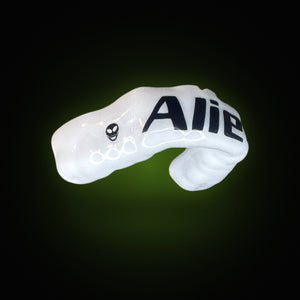
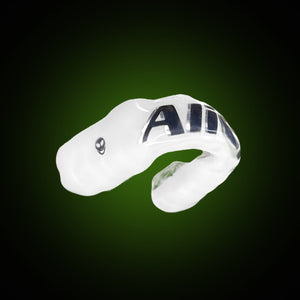
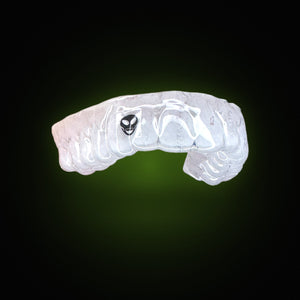
NanoBite comes in a clear, white or black base, and it can carry custom text. If your league bans clear or white, a black base is the simple choice, and a name or jersey number on the guard helps on a crowded sideline. Metallic, satin and holographic text colors are included at no extra charge. For design ideas within your league's rules, see choosing a mouthguard color and design. Thinking about printed fangs? Check our fang mouthguard rules first.
Strapped vs strapless guards
A strap, sometimes called a keeper strap or tether, connects the guard to the face mask so it doesn't get lost or dropped on the turf between plays. That's the reason Pop Warner requires one. Flag football has no helmet to clip to, so flag rules don't ask for a strap.
Whatever kind your child wears, the fit still has to be right. The NFHS position statement lists poor fit and easy dislodging as disadvantages of stock guards, and the American Dental Association (ADA) calls the stock mouthguard the least effective type "due to its generic design, improper fit and inadequate retention." A guard that only stays in because a child is biting down, or because a strap is holding it near the mouth, isn't doing its job. For a quick home check, see how should a mouthguard fit? and why does my mouthguard fall out?
Stock, boil-and-bite or custom for a young player
Dental groups describe three kinds of guards. The ADA's MouthHealthy mouthguard page says stock guards are inexpensive and come ready to wear, but often don't fit very well and can be bulky and make breathing and talking difficult. Boil-and-bite guards are softened in hot water and then shaped in the mouth, and may fit better than stock. Custom guards are made for one person's mouth.
The American Academy of Pediatric Dentistry (AAPD) policy on sports-related orofacial injuries says custom-fabricated guards are "superior in retention, protection, and comfort," and that when a custom guard isn't available, a mouth-formed (boil-and-bite) guard is preferable to a stock one. MouthHealthy adds that if you can't afford a custom guard, you should still wear a stock or boil-and-bite guard. The ADA guidance on athletic mouth protectors says that, depending on the circumstances, dentists might recommend a custom-fit guard or a properly fitted boil-and-bite guard.
In other words, any properly fitted guard is far better than none, and a custom guard is the most comfortable and secure option. For a side-by-side look, read why custom mouthguards outperform boil-and-bite.
Growing kids and braces
Kids' mouths change fast, and that affects any guard, custom or not. MouthHealthy says teens and children may need to replace their mouthguards more often because their mouths are still growing and changing. The AAPD notes that a stock guard may be the only practical option in some cases, such as during periods of rapidly changing bite in the mixed dentition years, when baby teeth are falling out and adult teeth are coming in. For when to start and what changes at each age, see our guide to what age kids should wear a mouthguard.
A USA Football article on mouth guards and braces in youth football makes the same point about braces: custom guards can't be remolded once teeth have shifted, and with braces, teeth can move quickly, especially early in treatment, so a custom guard may stop fitting within weeks. That's worth talking through with your child's orthodontist before the season.
If your child has braces and you choose AlienGuards, your dentist or orthodontist needs to take the impression instead of using our at-home kit, so the braces don't get damaged. They can take an impression or 3D scan, then ship it to us or email it to impressions@alienguards.com. If your child has a retainer, another dental appliance or loose teeth, talk to your dentist before using the kit. MouthHealthy also says not to wear a retainer or other removable appliance during contact sports. Braces rules for other sports are in can you wear a mouthguard with braces?
Check the guard during the season
Youth players chew on their guards, drop them, lose them and outgrow them. The USA Football column suggests checking your child's mouthpiece partway through the season rather than asking whether it feels OK, because a chewed-down guard can feel great. Look for:
- A changed shape. It should look much like it did when it was new. If it's been chewed flat or thin, replace it.
- Sharp edges. Guards that were trimmed with scissors can develop sharp edges that cut the gums.
- A loose or tight fit. If your child has grown and the guard no longer sits snugly, or it pinches, it's time for a new one.
- Damage. MouthHealthy says to replace a guard right away if it shows signs of wear, is damaged or fits poorly.
The NFHS 2016 rules change also says a protector chewed or altered so it no longer gives the necessary protection must be replaced. See how often should you replace your mouthguard? and how to clean and care for your mouthguard.
Getting kids to actually wear it
Owning a guard and wearing it are two different things. The AAPD policy cites a 2009 survey commissioned by the American Association of Orthodontists in which 67% of parents said their children don't wear a mouthguard during organized sports, and 84% said the reason was that it isn't required. In a 2016 survey of 503 middle and high school athletes in Houston (Miller et al., General Dentistry), 56% didn't have a mouthguard at all, and the most common reasons for not wearing one were forgetting it and discomfort.
The AAPD also says players' perceptions of comfort largely determine whether they keep wearing a guard. A few habits help young players:
- Start at the first contact practice. Pop Warner requires it from that point anyway, and it makes the guard part of the routine before game day.
- Pick a guard they can talk in. Players need to hear and call plays. See can you breathe, talk and drink with a mouthguard?
- Let them personalize it. A name, number or team color gives kids a reason to keep track of it.
- Keep a case in the bag. A ventilated case keeps the guard clean and makes it easy to find.
- Never share. One guard per player.
What mouthguards do, and don't do, for young players
Mouthguards are there to protect teeth, lips and gums. A 2019 systematic review and meta-analysis in Sports Medicine (Knapik et al.) found that across 12 cohort studies, athletes who didn't wear a mouthguard had about 2.3 times the risk of orofacial injury of those who did. A 2007 review in Sports Medicine traced the U.S. high school football mouthguard mandate to the 1962 season, after advocacy by the ADA.
Concussion is a different story. The same 2019 review found only a modest, non-significant effect of mouthguards on concussion, and the NFHS position statement says research currently doesn't support the idea that a mouthguard minimizes the risk or severity of a concussion. Choose a guard to protect your child's mouth, and follow your league's concussion protocols separately. More in do mouthguards prevent concussions? And if a tooth does get knocked out, read knocked-out tooth first aid before the season starts.
A parent's preseason checklist
- Find your league's equipment rule. Pop Warner, AYF, NFL FLAG or your rec league handbook. Note the strap and color rules.
- Check whether a strap is required. If it is, a strapless guard won't pass as written.
- Check the color rule. If clear or white is banned, choose a colored guard.
- Check for braces or loose teeth. Talk to your child's dentist or orthodontist first.
- Get the fit right before contact practice. The guard should cover all of the upper teeth, stay in without biting down, and let your child talk and breathe.
- Pack a case and a spare. Guards get lost on the sideline.
- Recheck mid-season. Look for chewing, sharp edges and a changed fit.
Choosing an AlienGuards model for youth football
For youth football, tackle or flag, our pick is NanoBite (4 mm). It's our slimmest guard and the best of our models for breathing and talking, so players can hear the play call and answer the coach. It's the same model we recommend for high school football, hockey, lacrosse, soccer, basketball and wrestling. Origin and Origin Pro (5 mm) are our combat-sports guards for boxing, MMA, Muay Thai, kickboxing, karate and taekwondo, not football. You can order NanoBite from our football mouthguard collection.
Every AlienGuard is made from an impression of your child's own teeth, taken at home with our impression kit and mailed back to our lab, where the guard is pressure-formed and finished by hand. Here's how at-home impression kits work. There's no age limit, but plan to replace a young player's guard more often as their mouth grows; our kids and youth mouthguard guide covers that in more detail. Our full football mouthguard guide covers model choice, color and care, you can compare all models, or shop our football mouthguards.
Ordering for a youth team
Coaches, team parents and league equipment managers can order through our team orders program. The minimum is 5 mouthguards, team pricing applies to every model, and each guard can carry your team logo plus a player's name or number, which makes sorting a pile of guards at practice much easier. Before you place a team order, check your league's strap and color rules so every guard on the roster passes the equipment check. For how team orders work step by step, see custom mouthguards for teams and gyms.
Youth football mouthguards: FAQ
Does Pop Warner require a mouthguard strap?
Yes, for tackle football. Rule 14 of the Pop Warner 2026-2027 rules says all mouth guards must have a keeper strap and be attached to the helmet face mask at all times. Pop Warner's flag football rules require a mouthguard but don't mention a strap.
Can my child wear a custom mouthguard in Pop Warner tackle?
Only if it meets the strap rule or your league approves it. Pop Warner's rule calls for a keeper strap attached to the face mask, and AlienGuards guards are strapless. Ask your league before you buy any strapless guard for Pop Warner tackle.
Do flag football players need a mouthguard?
In the major programs, yes. NFL FLAG's playing rules say all players must wear mouth guards at all times while on the field, and Pop Warner's flag rules say all players must always wear mouthguards on the field.
Is a clear mouthguard legal in youth football?
It depends on the league. Leagues that follow NFHS rules allow clear and white guards, which the NFHS stopped prohibiting in 2016. Some local youth leagues, such as AYF Nevada, require a mouthpiece that is not clear or white.
What mouthguard rules does AYF use?
The AYF National Rulebook says members follow their state or high school rule book in the regular season, and NFHS rules govern regional and national play except where AYF supersedes them. Local AYF leagues can add stricter equipment rules.
Can kids with braces get a custom football mouthguard?
Yes, but with care. Teeth with braces can move quickly, so a custom guard may need replacing sooner. For AlienGuards, your dentist or orthodontist takes the impression instead of using our at-home kit, so the braces aren't damaged.
How often should a youth football player replace their mouthguard?
Replace it right away if it's chewed, damaged or no longer fits, and check it mid-season. MouthHealthy says children and teens may need new guards more often because their mouths are still growing.
Does a mouthguard prevent concussions in youth football?
No. The NFHS says research doesn't support the idea that a mouthguard minimizes the risk or severity of a concussion. A mouthguard protects the teeth, lips and gums.
Sources: Pop Warner Little Scholars, Official Rules, Football 2026-2027 (Rule 14 and flag football equipment rules); American Youth Football, 2026 AYF National Rulebook (June 2, 2026); NYS Nevada / AYF Nevada Official Tackle Football Rules and Regulations 2025-2026; NFL FLAG Official Playing Rules (revised March 24, 2025) and Safety and Injury Prevention page; USA Football, Time to check your child's mouthpiece (2019) and Tips for mouth guards and braces in youth football (2013); NFHS Football Rules Changes 2016 and 2025; NFHS Sports Medicine Advisory Committee, Position statement and recommendations for mouthguard use in sports (2022); American Dental Association, Athletic mouth protectors (mouthguards); ADA MouthHealthy, Mouthguards; American Academy of Pediatric Dentistry, Policy on prevention of sports-related orofacial injuries, Reference Manual of Pediatric Dentistry 2026; Knapik et al., Sports Medicine 2019; Knapik et al., Sports Medicine 2007; Miller et al., General Dentistry 2016. Checked November 14, 2026.